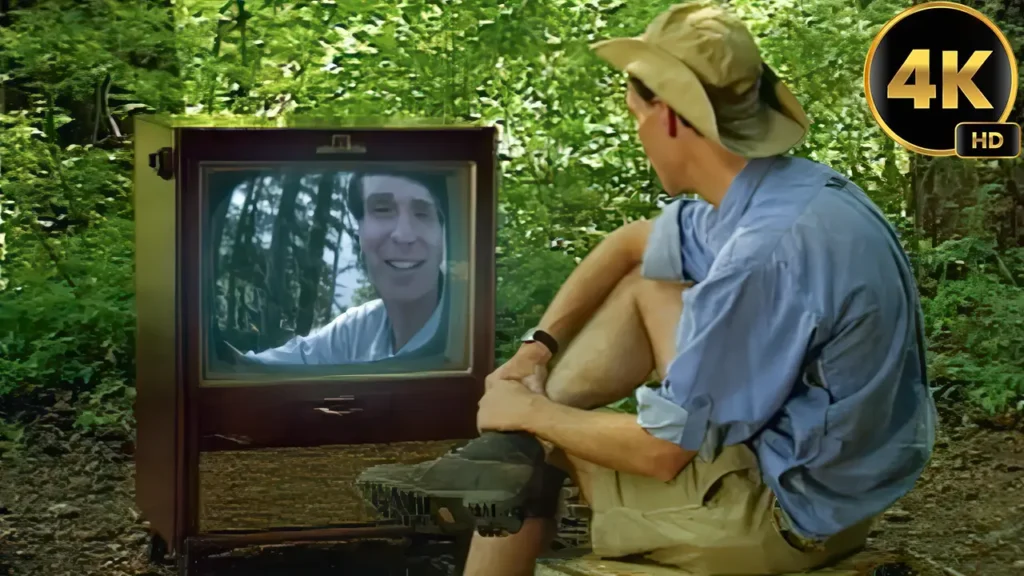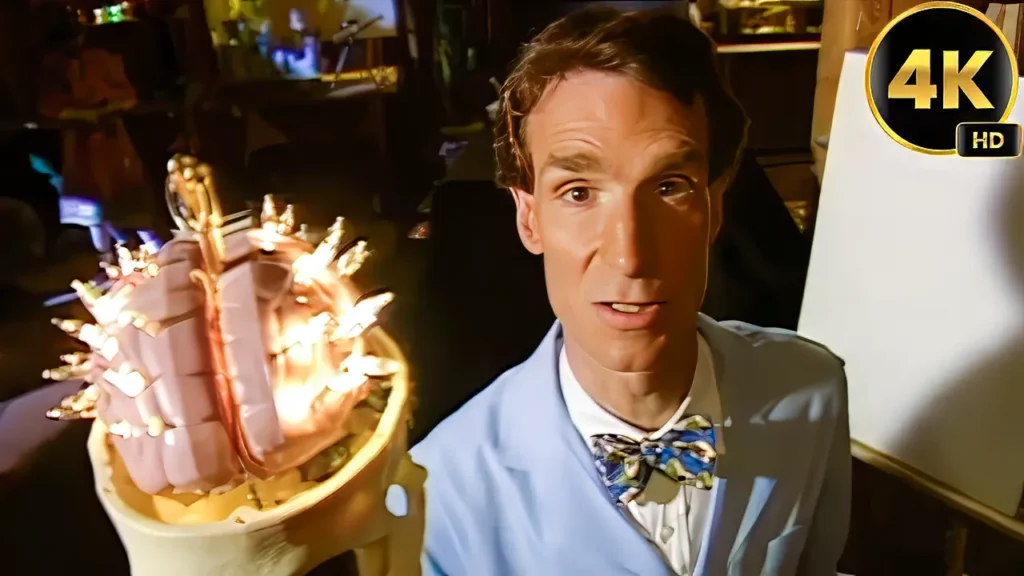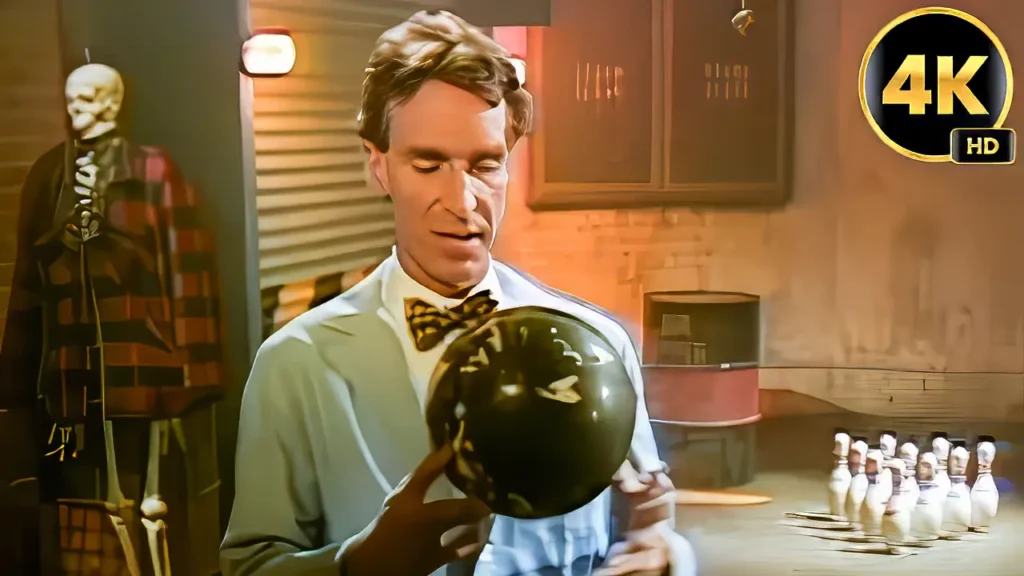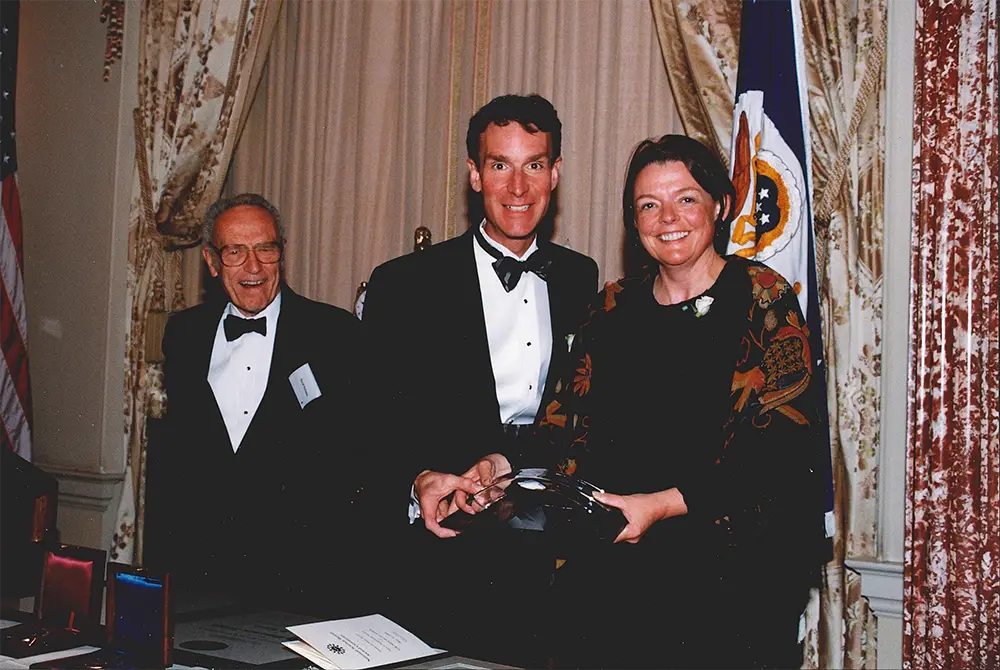
There’s a sundial on Mars. It’s about the size of a beer mat and sits on the deck of the Spirit and Opportunity rovers. Around its edge is written “Two worlds, one sun” and the word Mars in twenty two languages. Bill Nye helped design it.
It isn’t an ornament. The rovers needed a colour calibration target so the science team on Earth could trust what the cameras were sending back and a flat plate with known colours on it does that job. Nye’s contribution was to point out that if you stand a post up in the middle of it, the same object also tells you the time and shows you which way is north.
That’s the whole method in one object. Take a thing that already has to be there and make it teach.
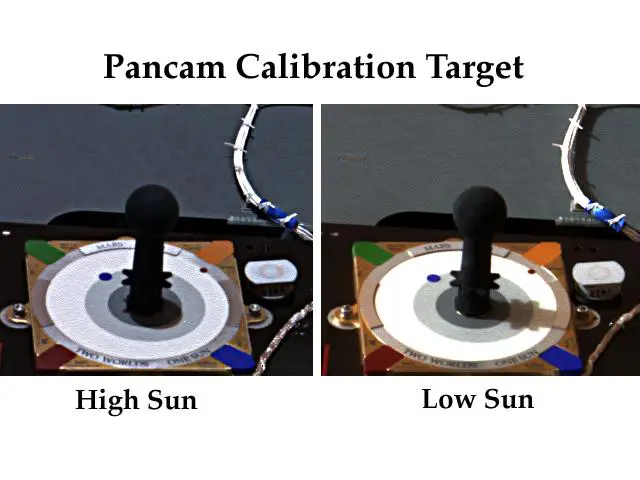
The MarsDial doing both jobs at once. The coloured corners calibrate the camera, the shadow of the central post gives the time and true north. “Two worlds, one sun” runs around the ring. Image NASA/JPL-Caltech/Cornell. More on the instrument at MarsDial.
Two people who could not talk about the war
Bill Nye’s father, Edwin Darby Nye, also known as Ned, was a civilian contractor building an airstrip on Wake Island when the Japanese took the island in December 1941. He spent nearly four years in prison camps. There were no watches and no clocks there, so he learned to read the time off shadows, and he came home from the war unable to leave the subject alone. He spent the rest of his life fixated with sundials, he wrote a book about them and signed his letters “Ned Nye, Boy Sundial Enthusiast”.
Nye’s mother, Jacqueline Jenkins, was recruited out of Goucher College by the US Navy to work on breaking Japanese and German codes. She was one of the group later known as the Goucher Girls. She wasn’t allowed to say what she’d done for decades.
So the household their son grew up in was one where a parent’s answer to “how does that work” was never a guess. Fifty years after his father was captured, Bill put his father’s obsession on another planet.
Cornell, and one astronomy class
Bill Nye was born in Washington DC on 27 November 1955 and went to Cornell, graduating in 1977 with a bachelor’s degree in mechanical engineering. While he was there he took an astronomy class taught by Carl Sagan. Thirty three years later he would be running the organisation Sagan founded, which is a piece of symmetry that sounds invented but definitely isn’t.
It’s worth being clear about the qualification, because it comes up later. Bill Nye is a mechanical engineer rather than a research scientist. He’s never run a research programme and he has no peer-reviewed publication record. That isn’t a criticism. If anything it’s what makes him such a good communicator, because he has spent his life explaining things to people who don’t already understand them.
Boeing, and four rejections
He went to Seattle and worked as an engineer, mostly at Boeing. His name is on a hydraulic resonance suppressor tube used on the 747. Simply put: the hydraulic lines that move a large aircraft’s control surfaces can develop pressure oscillations, the oscillations build on each other and the result is vibration in a system you very much want to be steady. The tube damps the oscillation out. It’s a small and unglamorous piece of engineering; it’s flying on aeroplanes today.
He applied to NASA’s astronaut programme four times. He was rejected four times.
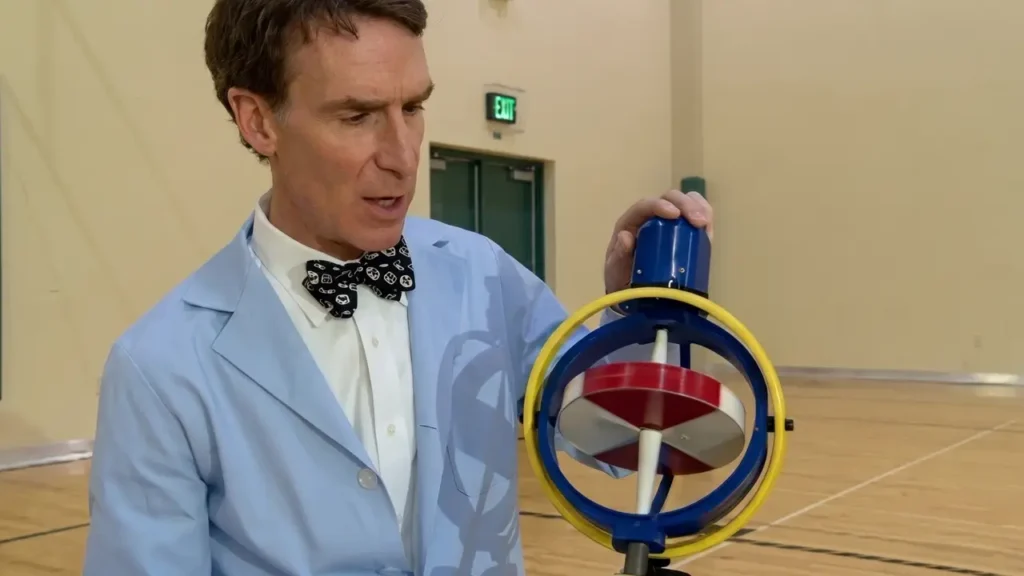
Those years matter more than they look. Every demonstration on the television show that came later is built by somebody who had spent a decade making physical things work, and it shows. When Bill Nye drops something, floats something or blows something up on camera, the apparatus is real and the result is the result. Nothing is animated in to make the point come out right.
The name started as a heckle
He was doing stand-up at night and ended up writing and performing on Almost Live!, a sketch comedy show in Seattle. He also won a Steve Martin lookalike contest, which tells you roughly what he looked like in the mid 1980s.
On air he corrected the host, John Keister, on the pronunciation of “gigawatt”. Keister came back with “Who do you think you are, Bill Nye the Science Guy?”
The name was a put-down but it worked, so Bill kept it.
The show
Bill Nye the Science Guy ran from 1993 to 1998, made 100 episodes and won 19 Emmy awards from 23 nominations. It’s the most successful thing anyone has done in school science television and thirty years on it’s still a classic in classrooms, which is why this site exists.
If you teach, the interesting question isn’t that it worked but why. Watching a lot of them back, four things do the work:
One idea per episode, said out loud. The big idea is stated in the first minute, in a sentence a nine year old can repeat. It’s then restated at the end. Everything in the middle is evidence for that one sentence. Compare that with a textbook chapter, which often contains many ideas but ranks none of them.
“Consider the following.” It’s a signal, not a catchphrase. It tells the viewer that attention is about to be required and that what follows is the actual point. Most teaching gives no such signal, so the learner has to guess which of the last four minutes mattered.
Cutting at the speed of the thing it was competing with. The show was made to be watched by children who had MTV on the other channel, so it cuts fast and it parodies music videos on purpose. That looks dated now in its styling but is still correct in its logic. You don’t win attention by being slower than the alternative.
Real apparatus, real children. The demonstrations are physical and the kids on camera are doing them, not watching an adult do them. That’s a pedagogical choice, not a production one.
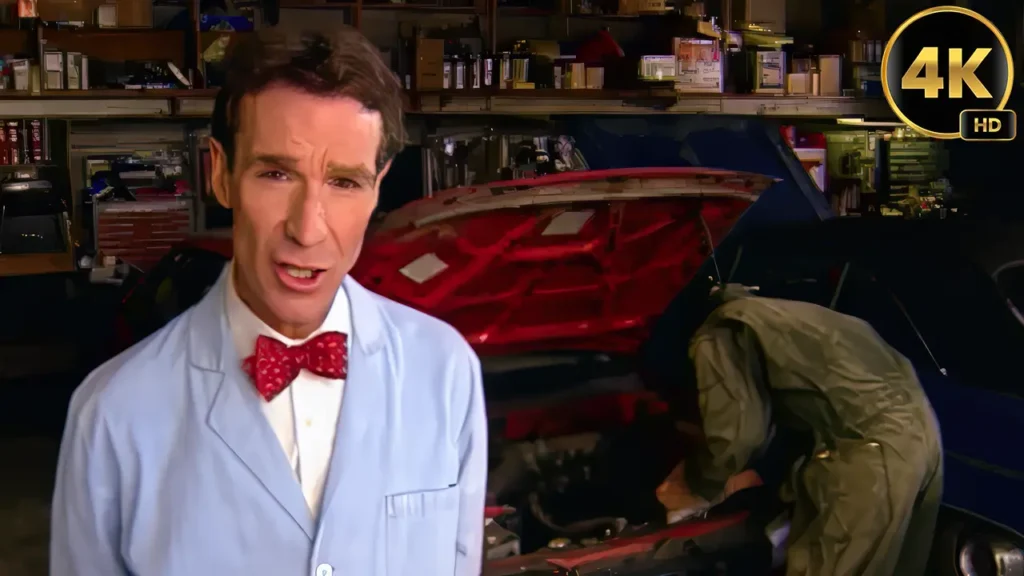
Good places to start if you want to see the method rather than the nostalgia: The Scientific Method, Motion and Pressure, which is the one where the engineering background is most obvious.
What has dated and what has not
Be honest with your students about this rather than letting them spot it themselves and decide the whole thing is unreliable.
The content has dated in places. Pluto was reclassified in 2006, so the planets material needs a word from you. Anything involving computers is a period piece. Some of the environmental figures have moved a long way since the mid nineties, mostly in the wrong direction.
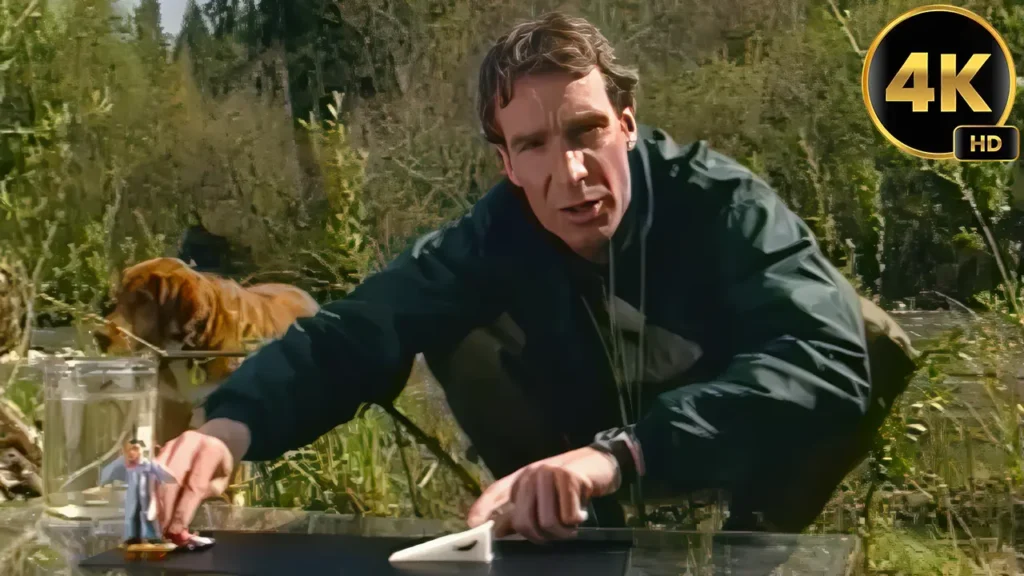
The method hasn’t dated at all. A demonstration of pressure using a plastic bottle worked in 1994 and works now, because the atmosphere hasn’t changed its mind. When you use these episodes you’re using them for the demonstrations and the structure, and you’re supplying the update yourself. That’s a feature. It gives the class something to do.
Sagan’s society
In 2010 Nye became executive director of The Planetary Society, which Carl Sagan co-founded in 1980 with Bruce Murray and Louis Friedman. The student ended up running the shop.
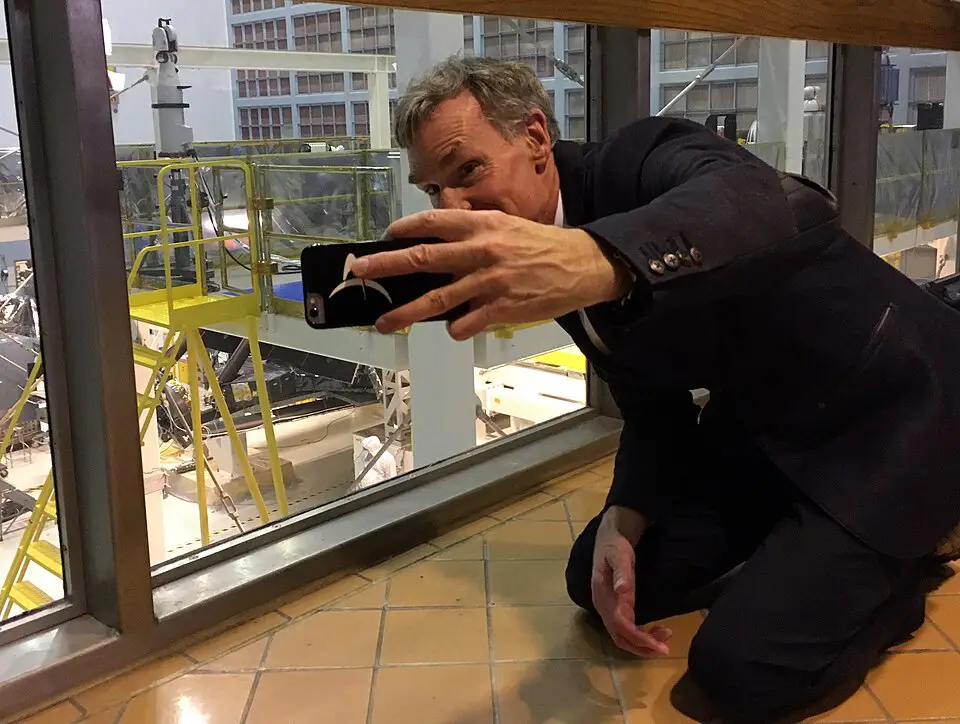
Bill Nye photographing the James Webb Space Telescope through the cleanroom viewing window. Photograph NASA, public domain, via Wikimedia Commons.
The most interesting thing to come out of it is LightSail. A solar sail carries no fuel. It’s pushed by the momentum of sunlight itself, which is a tiny force applied constantly and for free, and over a long enough time a tiny constant force beats a large one that stops. LightSail 2 launched in 2019 and raised its own orbit using nothing but light, which is a thing Sagan had argued for since the seventies. It’s a crowd-funded spacecraft that proved a point.
Everyone you will ever meet knows something you don’t.
The slightly grey area
Nothing here is in the same category as the difficult material on some of the other pages on this site. Nye’s problem is a different one and it’s worth knowing because it’s so ordinary: what happens when a science teacher becomes a brand.
The Ken Ham debate, 2014. Nye agreed to debate the creationist Ken Ham at Ham’s own Creation Museum in Kentucky. A lot of scientists thought this was a mistake and their argument is a good one: agreeing to stand on a stage opposite someone can hand the audience the impression that there are two sides of comparable weight and the venue got the ticket money and the publicity. Nye’s counter-argument is also good: Ham was never the audience, the people watching were, refusing to turn up doesn’t make the belief go away. The exchange most worth showing a class came near the end, when both men were asked what would change their mind. Ham said nothing would. Nye said evidence would. Whatever you think of the decision to debate, that’s the difference between the two positions in about four seconds.
Bill Nye Saves the World, 2017 to 2018. The Netflix series was poorly received, including by people who grew up on the original. The fair criticism is that it swapped demonstration for a panel show and advocacy for teaching. The old show showed you a thing and let you conclude. The new one told you the conclusion.
The authority question. Bill Nye speaks with a scientist’s authority on subjects a long way from mechanical engineering, and he isn’t one. Most of the time what he says is a fair summary of what scientists think, which is exactly what a science communicator is for. But it does mean the correct response to a claim of his is the same as the correct response to anybody’s claim, which is to go and check it.
The business. In 2017 he sued Disney over the accounting on Science Guy profits, alleging tens of millions in underreported payments. The fraud claims survived Disney’s attempt to have them thrown out in 2019. The trial judge then decided the accounting dispute himself rather than sending it to a jury, and on 1 July 2024 a California appeal court upheld that decision. Nye lost. Seven years of litigation, and the man whose face is on every episode walked away with nothing, which is worth knowing if you have ever assumed that the person fronting a show is the person who owns it.
I still post his episodes and I don’t think any of the above should stop you using them. He’s a very good teacher who became a celebrity; being a celebrity is a different job with different incentives. Show your students the man who spent ten years damping vibration out of hydraulic lines and start a discussion about the rest, so that when they meet the bow tie somewhere else they are looking at the claim instead of the costume. Which is what he told them to do in the first place.
Where to go next
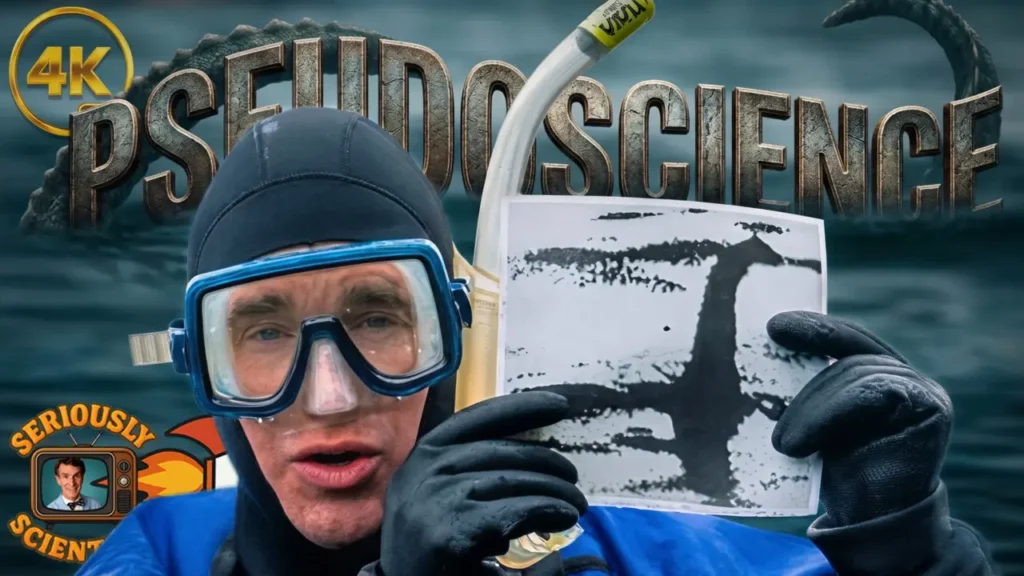
Start with The Scientific Method, then Pseudoscience, two great episodes that help us all to think like a scientist. All 100 episodes are on this site and every one of them has an interactive lesson built around it: browse them in the Bill Nye hub.
Sources
- The Story of the Clock, on Ned Nye and the Bill Nye Solar Noon Clock, Cornell Engineering
- Bill Nye’s interplanetary sundial heads for Mars, Cornell Chronicle
- MarsDial design, inscriptions and missions, Wikipedia
- Bill Nye, biography and career, Wikipedia
- What is solar sailing, and the LightSail 2 mission, The Planetary Society
- Bill Nye sues Disney over Science Guy profits, Variety
- Disney cannot escape fraud claims from Bill Nye, The Hollywood Reporter