
Planet Earth Right Now
Windows into the World We Live On
Pitch Drop : longest-running experiment
Live view of the University of Queensland's Pitch Drop Experiment, which holds the Guinness World Record for the longest-running laboratory experiment. Professor Thomas Parnell set it up in 1927 to show that pitch, which shatters like a solid, is really a fluid 100 billion times more viscous than water. The first drop took 8 years to fall; only 9 have fallen, the last in April 2014.
University of Queensland ↗Live Space Streams: International Space Station, SpaceX Starship Development and Florida Launch Pads
The cameras in this section give students and educators a direct window into humanity's most ambitious engineering projects. The International Space Station orbits Earth at approximately 28,000 kilometres per hour, completing a full orbit every 92 minutes at an altitude of around 425 kilometres. The live exterior camera captures the curvature of Earth, the razor-sharp terminator line between day and night, weather systems, ocean colour, city lights and the aurora, from a perspective impossible to see any other way. The ISS hosts continuous microgravity research into biology, physics, materials science and medicine that cannot be conducted on Earth's surface. NASA's own stream from the station shows the crew at work inside when they're on duty and Earth from an external camera the rest of the time. The Starbase Live camera at Boca Chica, Texas documents SpaceX's development of the Starship launch system, at 121 metres tall the largest and most powerful rocket ever built, capable of 74 meganewtons of thrust. Watching Starship development in real time gives students a rare opportunity to observe the iterative engineering process of a vehicle designed to carry humans to the Moon and eventually Mars. Space Coast Live follows SpaceX and NASA launch operations at Kennedy Space Center and Cape Canaveral in Florida, including Launch Complex 39A, the pad that launched 11 Apollo Saturn V missions, Apollo 11 among them, and 82 space shuttle missions.

Starbase Live : SpaceX
Boca Chica, Texas · NASASpaceflight · 24/7

ISS : Earth from orbit
Low Earth Orbit · afarTV · 24/7

NASA Live : space station
Low Earth Orbit · NASA · 24/7

Sen : Earth in 4K from space
Low Earth Orbit · Sen · 20+ hrs/day

Space Coast Live : Florida
Florida, USA · NASASpaceflight · 24/7
Live Volcano and Earthquake Webcams: Active Eruptions and Seismographs in Real Time
Volcanoes are among the most powerful geological forces on Earth, responsible for shaping landscapes, creating new land and cycling minerals through the atmosphere and oceans. The cameras in this section cover very different kinds of volcanic activity, from Hawaii and Sicily to Iceland, Mexico, Guatemala and Japan. Kilauea on Hawaii's Big Island is a shield volcano fed by a deep mantle hotspot, producing fluid basaltic lava that has been erupting nearly continuously for decades. Mount Etna in Sicily is a stratovolcano rising to around 3,350 metres above the Ionian Sea, sitting near the convergent boundary of the African and Eurasian plates. Its complex summit crater system generates near-constant activity ranging from strombolian explosions and ash emissions to open lava flows, and it has been designated a UNESCO World Heritage Site since 2013. Watching these feeds offers real-time insight into the geological processes that have shaped Earth's surface for 4.5 billion years. USGS volcanologists monitor Kilauea around the clock, measuring sulphur dioxide emissions, seismic activity and ground deformation to understand eruption dynamics, while INGV maintains equivalent continuous observation at Etna, one of the longest-studied active volcanoes in the world. Iceland's Sundhnúkur crater row on the Reykjanes Peninsula lies where the Mid-Atlantic Ridge rises above sea level, and the Icelandic Met Office recorded nine eruptions there up to August 2025. Popocatépetl, whose name is the Aztec word for smoking mountain, is North America's second highest volcano, with more than 26 million people living within 100 kilometres. Fuego in Guatemala has erupted frequently since records began in 1524, and Sakurajima in southern Japan was an island until its 1914 eruption joined it to the mainland. Alongside the volcanoes, a live feed from the Southern California Seismic Network shows real seismograms as they are recorded, so an earthquake appears on stations across the region about 20 seconds after the ground moves. The section also carries official observatory cameras from around the world: Badan Geologi, Indonesia's Geological Agency, streams its live monitoring screen for Merapi with a working seismogram; the Colombian Geological Survey watches Nevado del Ruiz, whose 1985 mudflow was South America's deadliest eruption; and in Japan a camera looks into the Nakadake crater of Aso, inside a caldera 25 kilometres long. More live views follow the restless volcanoes of Asia: Mayon in the Philippines, one of the world's most active stratovolcanoes; Semeru, Indonesia's highest volcano; and Tokachidake in Hokkaido, raised to eruption alert level 3 by the Japan Meteorological Agency in September 2026.
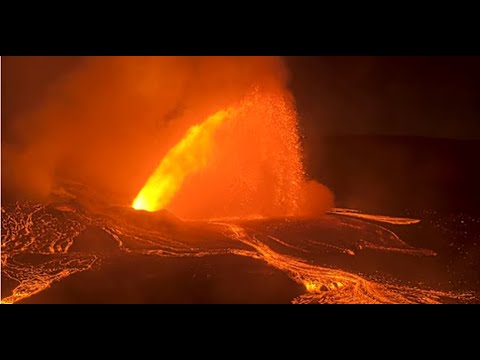
Kilauea : active eruption
Hawaii, USA · USGS · 24/7

Etna : multi-camera live
Sicily · afarTV · 24/7
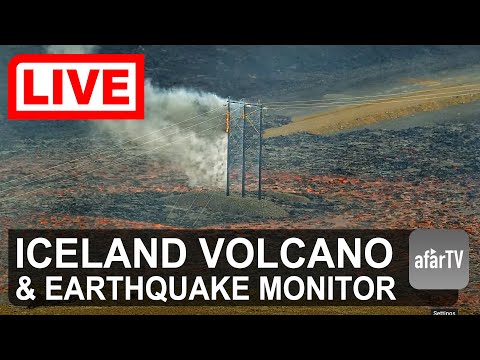
Iceland : Reykjanes
Iceland · afarTV · 24/7

Popocatépetl : Mexico
Mexico · afarTV · 24/7
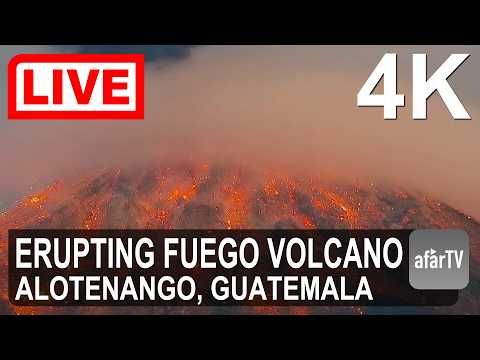
Fuego : Guatemala
Guatemala · afarTV · 24/7
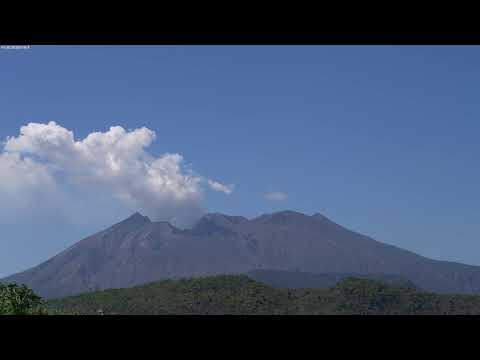
Sakurajima : Japan
Japan · Kyodo News · 24/7
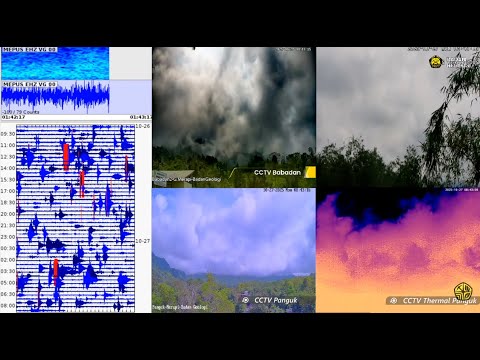
Merapi : observatory
Indonesia · Badan Geologi · 24/7
Nevado del Ruiz
Colombia · SGC · 24/7
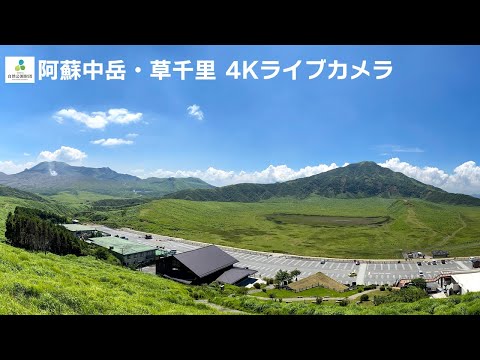
Aso : Nakadake crater
Japan · NPF Aso · 24/7
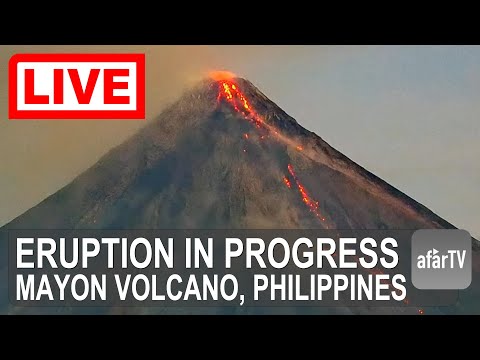
Mayon : Philippines
Philippines · afarTV · 24/7

Semeru : Java
Indonesia · afarTV · 24/7
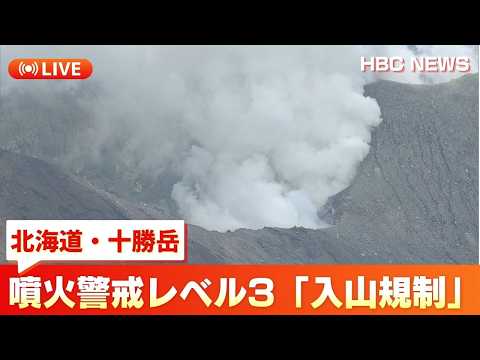
Tokachidake : Hokkaido
Japan · HBC · alert
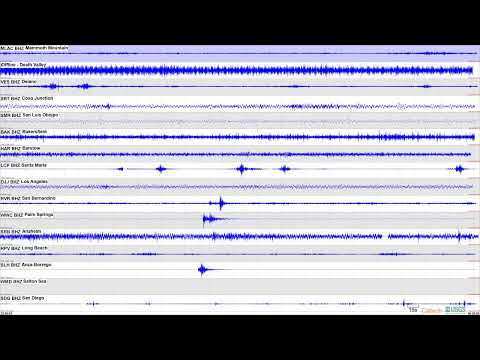
Live seismograms
California · SCSN · 24/7
Live Ocean and Underwater Cameras: Coral Reefs, Sharks, Seals, Orcas, Sea Otters and Aquariums
The ocean covers 71 percent of Earth's surface and contains an estimated 700,000 to one million species, the vast majority still unknown to science. Coral reefs, despite covering less than 0.1 percent of the ocean floor, support approximately 25 percent of all marine species, making them the most biodiverse ecosystems on Earth per unit area. The Coral City Camera at PortMiami, a collaboration between Coral Morphologic and NOAA, documents a remarkable urban reef ecosystem and provides continuous visual data for researchers studying reef resilience in a warming ocean. Over 185 fish species have been recorded at this single fixed camera, including daily manatee visits, lemon sharks and goliath grouper. The Florida Keys camera covers part of the Florida Reef Tract, the only living barrier reef in the continental United States and the third largest in the world, home to over 1,400 species of marine plants and animals. The Monterey Bay Aquarium jellyfish camera shows Pacific sea nettles, animals with no brain, heart, blood or bones that have survived all five major mass extinction events and remained essentially unchanged for over 500 million years. The EXPLORE.org tropical reef tank demonstrates the extraordinary density of life that living coral structures support, a density that takes decades to develop and can be destroyed in hours by bleaching events. The Monterey Bay Aquarium's sea otter camera shows rescued southern sea otters, a keystone species whose recovery the aquarium has supported for over 40 years by pairing orphaned pups with surrogate mothers; the threatened population now stands at around 3,000. In Japan, Aqua World Oarai keeps around 60 species of shark, including sand tigers whose embryos eat their siblings before birth, and the Okhotsk Tokkari Center in Mombetsu cares for rescued spotted and ringed seals. In British Columbia, OrcaLab has listened to the Northern Resident orcas for over 50 years with hydrophones and cameras that watch without disturbing them. In the Gulf of Alaska, the Alaska SeaLife Center's research camera on Chiswell Island watches endangered Steller sea lions, a population its scientists have monitored since 1998, while off Maui the Hawaiian Islands Humpback Whale National Marine Sanctuary protects the breeding grounds of the North Pacific humpback whale, which gather there from December to April.
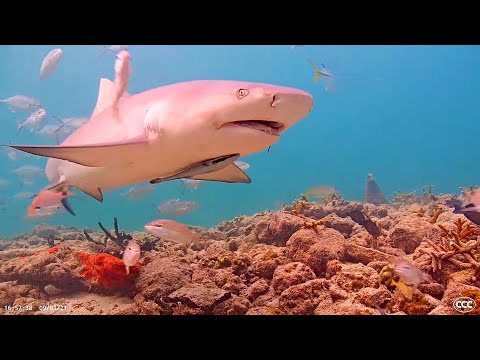
Coral City Camera
PortMiami, Florida · 24/7
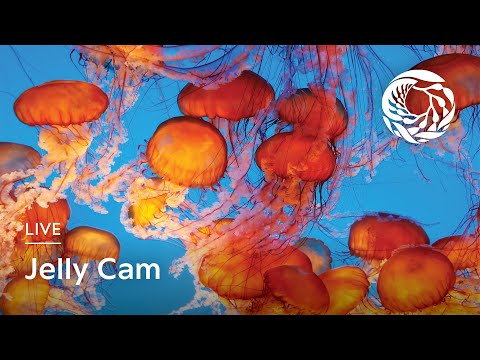
Monterey Bay : jellyfish
California, USA · MBA · 7am-7pm PT

Florida Keys : underwater
Lower Keys, Florida · 24/7
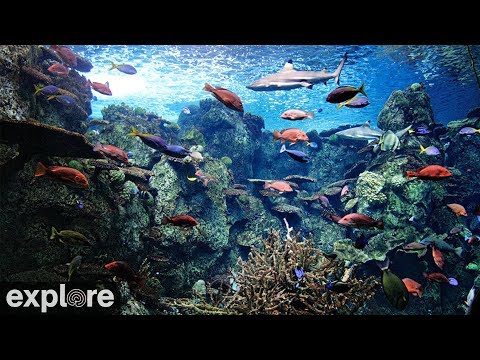
Tropical reef tank
USA · EXPLORE.org · 24/7
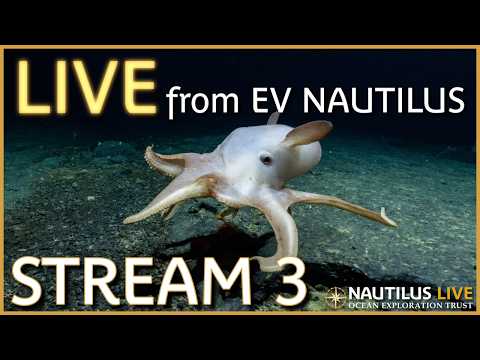
E/V Nautilus : deep sea live
Pacific Ocean · Ocean · at sea Jun-Oct
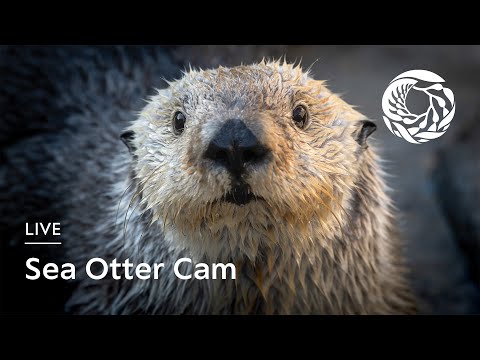
Monterey Bay : sea otters
California, USA · MBA · 7am-7pm PT

Oarai : shark tank
Japan · Aqua World · 24/7
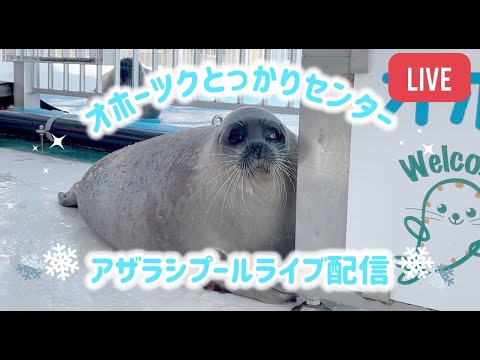
Mombetsu : seal centre
Japan · Tokkari Center · 24/7
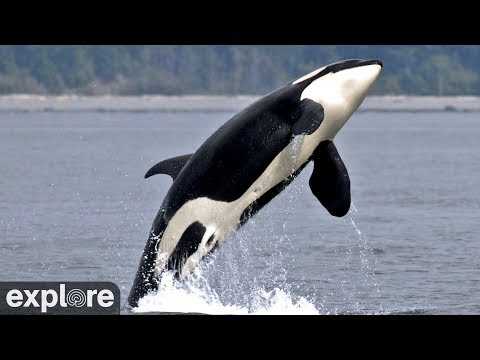
OrcaLab : orcas
Canada · OrcaLab · seasonal
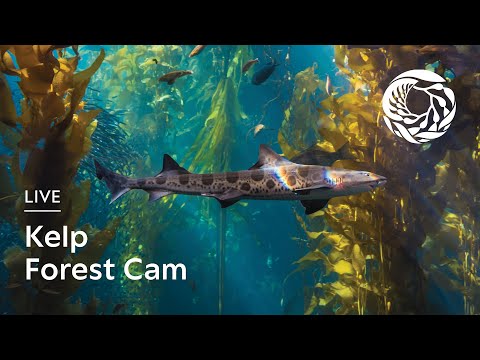
Monterey Bay : kelp forest
California, USA · MBA · 7am-7pm PT
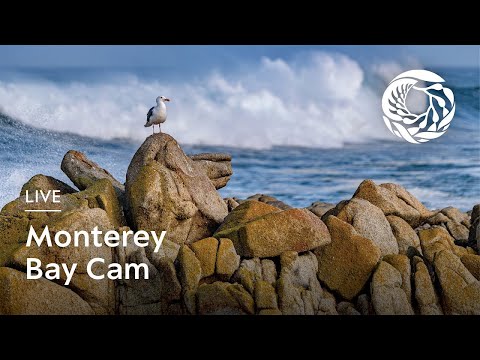
Monterey Bay : the bay
California, USA · MBA · daily

Utila : reef wall
Honduras · EXPLORE.org · 24/7

Maui : whale sanctuary
Hawaii, USA · afarTV · Dec-Apr

Toba : sea otters
Japan · Toba Aquarium · 24/7
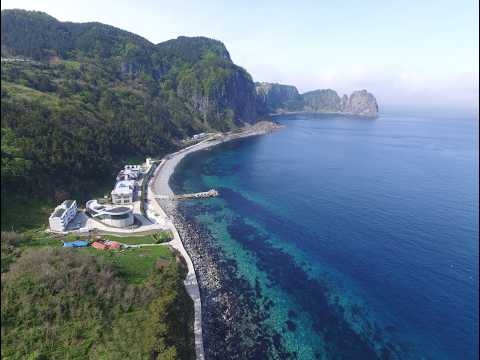
Ulleungdo : underwater
South Korea · KIOST · 24/7
Live African Safari Cameras: Wildlife Waterholes and the Great Migration in Botswana, Kenya, Namibia, South Africa and Zimbabwe
Waterholes are the ecological heartbeat of African savanna ecosystems. In regions where rainfall is intensely seasonal, a permanent water source becomes a congregation point for virtually every species in the landscape, from the largest elephant herds to the smallest birds. The cameras here cover distinct African ecosystems across five countries. Great Plains TV rotates between hidden cameras across Botswana, Kenya and Zimbabwe, capturing the daily rhythms of life including mega-tusker elephants at the Selinda Reserve waterhole, hippos and crocodiles on the Zambezi River at Tembo Plains, and lions and painted wild dogs in the Okavango. The Namib Desert waterhole documents how desert-adapted species including gemsbok oryx, with their remarkable ability to raise their body temperature to 45 degrees Celsius rather than sweat, survive in one of the oldest and most arid environments on Earth. Tembe Elephant Park in KwaZulu-Natal is home to some of the last truly giant tuskers, elephants carrying tusks exceeding 45 kilograms, representing a critical conservation success story. Hwange National Park in Zimbabwe hosts one of the largest concentrations of elephants on Earth, with over 50,000 animals, alongside Africa's full complement of large predators including lion, leopard, cheetah and African wild dog. Namibia Wildlife Resorts streams the Okaukuejo waterhole in Etosha National Park, one of Africa's largest savannah conservation areas, where black and white rhinoceros come to drink, and at the Fig Tree Crossing in Kenya's Mara Triangle a camera waits for the Great Migration, when more than 1.2 million wildebeest, with zebra and gazelle, cross the Mara River on their circuit from the Serengeti. Africam's wider network adds Amboseli's Tortilis Camp, where elephants drink beneath Mount Kilimanjaro, Africa's highest peak; Tau Game Lodge in Madikwe, home to both black and white rhino and the endangered African wild dog; and Djuma in the Sabi Sand, the oldest nature cam in the world, streaming since 1998.
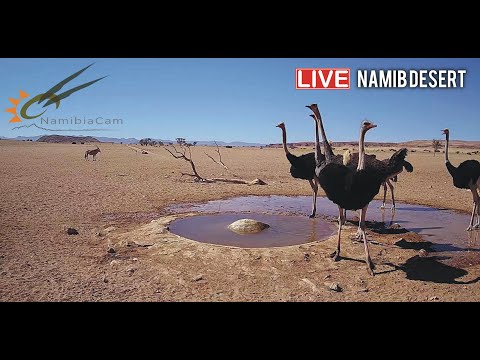
Namib Desert : waterhole
Namibia · NamibiaCam · 24/7

ol Donyo : Chyulu Hills
Kenya · Africam · 24/7
Djuma : waterhole
South Africa · Djuma · 24/7
Great Plains TV : hidecams
Botswana / Kenya / Zimbabwe · 24/7
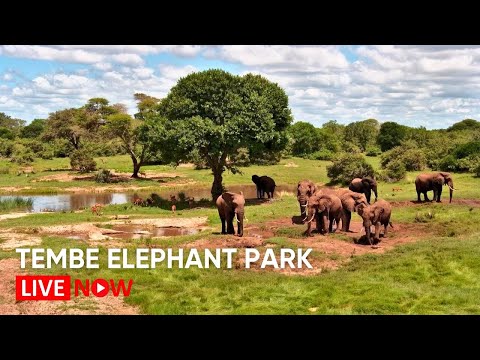
Tembe Elephant Park
South Africa · Africam · 24/7
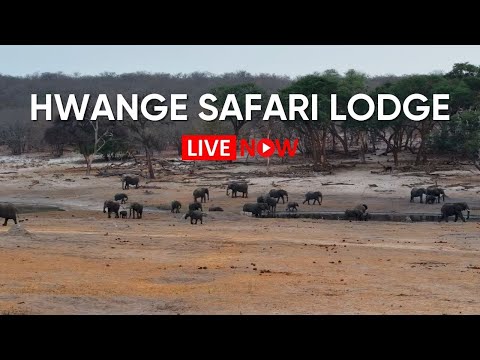
Hwange : safari waterhole
Zimbabwe · Africam · 24/7

Etosha : waterhole
Namibia · NWR · 24/7
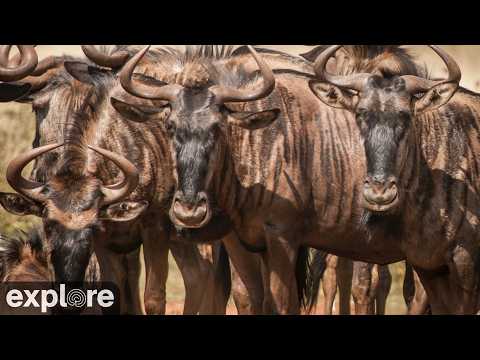
Maasai Mara : crossing
Kenya · Africam · Jul-Oct
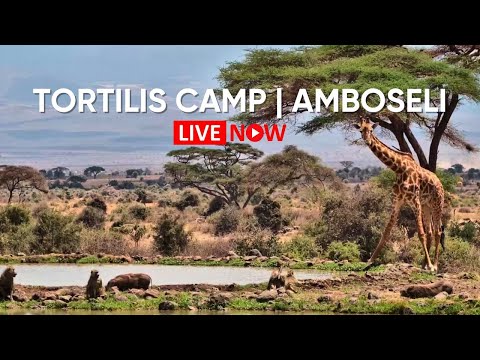
Amboseli : Kilimanjaro
Kenya · Africam · 24/7
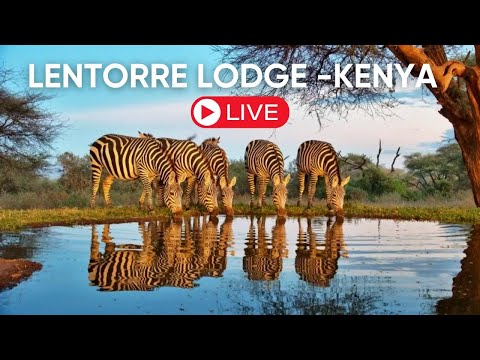
Lentorre : South Rift
Kenya · Africam · 24/7
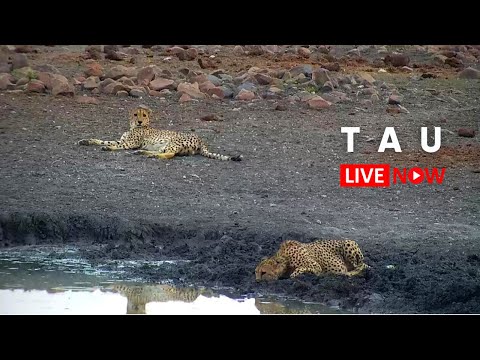
Tau : Madikwe
South Africa · Africam · 24/7
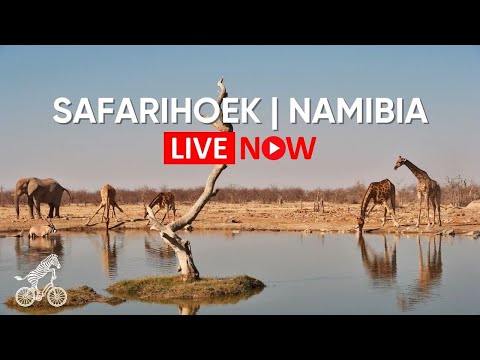
Safarihoek : Namibia
Namibia · Africam · 24/7
Live Long-running Experiments: The Pitch Drop Experiment and North America's Oldest Weather Record
Some science takes generations. The University of Queensland's Pitch Drop Experiment, set up by Professor Thomas Parnell in 1927, holds the Guinness World Record for the longest-running laboratory experiment: pitch shatters like a solid but is really a fluid 100 billion times more viscous than water, and only nine drops have fallen since the funnel was cut in 1930, the last in April 2014. At Blue Hill Observatory in Massachusetts, someone has recorded the weather every single day since 1 February 1885, building North America's oldest continuous weather record from one place.
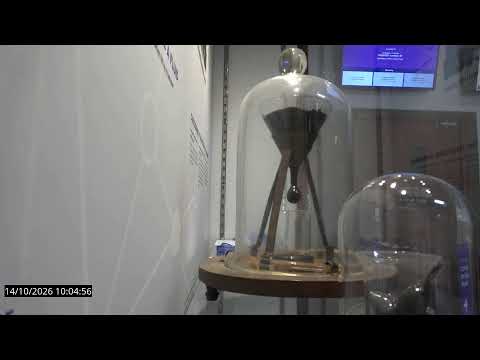
Pitch Drop experiment
Australia · UQ · 24/7
Blue Hill : weather record
Massachusetts, USA · Blue Hill · 24/7
Live Forest Wildlife Cameras: Giant Pandas, Brown Bears, Wolves, Beavers and Woodland Ecosystems
Forest ecosystems cover approximately 31 percent of Earth's land surface and are home to more than 80 percent of terrestrial biodiversity. The cameras here span three continents and very different approaches to observing wild animals. Morten Hilmer's camera in Northern Denmark is part of an active rewilding project in which the photographer has worked to restore natural ecological processes to his land, removing artificial barriers and allowing native species to return. The footage captures genuine behavioural rhythms across all four seasons, including red deer sparring in autumn, badgers foraging at night, stone marten and foxes visiting the stream, and the full complexity of a functioning European woodland ecosystem that has largely vanished from the continent. The International Wolf Center in Ely, Minnesota provides a scientific perspective on wolf ecology and is dedicated to advancing the survival of wolf populations through education and research. Wolves are a keystone species: their reintroduction to Yellowstone National Park in 1995 triggered a trophic cascade that changed elk behaviour, allowed riverbank willows and aspens to recover, stabilised eroding riverbanks and ultimately altered the course of rivers, one of the most dramatic demonstrations of how apex predators regulate entire ecosystems. At Brooks Falls in Katmai National Park, Alaska, brown bears gather to catch sockeye salmon as they leap the falls between late June and late July, with more than 50 bears seen fishing at once; the solar-powered camera runs from mid June to mid October. The Chengdu Research Base of Giant Panda Breeding in China cares for over 100 giant pandas, while in Hokkaido an infrared camera inside the Shiretoko World Natural Heritage area records sika deer, brown bears and foxes in a forest people normally cannot enter. In Somerset, the National Trust's beavers, released in 2020 to help manage flooding, have built dams and pools that now shelter otters, bats, amphibians and kingfishers. In the eastern Democratic Republic of Congo, GRACE is the world's only sanctuary for orphaned Grauer's gorillas, a critically endangered subspecies, and in Vietnam a camera looks over Phong Nha-Ke Bang National Park, the UNESCO World Heritage karst landscape that is home to Sơn Đoòng, the largest cave in the world.
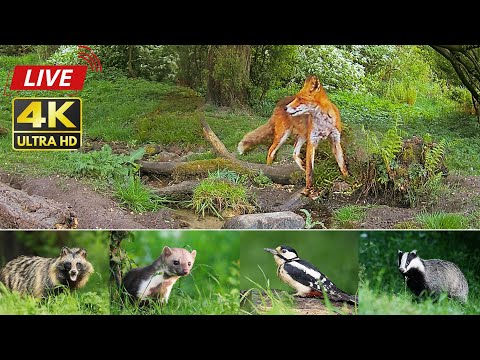
Wildlife in the forest
Northern Denmark · Morten Hilmer · 24/7
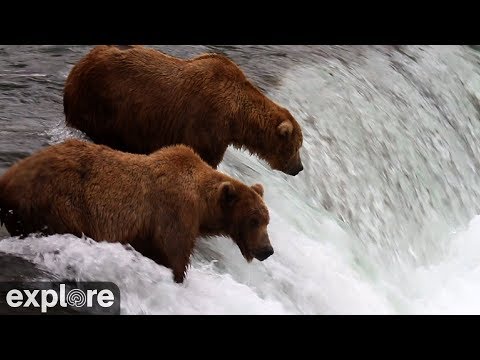
Brooks Falls : bears
Alaska, USA · EXPLORE.org · Jun-Oct

Chengdu : giant pandas
China · iPanda · 24/7

International Wolf Center
Minnesota, USA · EXPLORE.org · 24/7
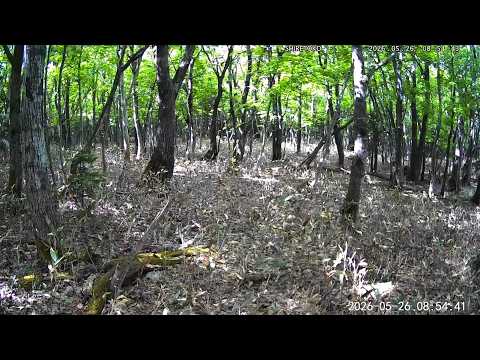
Shiretoko : forest
Japan · Shiretoko · 24/7
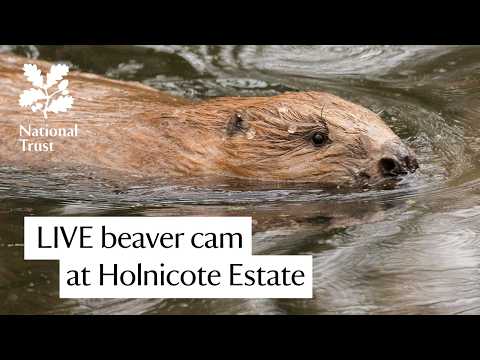
Holnicote : beavers
England · National Trust · 24/7
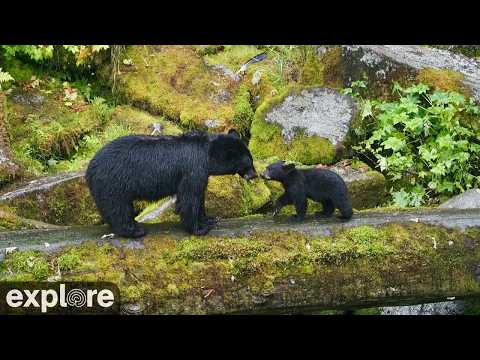
Anan Creek : bears
Alaska, USA · EXPLORE.org · Jun-Aug
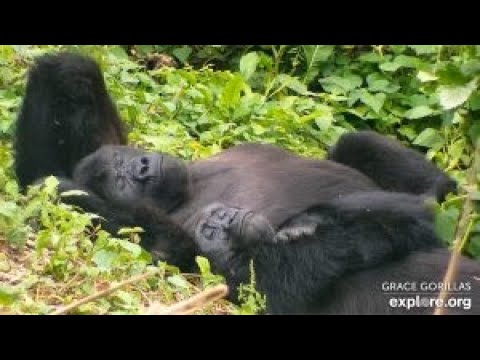
GRACE : gorillas
DR Congo · GRACE · 24/7

Costa Rica : sloths
Costa Rica · EXPLORE.org · 24/7

Phong Nha : Vietnam
Vietnam · Oxalis · 24/7
Live Bird Cams: Bald Eagle Nest, Cornell Lab FeederWatch, African Penguins, Black-faced Spoonbills and Bird Feeding Stations
Birds are among the most scientifically valuable animals for ecological monitoring, serving as indicators of ecosystem health across virtually every habitat on Earth. The Cornell Lab of Ornithology FeederWatch camera at Sapsucker Woods, Ithaca forms part of Project FeederWatch, one of the world's largest citizen science programmes, in which tens of thousands of volunteers across North America contribute observations that help scientists track long-term bird population changes. Species documented at this camera include northern cardinals, blue jays, downy woodpeckers, white-breasted nuthatches, dark-eyed juncos and red-winged blackbirds, whose seasonal appearances mark the turning of the year. The Big Bear Bald Eagle nest camera in the San Bernardino Mountains of California monitors Jackie and Shadow, a wild breeding pair nesting 145 feet up in a Jeffrey Pine. The bald eagle was removed from the United States Endangered Species List in 2007 following one of conservation's great success stories: a recovery from fewer than 500 breeding pairs in the lower 48 states in the 1960s, caused by DDT thinning eggshells, to over 9,000 pairs today following the pesticide ban and federal protection. Watching an active nest documents raptor breeding biology, incubation behaviour, hatching, eaglet development and the extraordinary parental investment of one of North America's largest birds of prey. At Stony Point Nature Reserve in South Africa, a camera watches the third largest breeding colony of African penguins in the world, a species uplisted to Critically Endangered in October 2024 with fewer than 10,000 breeding pairs remaining. In Panama, the Cornell Lab's fruit feeder camera at the Canopy Lodge has recorded 93 bird species, from toucans and tanagers to North American migrants spending the winter in the tropics. In Taiwan's Taijiang National Park, a camera at the Qigu watching pavilion follows the black-faced spoonbills that winter on the Tainan coast, when the park closes its 296 hectare Shifen reserve to people. Research and conservation cams cover the world: burrowing owls recovering from three or four pairs to nearly 100 on a former US Army depot in Oregon; California condors released in Big Sur since 1997; barn owl nest boxes studied by the University of Haifa in Israel; and a marsh camera in Poland's Polesie National Park that uses the BirdNET app to identify birds by their calls.

Big Bear : bald eagle nest
California, USA · FOBBV · 24/7
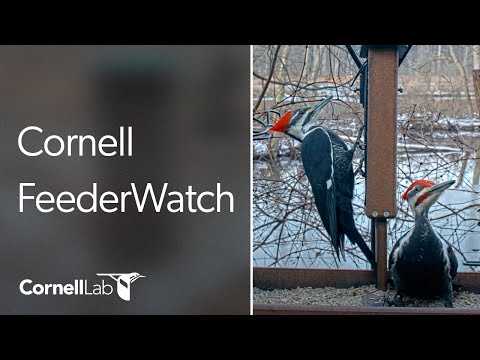
Cornell Lab : FeederWatch
New York, USA · Cornell Lab · 24/7

Panama : fruit feeder
Panama · Cornell Lab · 24/7

Bird feeder : live cam
Germany · NatureTec · 24/7
Taijiang : spoonbills
Taiwan · Taijiang NP · Sep-May
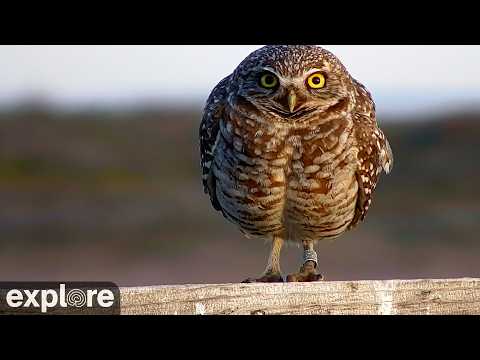
Burrowing owls : Oregon
Oregon, USA · EXPLORE.org · 24/7
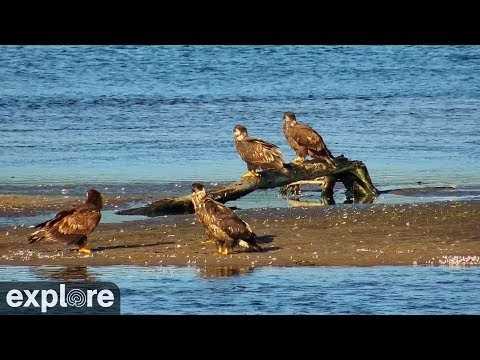
Mississippi Flyway
Wisconsin, USA · EXPLORE.org · 24/7

Mindo : hummingbirds
Ecuador · Hummingbird Spot · 24/7
Polesie : marsh
Poland · Polesie NP · 24/7
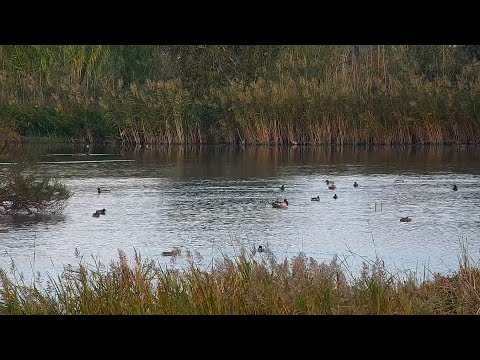
Ebro Delta : wetland
Spain · SEO/BirdLife · 24/7

Barn owls : Israel
Israel · Charter Group · 24/7
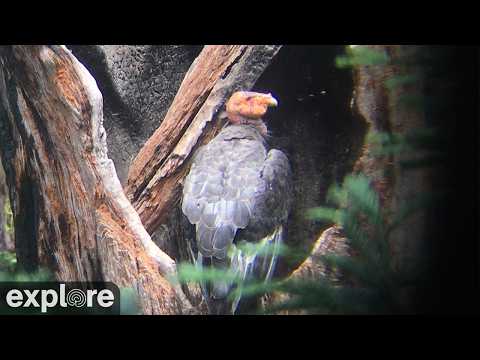
Condors : Big Sur
California, USA · EXPLORE.org · 24/7
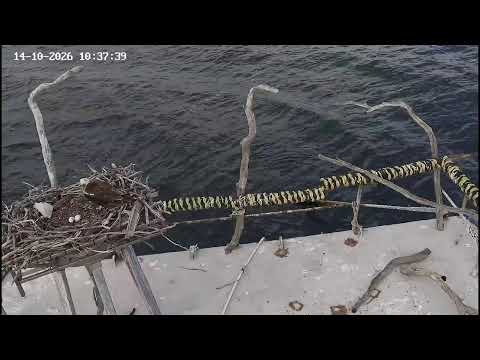
Port Lincoln : ospreys
Australia · Friends of Osprey · 24/7

Canopy Tower : hummingbirds
Panama · Cornell Lab · 24/7

Decorah : eagles
Iowa, USA · EXPLORE.org · 24/7
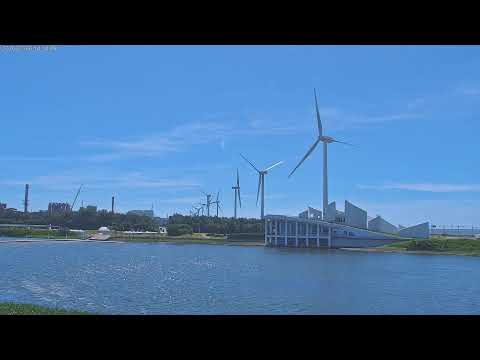
Changhua : wetland
Taiwan · Changhua County · 24/7
Gaomei Wetland
Taiwan · Taichung · 24/7
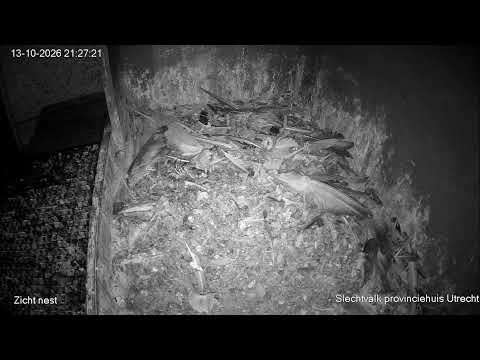
Utrecht : peregrines
Netherlands · Utrecht · 24/7
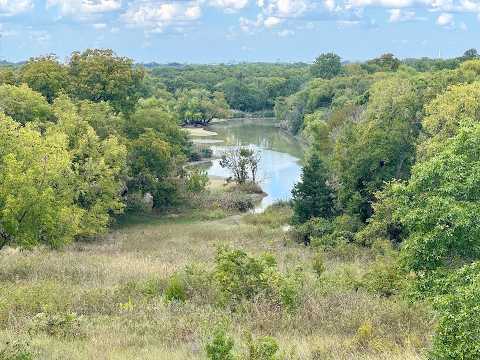
Heard Museum : wetland
Texas, USA · Heard Museum · 24/7
Live Engineering Cameras: Bridge Construction, Canal Locks, Ports and Railways
Engineering is science put to work, and these cameras show it happening. In Berlin, DEGES streams the rebuilding of the Westendbrücke on the A 100 motorway, demolished in 2025 because of structural damage and due to reopen in 2027. The US Army Corps of Engineers watches Lock and Dam 15 on the Mississippi, where the Government Bridge swings open for every passing tow. The Port of Rotterdam, the largest port in Europe, streams its own harbour; the Kiel-Holtenau locks guard the Kiel Canal, described as the busiest artificial waterway in the world; ocean-going ships pass the Welland Canal between Lake Erie and Lake Ontario; and in Nebraska, Union Pacific's Bailey Yard, more than five miles long, is the largest railway classification yard on Earth.
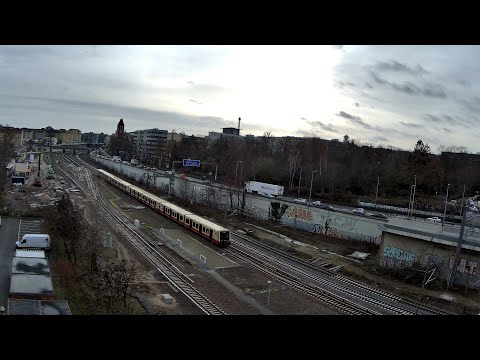
Westendbrücke : Berlin
Germany · DEGES · 24/7
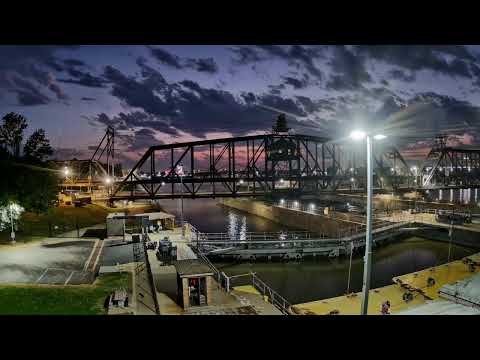
Lock and Dam 15
Illinois, USA · USACE · 24/7

Rotterdam : port
Netherlands · Port of Rotterdam · 24/7
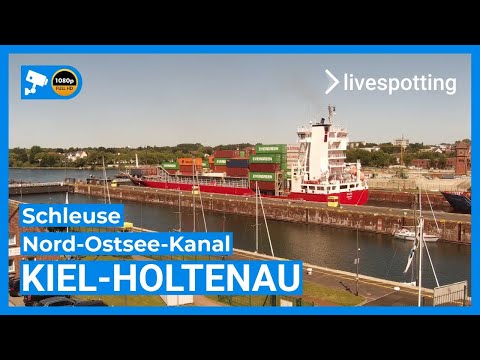
Kiel Canal : locks
Germany · livespotting · 24/7

Welland Canal
Canada · StreamTime · 24/7
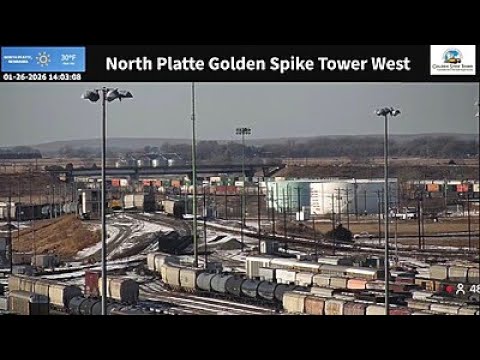
Bailey Yard : railyard
Nebraska, USA · Steel Highway · 24/7
Live Penguin and Seabird Cams: African Penguins, Royal Albatross and New Zealand Penguin Colonies
Penguins and seabirds spend most of their lives at sea, which makes their colonies some of the best places to study them. At Stony Point in South Africa, CapeNature's colony is the third largest breeding colony of African penguins in the world. In New Zealand, the Department of Conservation's Royal Cam follows a northern royal albatross nest at Pukekura/Taiaroa Head; the Ōamaru colony shows little penguins coming ashore at dusk; the Ngamotu Marine Society in Taranaki microchips every nesting kororā so each bird is known individually; and a solar-powered research camera on remote, sub-Antarctic Antipodes Island watches erect-crested penguins.
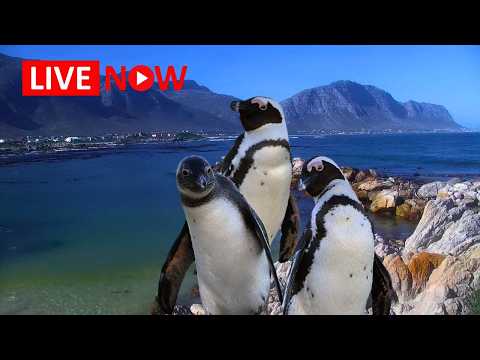
Stony Point : penguins
South Africa · Africam · 24/7
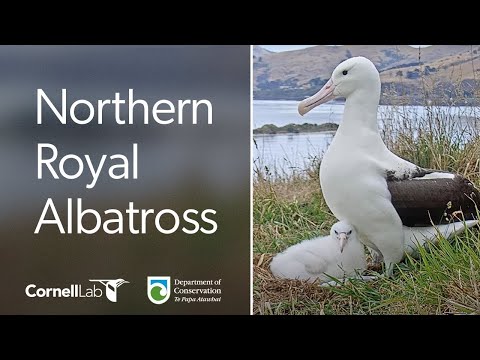
Royal Cam : albatross
New Zealand · DOC · seasonal
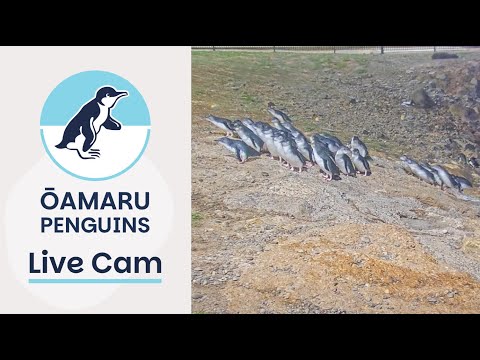
Ōamaru : penguins
New Zealand · Ōamaru · 24/7
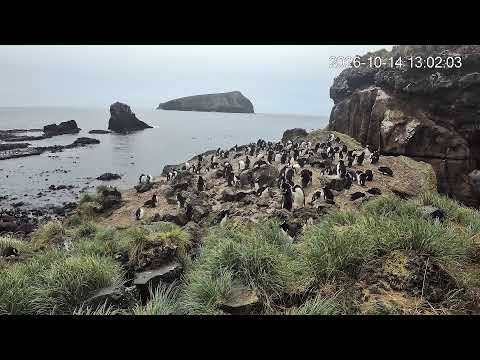
Antipodes : penguins
New Zealand · TawakiCam · beta
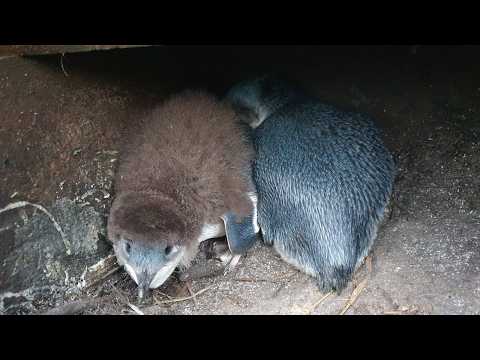
Taranaki : penguin nest
New Zealand · Ngamotu · 24/7
Live Sky Cameras: Northern Lights over Alaska and Night Skies above Maunakea, Kiso and the Atacama Desert
The aurora borealis over Fairbanks, Alaska is produced when electrically charged particles from the Sun are funnelled by Earth's magnetic field towards the poles and collide with gases in the upper atmosphere: oxygen around 100 kilometres up glows green, oxygen at around 320 kilometres glows red, and nitrogen adds blue and purple. There is always some aurora somewhere on Earth, but it can only be seen against a dark, mostly clear sky, which is why the long nights from autumn to early spring are the time to watch. On the summit of Maunakea in Hawaii, the Subaru Telescope of the National Astronomical Observatory of Japan uses an 8.2 metre mirror on a peak that rises above most of the weather, where the air pressure is only two thirds of that at sea level. In northern Chile, the Atacama Large Millimeter/submillimeter Array links 66 precision antennas at 5,000 metres on the Chajnantor Plateau into a single telescope, and passed 5,000 published scientific papers in July 2026. In Japan, a night camera at the University of Tokyo's Kiso Observatory shares the sky above the site where, in 2026, astronomers helped find a thin atmosphere around the distant object 2002 XV93, the first seen on an object beyond Neptune other than Pluto. In New Mexico, the Karl G. Jansky Very Large Array links 27 working dish antennas, each 25 metres across, into a single radio telescope.
Maunakea : night sky
Hawaii, USA · Asahi Astro · 24/7
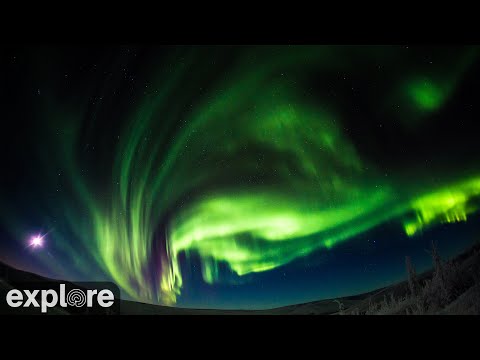
Fairbanks : aurora cam
Alaska, USA · EXPLORE.org · 24/7
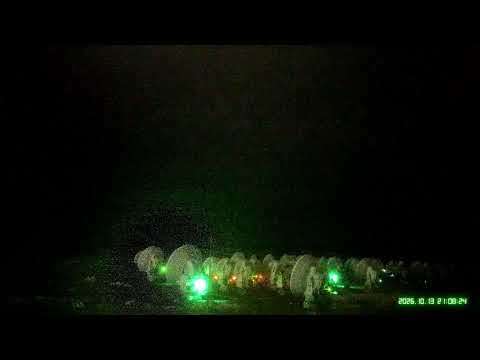
ALMA : Atacama
Chile · Asahi Astro · 24/7
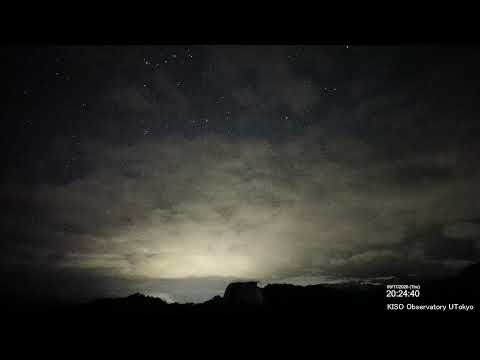
Kiso : night sky
Japan · Asahi Astro · 24/7
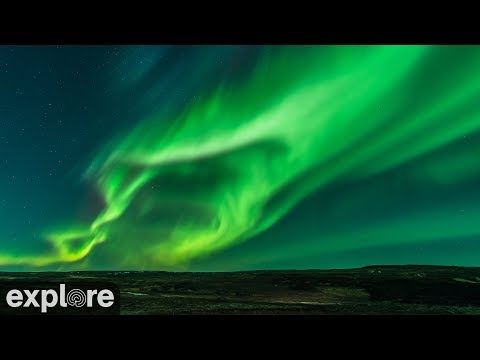
Churchill : aurora
Canada · EXPLORE.org · 24/7
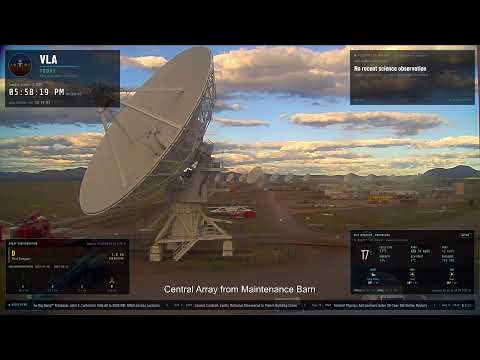
VLA : radio telescope
New Mexico, USA · VLA · 24/7
Live Polar Cameras: Greenland Icebergs and Hudson Bay Polar Bears
Off Ilulissat in Greenland, icebergs from Sermeq Kujalleq, described by the icefjord's official site as the world's fastest glacier, drift past the camera on their way out of the Ilulissat Icefjord, a UNESCO World Heritage Site since 2004. On the Hudson Bay coast of Manitoba, the Cape Churchill camera in Wapusk National Park watches polar bears waiting for the sea ice to form so they can hunt seals. Parks Canada reports that the ice-free season in western Hudson Bay has lengthened by nearly a month since the 1980s, giving the bears less time to hunt ice-breeding seals and build the fat reserves they need to survive. Wapusk also protects one of the largest polar bear maternity denning areas in the world.

Ilulissat : icebergs
Greenland · afarTV · 24/7
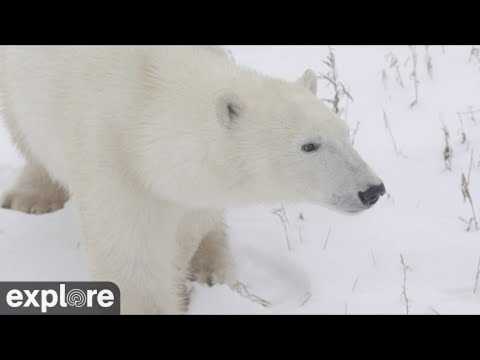
Wapusk : polar bears
Canada · EXPLORE.org · Oct-Nov
Live Weather and Climate Cameras: University Sky Cameras and Vietnam's Floating Flood Village
Weather cameras turn the sky into a live laboratory. At the University of North Dakota, the Department of Atmospheric Sciences runs sky cameras on Clifford Hall in Grand Forks, looking out over the flat Red River Valley where weather systems cross the northern plains. In Vietnam, Tân Hoá village in Quảng Trị province floods for days when heavy rain falls, usually around October, and villagers have adapted by building floating houses that rise with the water: a live example of people adapting to extreme weather.
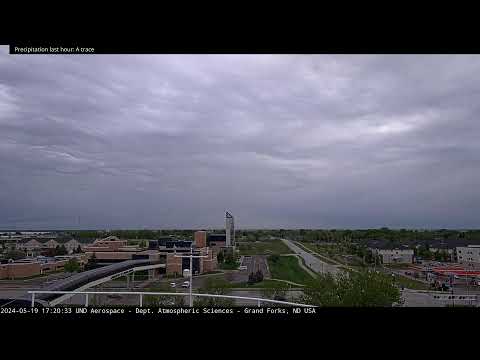
UND skycam
North Dakota, USA · UND · 24/7
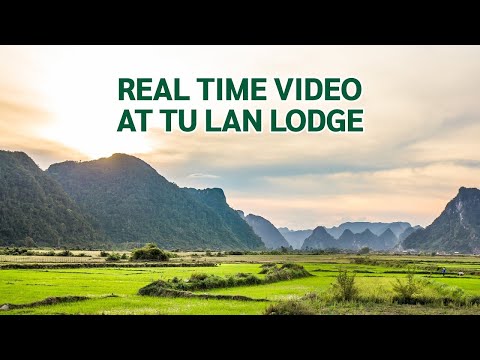
Tân Hoá : flood village
Vietnam · Oxalis · 24/7
Live Small Worlds Cameras: Inside Honey Bee Hives and a Baby Turtle Head Start
Small animals run on rules just as fascinating as large ones. Cameras inside honey bee colonies in Buchloe, Germany and Coweta County, Georgia show workers crowded over the wax comb where the colony raises its young and stores its food; the Georgia apiary even has its own weather station so hive activity can be compared with the weather. At ECHO, Leahy Center for Lake Champlain in Vermont, a head start programme with Vermont Fish and Wildlife raises young spiny softshell and northern map turtles over the winter before returning them to the lake.
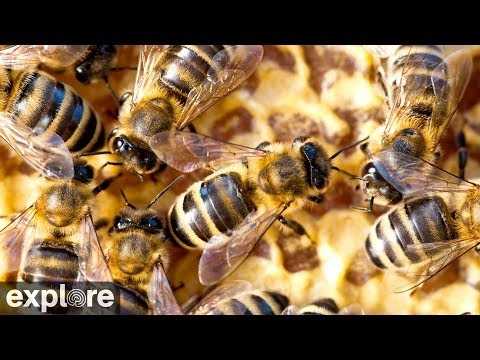
Buchloe : bee hive
Germany · EXPLORE.org · 24/7
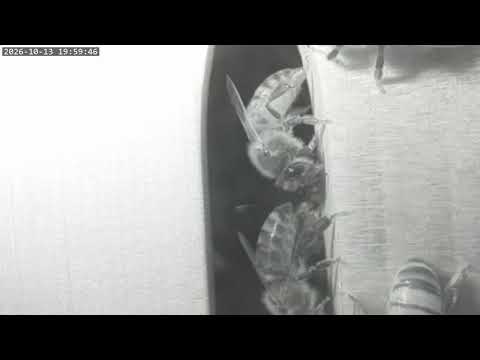
Georgia : bee hive
Georgia, USA · Turin Farm · 24/7
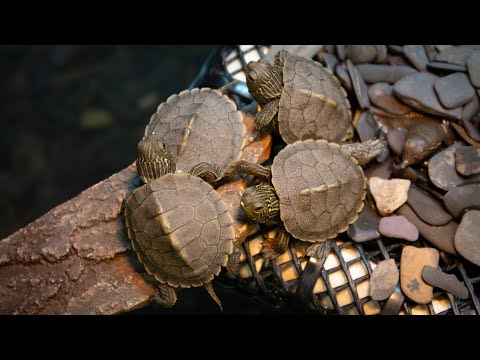
ECHO : baby turtles
Vermont, USA · ECHO · 24/7
Live stream offline at the moment
We broadcast Bill Nye season streams, NASA events, science news and special live programming. Subscribe so you never miss a broadcast, and while you wait, browse the live science streams above.
Scheduled Live Science Streams: Deep Ocean Hydrothermal Vents and Amazon Rainforest Cameras
Some of the most scientifically significant environments on Earth are accessible only through scheduled or intermittent live streams. The Ocean Observatories Initiative hydrothermal vent camera at Axial Seamount streams from the ASHES vent field, 1.5 kilometres beneath the North Pacific and 400 kilometres off the Oregon coast. Hydrothermal vents were first discovered in 1977 during a Galapagos Rift expedition and immediately rewrote the boundaries of biology, demonstrating that entire ecosystems could be powered by chemosynthesis rather than photosynthesis, sustained by the chemical energy of superheated mineral-rich water rather than sunlight. The tube worms, bacterial mats and specialised crustaceans visible around the Mushroom chimney at 260 degrees Celsius represent life in conditions once thought impossible, and have profoundly shaped the search for life on ocean moons such as Europa and Enceladus. The Amazon rainforest camera at the Junglekeepers Reserve in the Las Piedras watershed, southeastern Peru, documents one of the most biodiverse regions on the planet. The Amazon basin contains an estimated 10 percent of all species on Earth, produces approximately 20 percent of the world's freshwater river discharge and cycles around 20 billion tonnes of water vapour into the atmosphere each day through transpiration, making it a critical regulator of both regional and global climate.
Hydrothermal vent : Axial Seamount
Live HD footage from the Mushroom chimney, 1.6km (1 mile) underwater and 400km (250 miles) off the Oregon coast. Superheated fluid at 260°C, tube worms and bacterial mats. Streams every 3 hours for 14 minutes. Operated by the Ocean Observatories Initiative and University of Washington.
Amazon : Madre de Dios, Peru
Live camera inside the Junglekeepers Reserve beside an oxbow lake in the Las Piedras watershed, southeastern Peru. One of the most biodiverse regions on Earth, home to jaguar, giant river otters, macaws and hundreds of species of primates, reptiles and amphibians. Active during daylight hours only.
Know any interesting science webcams?
If you've found a live science webcam that belongs here, a volcano, wildlife camera, space feed, underwater cam or anything else genuinely interesting, we'd love to hear about it.