
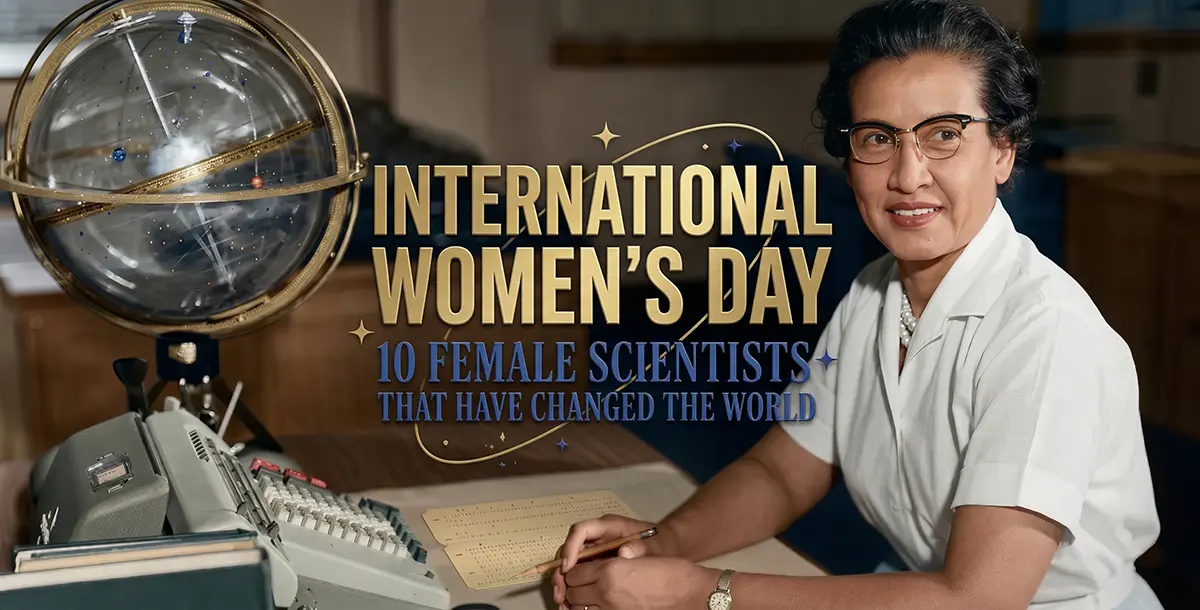
The Invisible Architects: 10 Female Scientists Who Changed The World
History books often focus on sudden moments of genius. They usually celebrate the men who won the big academic prizes. However, they frequently leave out the brilliant people who actually measured the invisible forces of our universe. Why is that so?
It takes far more than a bright idea to change the world. A scientific revolution requires raw data. It requires grueling physical labor. It requires complex math. Historically, much of this tedious foundational work was assigned to human computers and laboratory assistants. These roles were often filled by women. They were denied official academic titles. They were frequently locked out of top universities.
Today is International Women’s Day. We are looking at ten brilliant scientists who fought through those massive institutional barriers. They actively developed the experimental methods that power our current world. They supplied the exact primary data that built modern physics and biology.
So, how did they actually do it? Let us examine these famous female scientists and the precise mechanics of their world-changing discoveries.
1. Rosalind Franklin: The Secret of Life (1920–1958)
How do you map the exact structure of a molecule you cannot even see? In the early 1950s, the physical shape of DNA was a massive mystery. Multiple teams of scientists were racing to figure it out. They knew it carried genetic information. But nobody knew how the atoms were actually arranged.
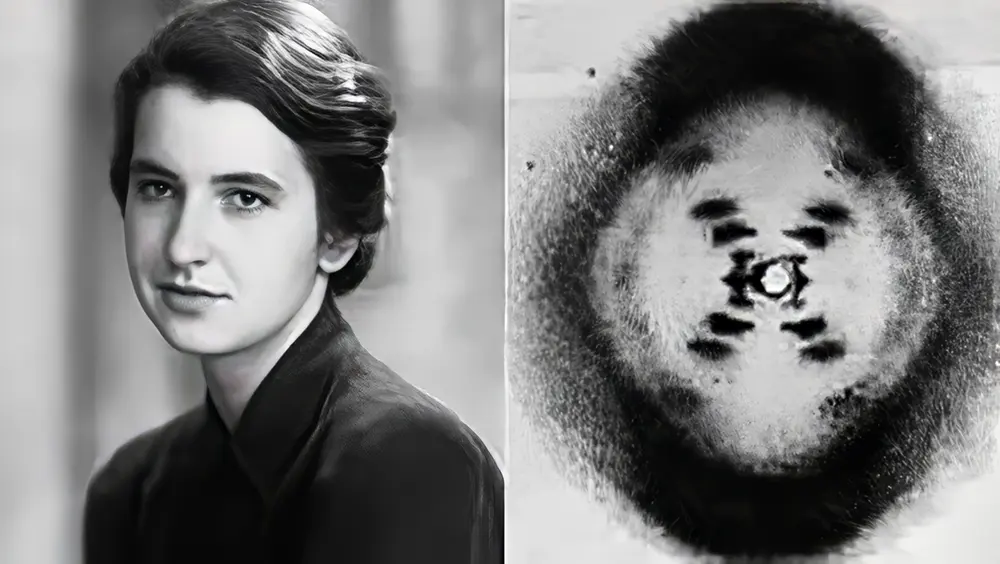
Rosalind Franklin captured the precise physical measurements of the double helix. Credit: King’s College London. Digital restoration by Seriously Scientific.
Rosalind Franklin faced extreme hostility while trying to solve this puzzle. She worked at King’s College in London. The environment was incredibly sexist. Her male colleague Maurice Wilkins treated her like a junior assistant. He repeatedly undermined her authority in the laboratory.
Despite this, Franklin mastered a highly complex technique called X-ray crystallography.1Franklin, R., & Gosling, R. G. (1953). Molecular Configuration in Sodium Thymonucleate. Nature. https://www.nature.com/articles/171740a0 She carefully maintained the exact humidity in her laboratory. This kept the tiny DNA fibers plump and readable. She then fired X-ray beams at the fibers for hundreds of hours. The beams bounced off the atoms and hit photographic paper.
Think of it like shining a powerful laser through a fine mesh curtain. You cannot see the threads directly. But the laser creates a distinct shadow pattern on the wall. Her famous Photograph 51 showed a clear X shape. It provided the exact mathematical dimensions of the double helix. Today, her data is the foundation of modern gene editing.
2. Marie Curie: The Unstable Atom (1867–1934)
Where does strange energy come from? In the late 1800s, the smartest minds in physics thought atoms were solid. They believed atoms were unbreakable blocks of matter that never changed. Then, mysterious rays were discovered coming from uranium.
Marie Curie wanted to investigate these strange rays. She faced a massive physical barrier. She was forced to work in a freezing, leaky shed in Paris. The academic establishment initially refused to nominate her for the Nobel Prize. They only included her after her husband aggressively complained to the committee.
She hypothesized that this radiation was an atomic property.2Curie, M. (1903). Recherches sur les substances radioactives. Sorbonne University Archives. https://gallica.bnf.fr/ To prove this, she performed backbreaking physical labor. She boiled down tons of toxic black dirt called pitchblende. She stirred vats of boiling acid with a heavy iron rod. She used a delicate electrometer to measure faint electrical currents in the air. She event
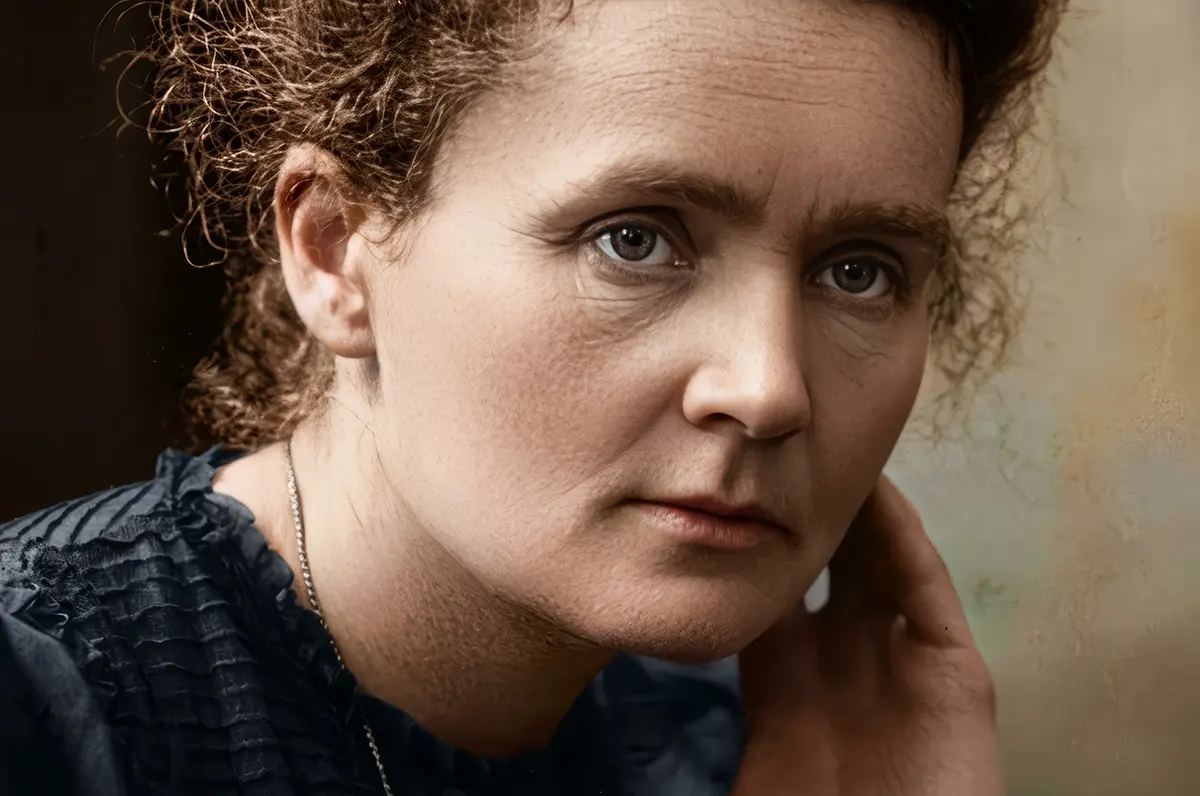
The iconic gaze of Marie Curie, the only person to ever win a Nobel Prize in two different scientific fields. Original photograph by Henri Manuel. Digital colorization by Seriously Scientific.
ually extracted a tiny speck of pure radium.
Imagine a giant bucket filled with popcorn kernels. Suddenly, they start popping completely on their own. They release bursts of heat and energy into the air. Curie realized that atoms were literally breaking apart from the inside. Her grueling work laid the exact foundation for modern cancer radiation therapy.
3. Chien-Shiung Wu: Breaking the Mirror (1912–1997)
Does the universe have a preferred direction? For decades, top physicists believed in a fundamental law called parity conservation. This strict rule stated that nature does not prefer right over left. Any physics experiment should work exactly the same way if you flip it inside a mirror.
Chien-Shiung Wu suspected this sacred rule was completely f
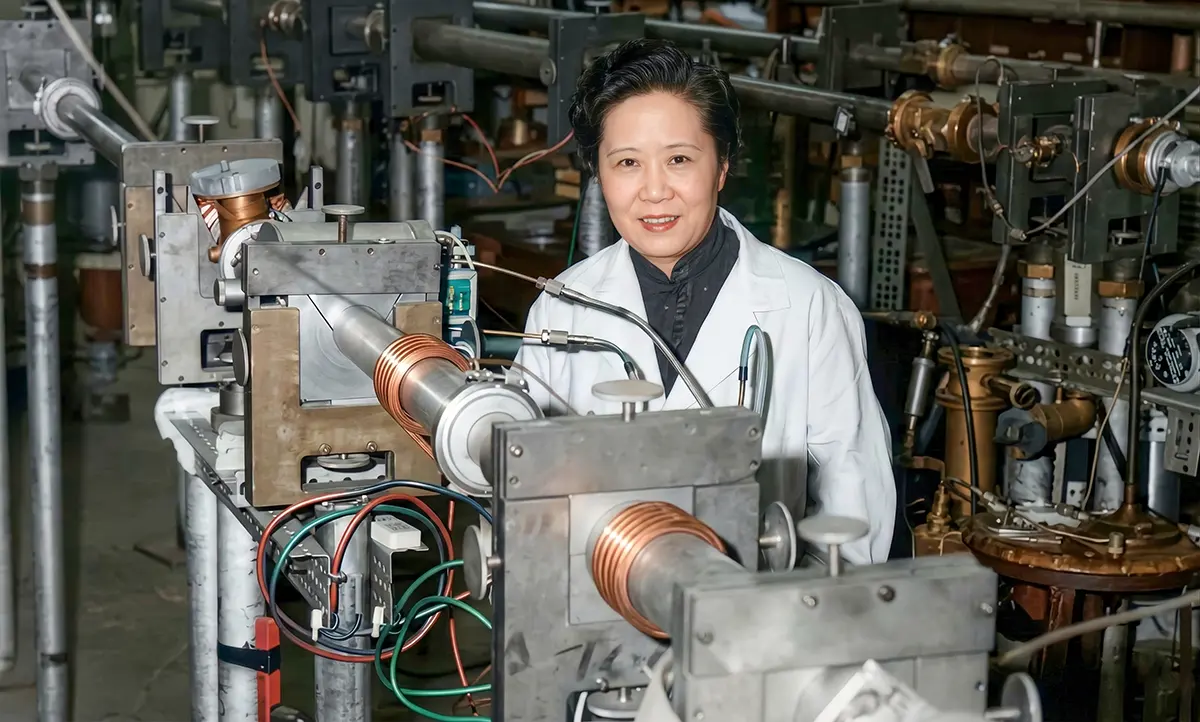
Experimental physicist Dr. Chien-Shiung Wu, known for her groundbreaking work proving parity violation. Original photograph courtesy of the Smithsonian Institution Archives. Digital restoration and colorization by Seriously Scientific.
ake. She was a brilliant experimental physicist. However, she faced severe gender discrimination. When she finally proved the theory wrong, the two male theorists who suggested the idea won the Nobel Prize. Dr. Wu was entirely excluded from the award.
To test the theory, she built a spectacularly complex experiment.3Wu, C. S., et al. (1957). Experimental Test of Parity Conservation in Beta Decay. Physical Review. https://journals.aps.org/pr/abstract/10.1103/PhysRev.105.1413 She used liquid gases to chill radioactive Cobalt-60 atoms down to near absolute zero. This extreme cold stopped the atoms from jiggling. She then aligned their spins using a powerful magnetic field. She carefully counted the direction of the emitted electrons as the atoms decayed.
Amazingly, the atoms shot out electrons in one specific direction much more often. It was exactly like watching a mirror-image clock where the hands suddenly decide to spin backward. She broke a fundamental law of quantum mechanics. She proved that the weak nuclear force is actually left-handed.
4. Katherine Johnson: Mapping the Stars (1918–2020)
How do you calculate a safe path to the moon without crashing? You cannot just point a rocket upward and press a launch button. The Earth is spinning rapidly. The moon is constantly moving. You have to predict exactly where a tiny target will be days into the future.
Katherine Johnson was a brilliant mathematician who worked as a human computer. She faced intense racial segregation and gender bias at NASA. She had to fight relentlessly just to attend the vital editorial meetings. She demanded to be in the room where flight trajectories were decided.
She mastered highly complex orbital mechanics.4Johnson, K. G. (1960). Determination of Azimuth Angle at Burnout for Placing a Satellite over a Selected Earth Position. NASA Technical Memorandum D-233. https://ntrs.nasa.gov/ She calculated massive parabolic equations entirel
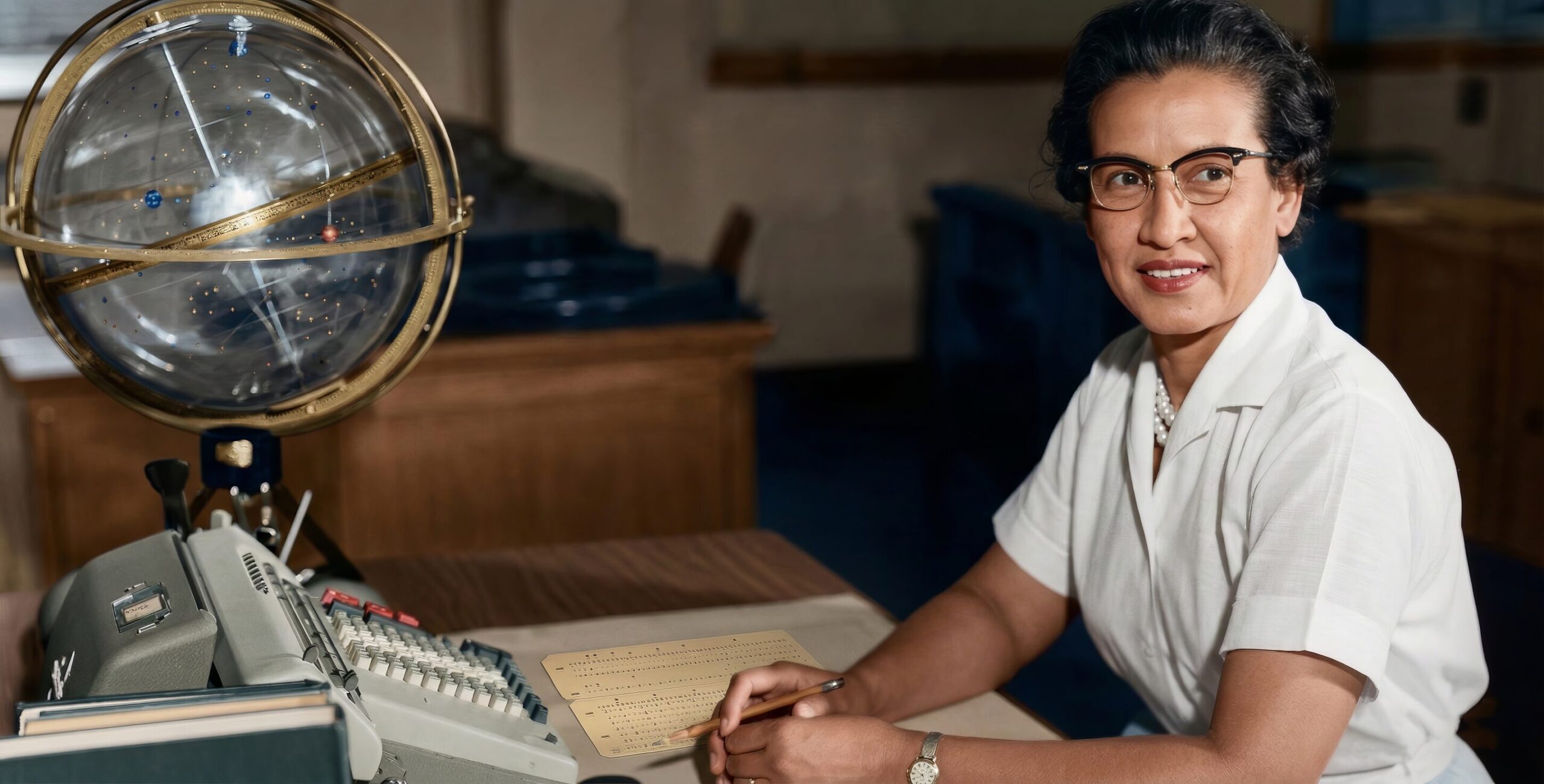
NASA mathematician Katherine Johnson, the “human computer” who calculated the trajectory for the first Americans in space. Original image courtesy of NASA; digital restoration and colorization by Seriously Scientific.
y by hand using geometry and calculus. She mapped out the exact launch windows and precise splashdown zones for the Mercury missions. She accounted for the rotation of the Earth and the pull of gravity.
Throwing a baseball across a park creates a simple arc. To send an astronaut into space, you essentially throw a metal capsule so fast that its downward curve perfectly matches the falling edge of the Earth. Her handwritten math was so flawless that astronaut John Glenn refused to launch until she personally verified the computer data.
5. Mary Anning: Monsters in the Stone (1799–1847)
Did massive monsters once rule the oceans? In the early 1800s, scientists firmly believed that animal species could never go extinct. They thought the world was perfectly static. The concept that a creature could completely vanish from the Earth did not exist.
Mary Anning changed that entire worldview using a simple hammer and a chisel. She lived in extreme poverty. She scoured the dangerous, crumbling cliffs of Lyme Regis in England to find shells to sell. Because she was a working-class woman, the male-only Ge
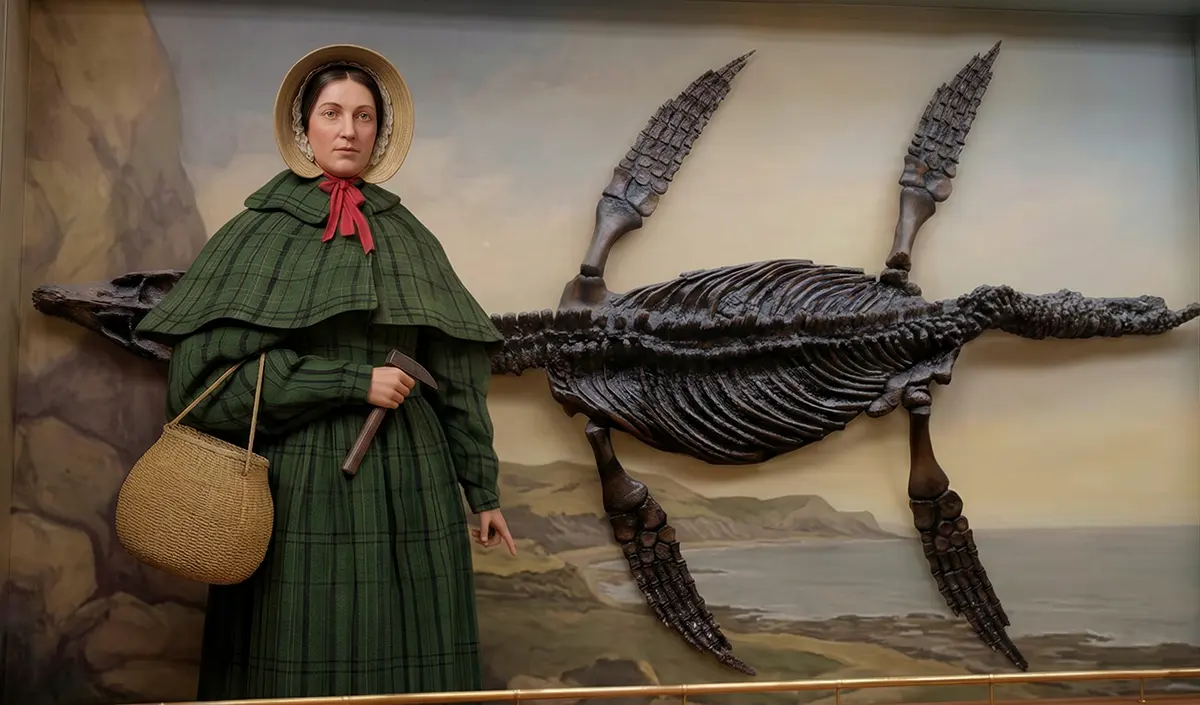
A creative composite of the 1842 portrait of Mary Anning and the massive Ichthyosaurus skeleton she discovered. Digital composition by Seriously Scientific.
ological Society of London absolutely refused to admit her.
She spent her life digging through freezing rain.5Torrens, H. (1995). Mary Anning of Lyme Regis. British Journal for the History of Science. https://www.cambridge.org/core/journals/british-journal-for-the-history-of-science She carefully extracted fragile bones from heavy shale using tiny picks and brushes. She had to piece together fragmented skeletons of creatures nobody had ever seen before. She eventually uncovered the very first complete skeletons of terrifying marine reptiles like the Ichthyosaurus.
Her work was exactly like piecing together a massive jigsaw puzzle without looking at the picture on the box. She provided the raw, undeniable fossil evidence that forced geologists to accept extinction. She essentially founded the modern science of paleontology.
6. Ada Lovelace: The First Programmer (1815–1852)
How do you write a software program for a computer that does not actually exist? In the 1840s, a man named Charles Babbage designed blueprints for a giant mechanical calculator. He called it the Analytical Engine. He never actually built the machine.
Ada Lovelace faced a society that believed women were too fragile for intense mathematical study. She ignored them and studied Babbage’s theoretical blueprints intently. She was asked to simply translate a
French article about his machine. Instead, she added her own massive notes that were three times longer than the original text.
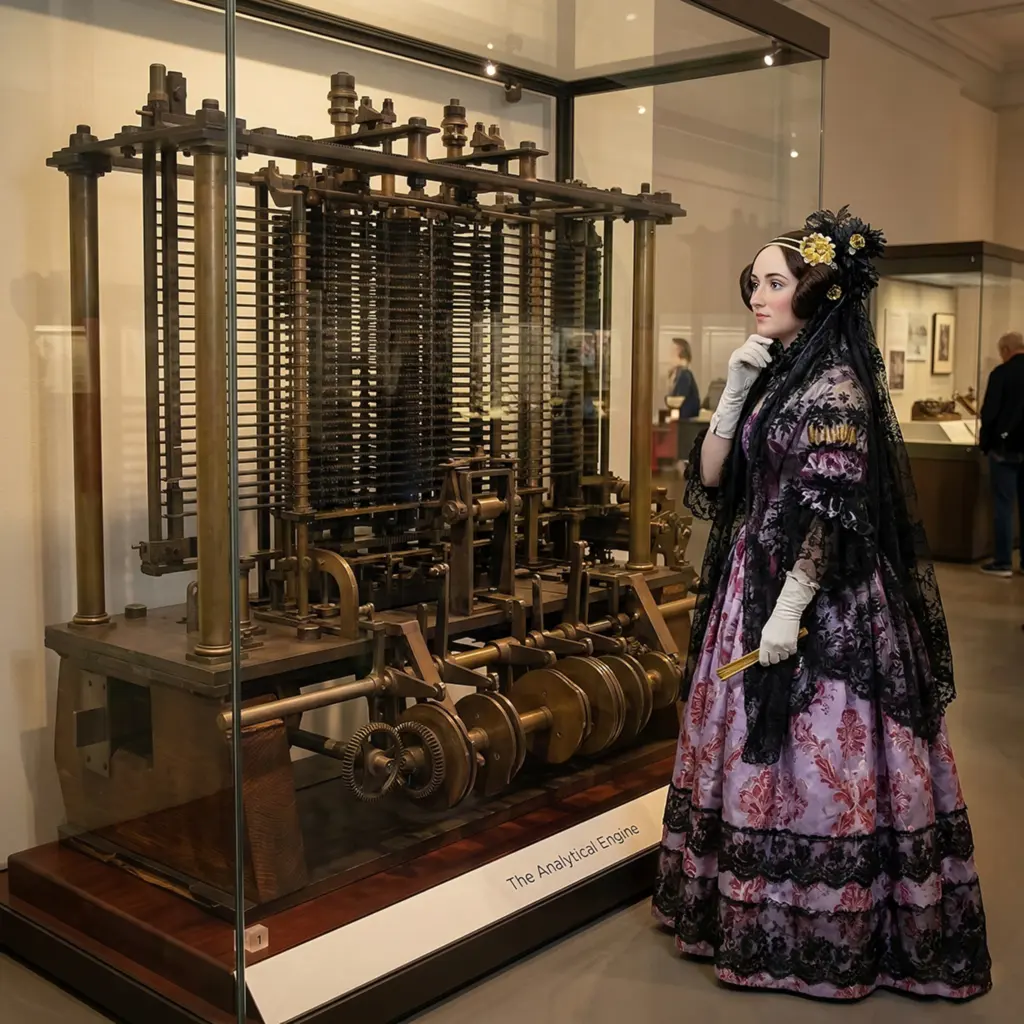
A visualization of Ada Lovelace, the first programmer, predicting the future of computing using mechanical gears. Render and composite by Seriously Scientific.
She wrote a highly detailed section called Note G.6Menabrea, L. F., & Lovelace, A. (1843). Sketch of the Analytical Engine. Scientific Memoirs. https://www.fourmilab.ch/babbage/sketch.html This document detailed a complex step-by-step mathematical algorithm. It was designed to calculate a sequence of Bernoulli numbers using the theoretical punch cards of the engine. She mapped out exactly how the mechanical gears would process the logic.
She realized that if you assigned numbers to letters or musical notes, the machine could process complex language. It was exactly like writing a perfect recipe for a magical oven that had not been built yet. She successfully predicted the modern digital age a full century before it arrived.
7. Alice Ball: The Chemical Cure (1892–1916)
How do you cure a disease when the medicine is too thick to use? For centuries, leprosy was a highly terrifying disease. Doctors tried treating patients using a thick oil extracted from the chaulmoogra tree. The raw oil kind of worked, but it was too thick to inject safely. It just sat under the skin like a painful lump.

Alice Ball with classmates Yakichi Kutsunai and Tomoso Imai in their 1915 graduation portrait. Digital restoration and colorization by Seriously Scientific.
Alice Ball was a brilliant twenty-three-year-old chemist. She was the first woman and first African American to earn a Master of Science from the College of Hawaii. In 1915, she solved a centuries-old medical crisis by developing a rigorous chemical process to isolate ethyl esters from chaulmoogra oil, creating the world’s first injectable leprosy treatment.
Tragically, Alice Ball died in 1916 at age twenty-four. Following her death, university president Arthur L. Dean claimed her findings as his own. In 1920, Dean published her research under his name, branding it the “Dean Method.”7McDonald, J. T., & Dean, A. L. (1920). The Treatment of Leprosy. Public Health Reports. https://doi.org/10.2307/4575690 This led to international press coverage, including a 1921 New York Times report that hailed Dean as the pioneer while completely erasing Ball from history.
It was not until 1922 that her colleague, Dr. Harry T. Hollmann, published a direct rebuttal. He officially coined her technique the “Ball Method” and publicly stated that Dean had made no improvements to her original work.8Hollmann, H. T. (1922). The Fatty Acids of Chaulmoogra Oil. Archives of Dermatology and Syphilology. https://doi.org/10.1001/archderm.1922.02350260097010 Thanks to this intervention, Alice Ball is now recognized as the true architect of the first viable treatment for leprosy, a chemical miracle that saved thousands of lives.
8. Janaki Ammal: Engineering a Super Crop (1897–1984)
How do you make a weak crop strong enough to feed millions of people? Sugarcane is absolutely vital to the global economy. However, native Indian sugarcane in the early 1900s was very weak. It yielded very little sugar and died easily in harsh weather.
Janaki Ammal focused

Janaki Ammal (1897–1984), the cytogeneticist who transformed global agriculture. Digital restoration and colorization by Seriously Scientific.
her life on solving this agricultural crisis. She faced extreme caste discrimination and severe gender bias in colonial India. Despite these massive social barriers, she became a leading expert in cytogenetics. This is the highly complex study of chromosomes inside living plant cells.
She did not just randomly guess which plants to breed together.9Darlington, C. D., & Ammal, E. K. J. (1945). Chromosome Atlas of Cultivated Plants. George Allen & Unwin Ltd. https://archive.org/details/chromosomeatlaso00darl She carefully mapped their genetic structures under a microscope. She counted the exact number of chromosomes. She then performed complex intergeneric crosses. She hybridized the sweet sugarcane with completely different wild grasses like bamboo to increase its strength.
It was exactly like taking the heavy engine of a rugged military truck and dropping it into a sleek sports car. She created a robust, sweet hybrid crop that could survive disease and drought. Her precise genetic mapping secured the food supply for millions.
9. Dorothy Hodgkin: Mapping the Medicine (1910–1994)
How do you mass-produce a medicine if you do not know its shape? Doctors knew that penicillin could kill dangerous bacteria. But nobody knew exactly what a single penicillin molecule actually looked like. If you do not know the precise three-dimensional shape of a chemical drug, you cannot synthesize it in a laboratory.
Dorothy Hodgkin spent years trying to solve this massive puzzle. She faced incredible physical hardship. She had to perform millions of mathematical calculations by hand. She did all of this while suffering from severe, crippling rheumatoid arthritis that painfully twisted her hands.
She used X-ray crystallography to map the medicine.10Crowfoot, D., et al. (1949). The X-ray Crystallographic Investigation of the Structure of Penicillin. The Chemistry of Penicillin. https://archive.org/ She grew pure crystals of penicillin. She bounced X-rays off the crystal lattice. She then cal
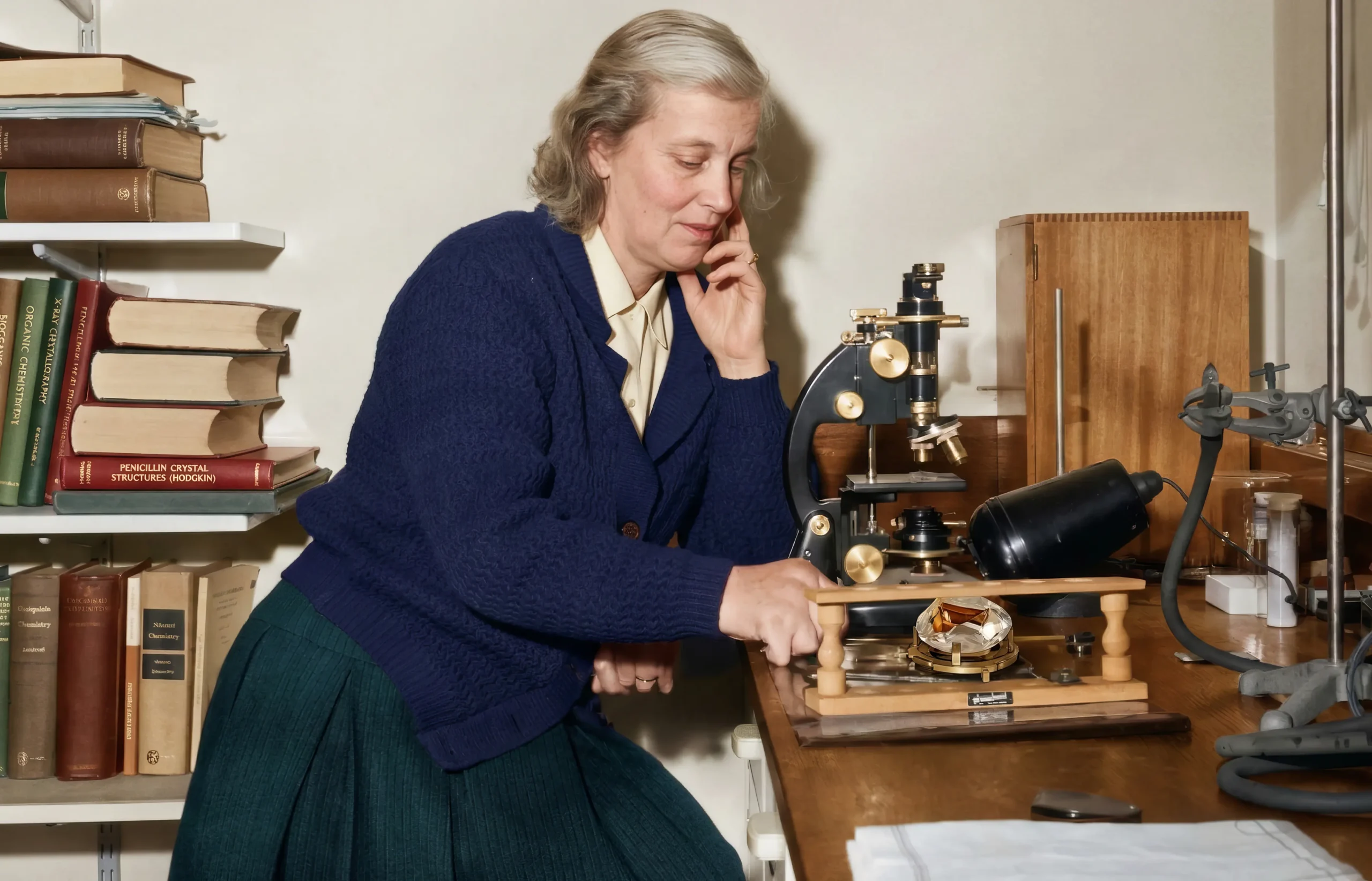
Nobel Prize-winning chemist Dorothy Hodgkin in 1964. Original image courtesy of Britannica; restoration and colorization by Seriously Scientific.
culated massive electron density maps to locate the exact position of all seventeen atoms. She confirmed the existence of a crucial beta-lactam ring.
Think of her incredible work like drawing a highly detailed street map of a massive, completely invisible city. Her precise structural map finally allowed pharmaceutical companies to mass-produce the antibiotics. Her data directly saves millions of lives today.
10. Barbara McClintock: The Jumping Genes (1902–1992)
Do genes stay in one place forever? Biologists used to firmly believe that human genes were permanently fixed in place. They thought your DNA was absolutely static. They believed it was exactly like a printed book where the words could never move.
Barbara McClintock knew this was completely wrong. She studied the complex genetics of maize crops. The male-dominated scientific community completely ignored and mocked her groundbreaking data for over twenty years. They thought her ideas were ridiculous.
She carefully tracked the u
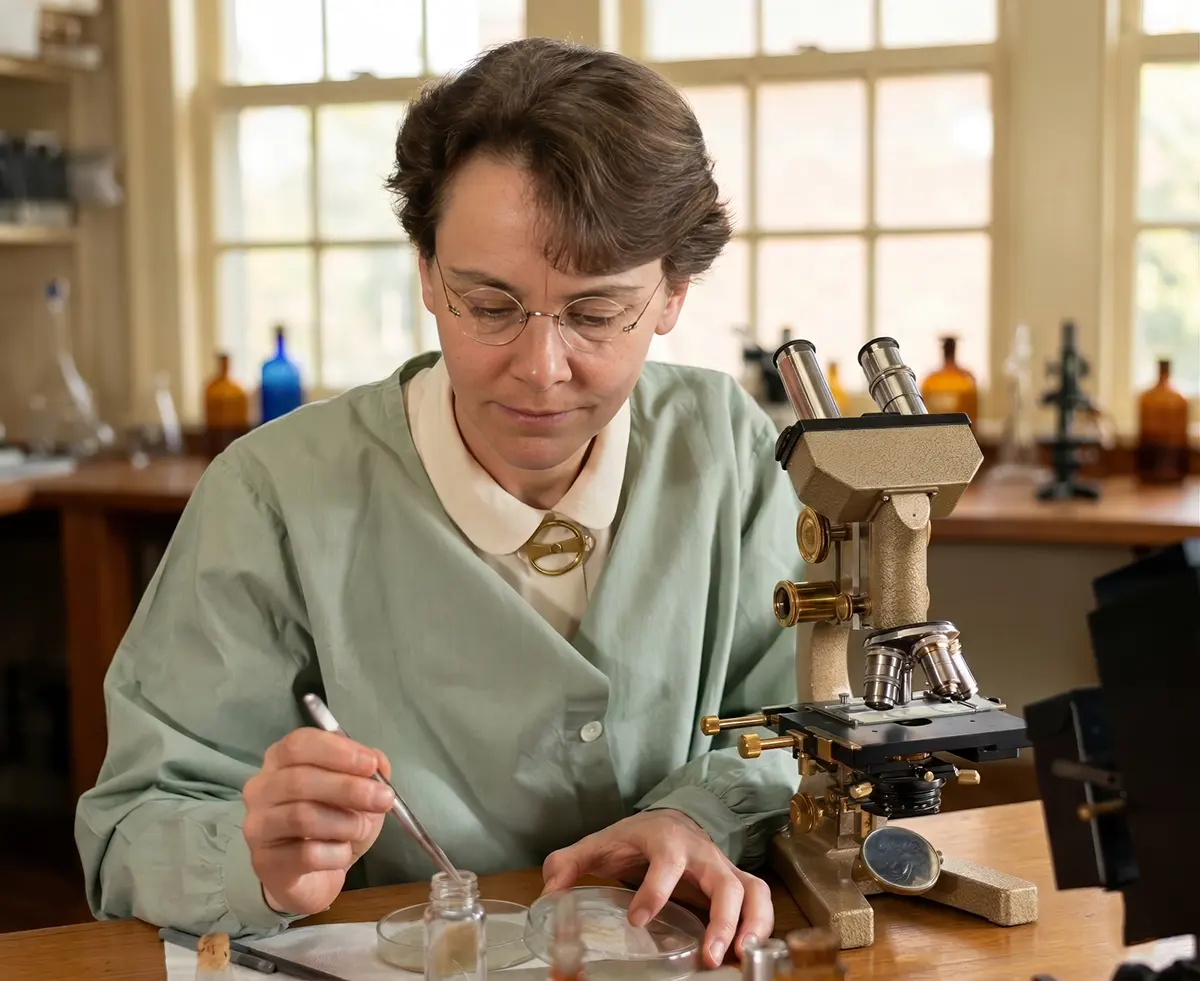
Geneticist Barbara McClintock in her lab around 1947. Based on the original photograph distributed by the Smithsonian Institution Archives. This image is a digital composite by Seriously Scientific that expands her historical environment with newly added, illustrative scientific context.
npredictable color patterns in corn kernels across many generations.11McClintock, B. (1950). The origin and behavior of mutable loci in maize. Proceedings of the National Academy of Sciences. https://www.pnas.org/doi/10.1073/pnas.36.6.344 She examined the chromosomes under a microscope. She discovered that certain genetic elements could literally cut themselves out of the DNA strand. They would then paste themselves into completely new locations on the chromosome.
It is exactly like walking into a magical library where chapters tear themselves out and fly into entirely different books. She called this process genetic transposition. She proved that the genome is a highly dynamic, changing system. She eventually won a Nobel Prize for her persistence.
The Power of the Primary Data
So, why does this deep history actually matter to us right now? These ten brilliant scientists did not merely publish interesting academic theories. They actively built the highly technical tools we still use every single day.
When scientists use CRISPR tools to edit human DNA, they rely on the foundational data of McClintock and Franklin. When NASA programs the flight path for the new Artemis moon missions, they use the orbital math pioneered by Johnson. When we use massive artificial intelligence systems, we are running software concepts predicted by Lovelace.
They fought through massive prejudice to measure the real world. They are the true invisible architects of our modern reality. Let us celebrate their actual science today.







While we’ve highlighted 10 incredible women today, their stories represent thousands more who fought for discovery. Science is a collaborative journey, and the list of pioneers is far longer than one article can hold.
We want to hear from you: Which other female scientists have shaped your world? Let’s keep the conversation going in the comments below! 🏛️🧪