
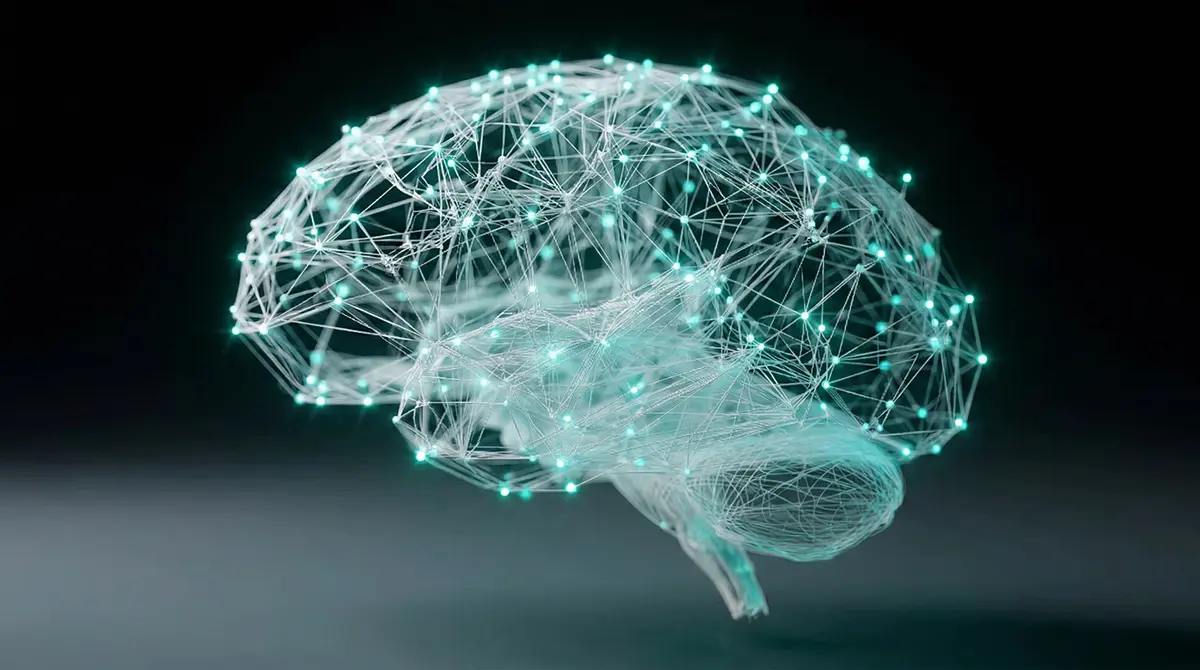
Have you ever wondered why you feel like just one person? Inside your skull, there are 86 billion separate nerve cells. They are all firing electrical signals at the same time. It should be a chaotic mess. It should feel like a stadium where everyone is shouting different things at once. Yet, your mind feels like a single unit. You can walk, talk, and solve a math problem all at once. Your brain never seems to glitch or lose track of itself. This is the great mystery of neuroscience. How do all these separate parts create one single experience?
For over a hundred years, scientists looked for a “boss” region in the brain. They thought there must be a command center. They looked for a specific spot where intelligence lives. But a massive new study from the University of Notre Dame has changed everything. They found that intelligence does not live in one spot. Instead, it is a whole-brain event. It is like a Global Symphony where every part of the brain plays a role in the harmony. The study suggests that your intelligence comes from how well your brain communicates with itself as one big system.
The History of the Wires
To understand this discovery, we have to look back at how we used to think about the mind. In the early 1900s, scientists focused heavily on the gray matter. This is the outer layer of the brain where the thinking happens. They looked at the size of the frontal lobes. They looked at how many neurons someone had. But they were missing half the story. They were looking at the light bulbs but ignoring the wires. This new research by Ramsey Wilcox and Aron Barbey shifts the focus to the wires.
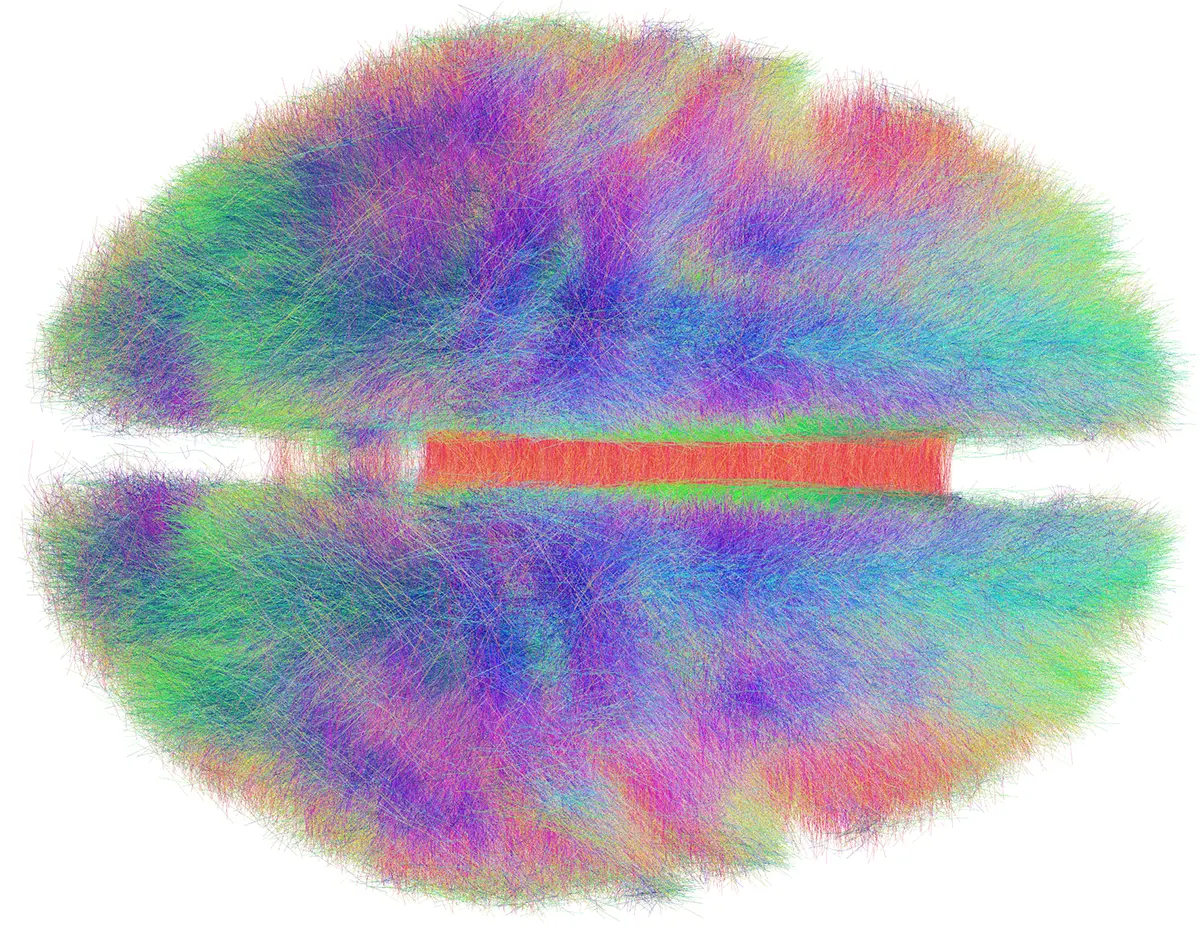
The Global Symphony in high definition. This fiber map shows the thousands of pathways that researchers analyzed to understand intelligence. Credit: Wikimedia Commons / Andreashorn.
This is what we call the Human Connectome. It is the total map of every physical highway that connects one part of your brain to another. Mapping the connectome is one of the hardest jobs in science. Imagine trying to map every single road, alley, and footpath on Earth at the same time. That is what scientists are doing with the brain. They use powerful MRI scans to see the white matter fibers. By seeing where these cables go, they can finally see the Global Symphony in action. This study used the largest datasets ever created to see how this network creates intelligence. 1Wilcox, R.R., Hemmatian, B., Varshney, L.R., & Barbey, A.K. (2026). The network architecture of general intelligence in the human connectome. Nature Communications. https://doi.org/10.1038/s41467-026-68698-5
The Secret of the Shortcuts
The team used Network Neuroscience to solve the mystery. To understand how the brain works, think about a small town. In a small town, most people only talk to their neighbors. This is great for local business. But what if you want to know what is happening in a city across the ocean? If you only talk to neighbors, the news will take forever to travel. Your brain has the same problem. Most of your brain cells only talk to the cells right next to them. This helps the brain process things like sight or sound in specialized neighborhoods.
The Notre Dame study found something special in highly intelligent brains. These brains have “weak ties.” These are long-range fibers that jump across the brain like international flight paths. They connect distant neighborhoods together. This is called Small-World architecture. You can see this in the circular diagram below. The lines jumping across the middle are the shortcuts that connect one side of the brain to the other instantly.
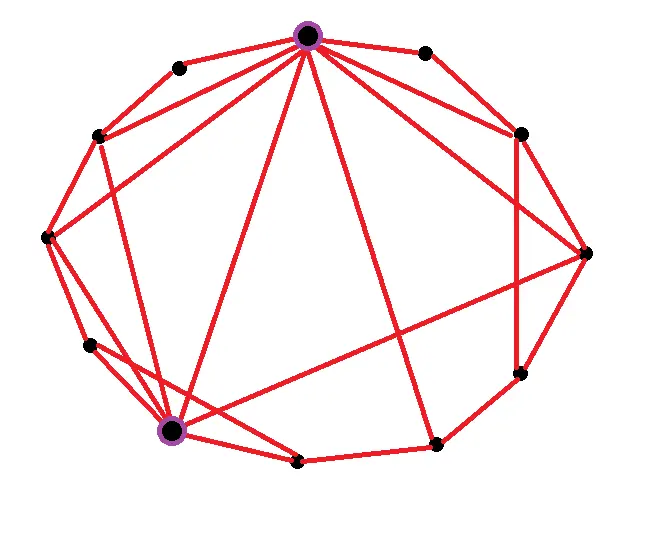
The secret to speed! Adding just a few long-range “shortcuts” to a local network allows information to travel across the entire system in record time. Credit: Wikipedia / Watts-Strogatz Model.
You might have heard of “six degrees of separation.” That is the idea that everyone in the world is connected by just six people. Your brain uses the same trick. These shortcuts allow information to travel across the entire system instantly. This global communication is what creates the Symphony of the Mind. Without these few shortcuts, your brain would be slow and sluggish. These long-distance paths are the key to a high IQ. 2Barbey, A. K. (2018). Network Neuroscience Theory of Human Intelligence. Trends in Cognitive Sciences. https://doi.org/10.1016/j.tics.2017.10.001
Behind the Science: The Linear State-Space Model
The researchers did not just look at pictures. They used hard math from a theory called Network Control Theory. The researchers discovered that your brain follows a mathematical rule to decide where its next thought will go. While the math is complex, we can think of it as the “Steering Equation” of the mind.
LINEAR STATE-SPACE MODEL
(The “Steering Equation”)
x(t+1) = Ax(t) + Bu(t)
The mathematical blueprint for how your mind moves through the network.
Think of your brain as a car on a giant map. Here is what the math actually represents:
x(t) is your Current State. This is the thought you are having right now – your starting point on the map.
A is the Structural Connectivity. This is the “A” matrix, representing the physical wiring of your brain. These are the roads that are already built. High intelligence is linked to an “A” map that has more efficient long-range shortcuts.
Bu(t) is the Control Input. This is the steering wheel and the gas pedal. It represents the energy (u) applied through specific control hubs (B) to change your mental state. It is the effort used to “steer” your mind from one thought to the next.
x(t+1) is the Target State. This is your next thought. Your intelligence is essentially how efficiently your brain can move the “car” to this destination without wasting energy or losing focus.
The study found that people with higher intelligence have a more efficient “A” map. Their roads are laid out in a way that makes it easier for the steering wheel to move the car anywhere. They can jump from a simple thought to a very difficult cognitive state with less effort. High intelligence is literally about having a better map and an easier steering wheel. 3Cambridge University Press. (2021). The Cambridge Handbook of Intelligence and Cognitive Neuroscience. Cambridge Core. https://www.cambridge.org/core/books/cambridge-handbook-of-intelligence-and-cognitive-neuroscience/theories-models-and-hypotheses/C234ACFDCB989E80400D917CA7EE49FB
The Air Traffic Controllers
The researchers also identified specific regions called “Modal Control Hubs.” These are mostly located in the frontoparietal network. This is the area behind your forehead and at the top of your head. These hubs act like the air traffic controllers of the brain. They are the ones holding the steering wheel. They decide where the car goes next. They make sure the whole system stays on track. Without these controllers, the symphony would turn back into noise.
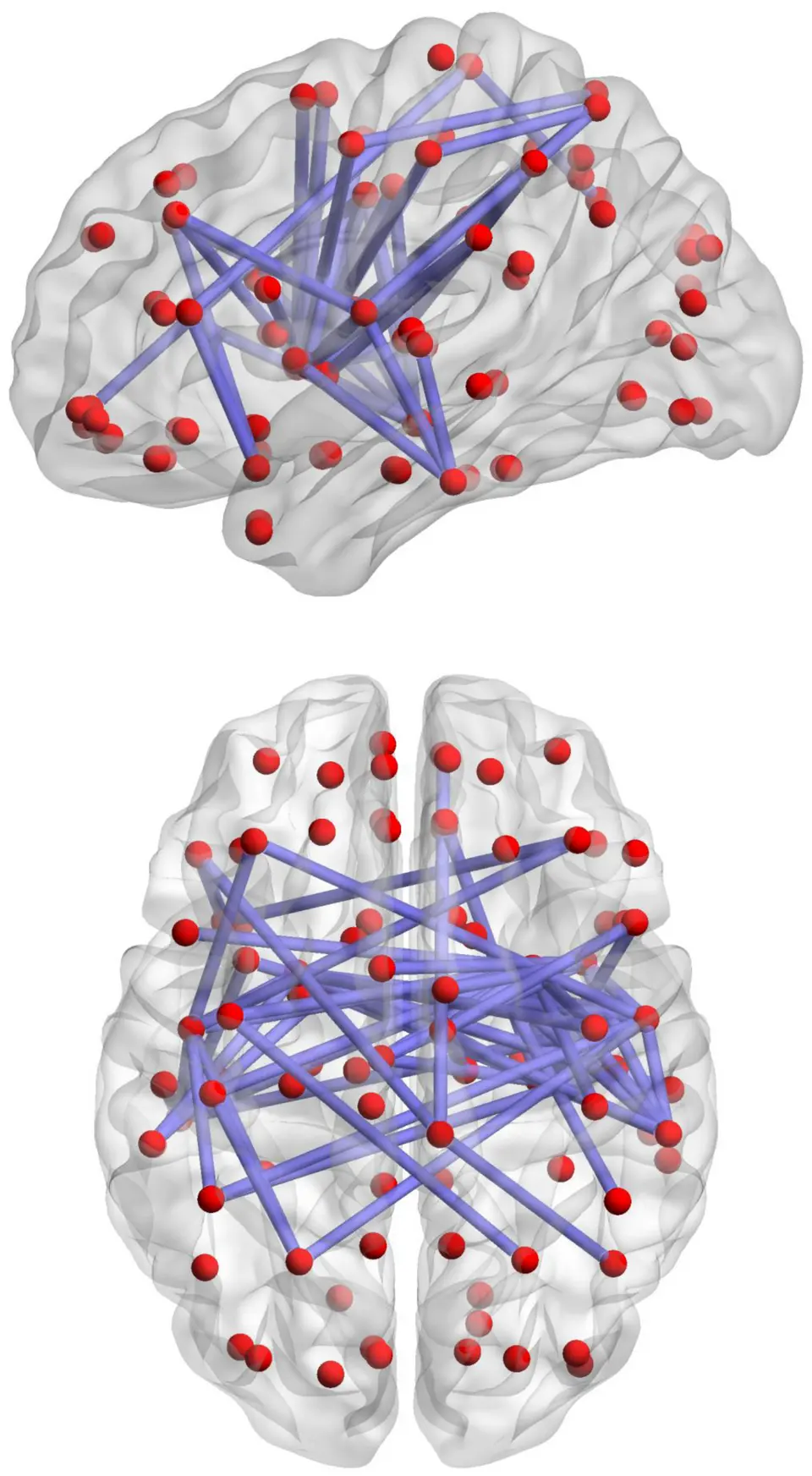
Think of these highlighted areas as the “Air Traffic Control” of your mind. They use energy to steer your thoughts into complex states. Credit: Wikimedia Commons / Case Western.
When you are doing something easy, your brain stays in a low-energy state. But when you start a difficult task, the brain has to move into a difficult state. These Modal Control Hubs use the long-range shortcuts to pull the rest of the brain along with them. They orchestrate the entire network to focus. This is why these regions are so critical for intelligence. If these hubs are strong, you can steer your mind into complex ideas very quickly. Without them, your brain would just wander. These hubs are the conductors of the global symphony.
The Cost of Thinking
The researchers also looked at something called “Control Energy.” Every time your brain changes its state, it costs energy. It is like shifting gears in a car. If you are in first gear and want to go to fifth, you need a lot of power. Some thoughts are very expensive for the brain. Solving a calculus problem costs more control energy than scrolling through social media. This is why you feel tired after a long day of school, even if you were just sitting at a desk.
The study found that intelligent brains are experts at saving energy. Because their network is so well-connected, they can reach difficult states without burning through as much fuel. This is a game-changer for how we understand brain health. It suggests that being smart is not just about raw power. It is about efficiency. If your brain is wired correctly, you can think faster while working less. This efficiency is what allows us to process the massive amounts of data in the modern world without becoming overwhelmed.
The Future of Minds and Machines
This discovery is a huge step forward for humans. But it also changes how we build robots. Current Artificial Intelligence is very good at specific tasks. It can play chess or write an essay. But it is not very good at General Intelligence. It does not have the Global Symphony that we do. It often gets stuck in one neighborhood of data. This leads to what we call AI “hallucinations.” The AI makes mistakes because it cannot steer its thoughts properly across a global map. It lacks the map that humans have built over millions of years of evolution.
By copying the brain Steering Equation, engineers might be able to build better AI. They could give AI its own connectome with long-range shortcuts. This would allow an AI to steer its own thoughts more like a human. It could move between different types of problems without needing to be reprogrammed. We are essentially using the math of the human brain to build the brains of the future. This could lead to robots that are truly smart and helpful in our daily lives.
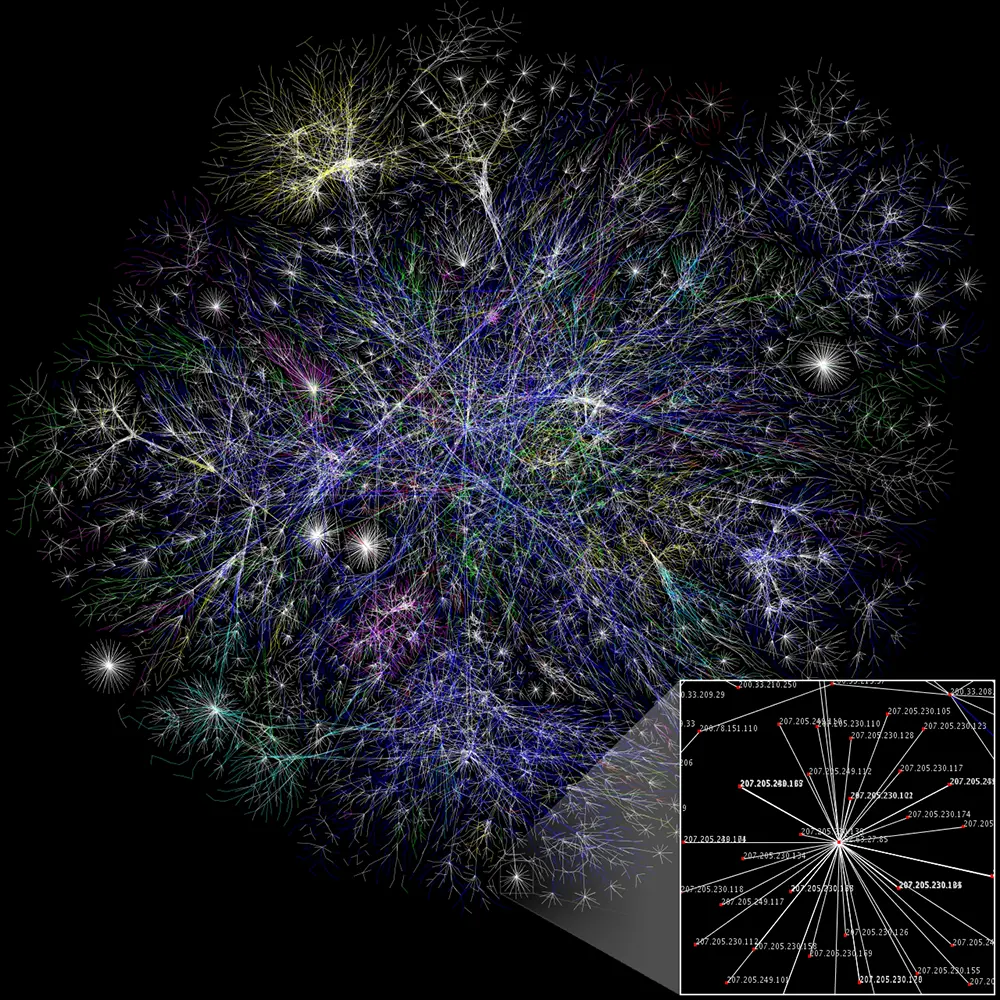
Whether it is the internet or your own brain, these massive networks rely on “weak ties” to keep distant hubs connected. Credit: Wikipedia / Opte Project.
Whether it is the internet or your own brain, these massive networks rely on “weak ties” to keep distant hubs connected.
Why Does This Matter to You?
This research tells us that we cannot boost the brain by looking at just one spot. If we want to help people with learning disabilities, we have to look at the whole network. We have to look at the highways and the shortcuts. It also means that your intelligence is not just about how much you know. It is about how well your brain parts talk to each other. Your brain is a dynamic and living system that is constantly steering itself toward new horizons. It is a work of art that you use every day.
The next time you solve a tough puzzle, take a second to thank your internal orchestra. Your brain is performing a masterpiece of communication. It is using every highway and every shortcut to make sure you stay “you.” It is a beautiful dance of data that happens every single second. Is your brain a well-mapped city or a sprawling wilderness? The science says it is a bit of both. The true beauty is in how it all connects into one single and brilliant mind. Everything you think and feel is the result of this global symphony. You are the conductor of the most complex network in the known universe.
This research is a huge win for neuroscience, but I can’t help but look at the bigger picture. If we can map the ‘shortcuts’ that create a single mind, are we one step closer to understanding consciousness itself?