
















The Brain
Introduction
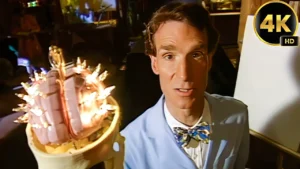
The human brain is one of the most powerful and complex organs in the body. It controls everything we do, from thinking and feeling to moving and remembering. In this episode, Bill Nye dives into brain science, exploring how it processes information, stores memories, and tricks us with optical illusions. Furthermore, he explains how neurons, reflexes, and perception shape our reality. As you watch, you will gain a deeper understanding of how your brain works and why it is so important.
Scientific Concepts
The brain contains billions of neurons—specialized cells that send and receive electrical signals. These neurons form networks that allow us to think, learn, and react. Moreover, Bill Nye explains how signals move across synapses, tiny gaps between neurons, using chemical messengers called neurotransmitters.
One amazing ability of the brain is neuroplasticity—it can rewire itself! When we learn, our brains physically change, strengthening connections between neurons. Additionally, Bill Nye explores different brain regions, from the cerebellum, which controls movement, to the frontal lobe, responsible for decision-making. Understanding these functions allows us to appreciate the full capacity of the human mind.
Experiments & Demonstrations
To make brain science exciting, Bill Nye presents fun experiments. For example, one test involves reaction time—volunteers try to catch a falling ruler, showing how fast the brain processes information and controls movement. This simple test effectively reveals how the nervous system responds to external stimuli.
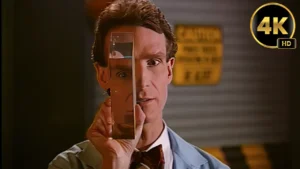
Another engaging demo features optical illusions. Bill Nye explains how our brain interprets visual signals and sometimes gets fooled. As a result, viewers will see why the brain fills in missing details and how illusions alter our perception of reality. Additionally, this experiment demonstrates how the brain organizes and processes information.
The episode also explores memory and learning. By using mnemonics and memory tricks, Bill Nye shows how repetition and practice strengthen brain connections. Consequently, these techniques make learning easier and improve recall. Furthermore, viewers will learn how the brain sorts and stores new information efficiently.
Impact & Applications
Understanding the brain helps in mental health, education, and medicine. For instance, scientists study the brain to develop treatments for conditions like Alzheimer’s and Parkinson’s disease. Similarly, cognitive science research helps educators design better learning techniques, making use of how memory and focus function.
This episode also highlights why sleep is essential for brain function. During sleep, the brain processes information, strengthens memories, and removes unnecessary data. Therefore, Bill Nye explains why proper rest improves learning and mental performance.
Scientific Adjustment
Since this episode aired, neuroscience has made huge advances. For example, Functional MRI (fMRI) technology now allows scientists to map real-time brain activity, revealing deeper insights into thought processes and emotions. Additionally, brain-computer interfaces are advancing, with companies like Neuralink working on ways to link the brain with technology.
Research has also proven that mindfulness and meditation can physically change the brain. As a result, these practices improve focus, reduce stress, and enhance emotional control. Scientists now know that the brain continues adapting and evolving throughout life.
Conclusion
The brain controls everything we do, think, and feel. Bill Nye makes this complex organ easy to understand with exciting experiments and real-world examples. From reflexes to memory, this episode uncovers the incredible ways our brains shape our experiences. Therefore, learning about the brain helps us appreciate how truly remarkable it is.
Links
Visit our homepage for more Seriously Scientific news and documentaries: SeriouslyScientific.com.
Subscribe to our YouTube channel for more science content: Seriously Scientific YouTube.
Get free science worksheets for students and educators: Seriously Scientific on TPT.
Bill Nye The Science Guy
02 // EPISODE_INDEX100 remastered episodes across 5 seasons of science education
Season 1 (20 episodes)
Bill Nye The Science Guy | Flight
Bill Nye The Science Guy | Earth's Crust
Bill Nye The Science Guy | Dinosaurs
Bill Nye The Science Guy | Skin
Bill Nye The Science Guy | Buoyancy
Bill Nye The Science Guy | Gravity
Bill Nye The Science Guy | Digestion
Bill Nye The Science Guy | Phases of Matter
Bill Nye The Science Guy | Biodiversity
Bill Nye The Science Guy | Simple Machines
Bill Nye The Science Guy | The Moon
Bill Nye The Science Guy | Sound
Bill Nye The Science Guy | Garbage
Bill Nye The Science Guy | Structures
Bill Nye The Science Guy | Earth's Seasons
Bill Nye The Science Guy | Light & Color
Bill Nye The Science Guy | Cells
Bill Nye The Science Guy | Electricity
Bill Nye The Science Guy | Outer Space
Bill Nye The Science Guy | Eyeballs
Season 2 (20 episodes)
Bill Nye The Science Guy | Magnetism
Bill Nye The Science Guy | Wind
Bill Nye The Science Guy | Blood & Circulation
Bill Nye The Science Guy | Chemical Reactions
Bill Nye The Science Guy | Static Electricity
Bill Nye The Science Guy | Food Webs
Bill Nye The Science Guy | Light Optics
Bill Nye The Science Guy | Bones & Muscle
Bill Nye The Science Guy | Oceanography
Bill Nye The Science Guy | Heat
Bill Nye The Science Guy | Insects
Bill Nye The Science Guy | Balance
Bill Nye The Science Guy | The Sun
Bill Nye The Science Guy | The Brain
Bill Nye The Science Guy | Forests
Bill Nye The Science Guy | Communication
Bill Nye The Science Guy | Momentum
Bill Nye The Science Guy | Reptiles
Bill Nye The Science Guy | Atmosphere
Bill Nye The Science Guy | Respiration
Season 3 (21 episodes)
Bill Nye The Science Guy | Planets & Moons
Bill Nye The Science Guy | Pressure
Bill Nye The Science Guy | Plants
Bill Nye The Science Guy | Rocks & Soil
Bill Nye The Science Guy | Energy
Bill Nye The Science Guy | Evolution
Bill Nye The Science Guy | The Water cycle
Bill Nye The Science Guy | Friction
Bill Nye The Science Guy | Germs
Bill Nye The Science Guy | Climates
Bill Nye The Science Guy | Waves
Bill Nye The Science Guy | Ocean Life
Bill Nye The Science Guy | Mammals
Bill Nye The Science Guy | Spinning Things
Bill Nye The Science Guy | Fish
Bill Nye The Science Guy | Human Transportation
Bill Nye The Science Guy | Wetlands
Bill Nye The Science Guy | Birds
Bill Nye The Science Guy | Populations
Bill Nye The Science Guy | Animal Locomotion
Bill Nye The Science Guy | Invertebrates
Season 4 (19 episodes)
Bill Nye The Science Guy | Rivers & Streams
Bill Nye The Science Guy | Nutrition
Bill Nye The Science Guy | Marine Mammals
Bill Nye The Science Guy | Earthquakes
Bill Nye The Science Guy | NTV Music Videos
Bill Nye The Science Guy | Spiders
Bill Nye The Science Guy | Pollution Solutions
Bill Nye The Science Guy | Probability
Bill Nye The Science Guy | Pseudoscience
Bill Nye The Science Guy | Flowers
Bill Nye The Science Guy | Archaeology
Bill Nye The Science Guy | Deserts
Bill Nye The Science Guy | Amphibians
Bill Nye The Science Guy | Volcanoes
Bill Nye The Science Guy | The Heart
Bill Nye The Science Guy | Inventions
Bill Nye The Science Guy | Computers
Bill Nye The Science Guy | Fossils
Bill Nye The Science Guy | Time
Season 5 (20 episodes)
Bill Nye The Science Guy | Forensics
Bill Nye The Science Guy | Space Exploration
Bill Nye The Science Guy | Genes
Bill Nye The Science Guy | Architecture
Bill Nye The Science Guy | Farming
Bill Nye The Science Guy | Life Cycles
Bill Nye The Science Guy | The Scientific Method
Bill Nye The Science Guy | Atoms
Bill Nye The Science Guy | Ocean Exploration
Bill Nye The Science Guy | Lakes and Ponds
Bill Nye The Science Guy | Smell
Bill Nye The Science Guy | Caves
Bill Nye The Science Guy | Erosion
Bill Nye The Science Guy | Fluids
Bill Nye The Science Guy | Comets and Meteors
Bill Nye The Science Guy | Measurement
Bill Nye The Science Guy | Patterns
Bill Nye The Science Guy | Storms
Bill Nye The Science Guy | Music
Bill Nye The Science Guy - Motion
Loading Biography...
The Brain
Based on Bill Nye the Science Guy · Season 2, Episode 14 · 23 min
You use it to breathe, to dream, to smell your breakfast, and to catch a falling object! Join Bill Nye the Science Guy as we investigate the spectacular folding organ that controls every single thing you do.
Unlock Your Mind!
One hundred percent! It is a common myth that humans only use ten percent of their brains. You use your entire brain all day and all night, even when you are fast asleep!
No, we never grow new ones! Unlike a cut on your finger or a broken bone, brain cells cannot easily regenerate. This is exactly why it is so incredibly important to always wear a helmet!
Put Your Instincts to the Test
Think about how your mind and body communicate. Pick an answer for each question, then see if your instincts were right.
To fit massive amounts of information inside our skulls! Just like folding a massive newspaper allows it to fit neatly onto a small table, folding the brain gives it a massive surface area to store memories while still fitting inside your head.
The left side! The central nervous system connections cross over in the middle of your body. The left hemisphere controls the right side, and the right hemisphere controls the left side.
Tiny electrical and chemical signals! These microscopic sparks travel down the central nervous system at incredible speeds to tell your muscles exactly when to move.
Understanding the Science
Tap each card to uncover the biological regions and brilliant neural pathways that make up your central nervous system.
Key Concepts
Central Nervous System
Tap to learn moreThe vital network of nerve cells running down your spine that carries signals from your brain to the rest of your body.
Neurons
Tap to learn moreMicroscopic brain cells that communicate by sending tiny electrical and chemical signals to one another.
Cerebellum
Tap to learn moreThe specific region of the brain that coordinates your muscles and helps you maintain your physical balance.
Olfactory Cortex
Tap to learn moreThe sensory area responsible for processing information from your nose so you can smell your food.
Magnetic Resonance Imaging
Tap to learn moreA brilliant medical scanner that uses powerful magnets and radio waves to take detailed pictures of the brain.
Ancestral Memory
Tap to learn moreInstinctual knowledge that animals possess the moment they are born, like a bird knowing exactly how to build a nest.
Eidetic Memory
Tap to learn moreThe rare ability to perfectly recall visual information, often referred to as a photographic memory.
Optical Illusions
Tap to learn moreVisual tricks that occur when your brain tries its absolute best to interpret confusing visual signals sent from your eyes.
Try It: The Neural Network Lab
Step into the neurology clinic!
The Mission: You must test the reaction time of your digital patient. Click a button below to begin a trial. To catch the falling ruler, simply tap anywhere on the large laboratory screen. Watch the glowing electrical signals travel down the spinal cord and see how your neural pathway speeds up when you control the drop yourself!
Apply Your Knowledge
Let us see if you can correctly identify the different sections of the central nervous system and their vital jobs.
Match the Concepts
Click a neurological term to select it, then click the matching description to place it.
Real World Challenge
Bill Nye the Science Guy demonstrates that your reaction time is much faster if you drop a ruler through your own fingers rather than waiting for someone else to drop it. Trace the exact pathway the electrical signal takes in both scenarios to explain why this happens!
What Has Changed Since This Episode Aired
This episode originally aired in 1995. While the fundamental biology of the human nervous system remains accurate, the field of neuroscience has experienced explosive technological breakthroughs!
Updated: Yes! Thanks to incredible advancements in Brain Computer Interfaces by companies like Neuralink, this is now a reality. Scientists can implant microscopic electrodes directly into the motor cortex to read neural signals. This breakthrough allows paralyzed patients to control computer cursors, play video games, and operate robotic arms using only their thoughts!
Updated: A massive modern breakthrough called optogenetics allows researchers to do exactly this! By combining genetic engineering with optical science, researchers can modify specific neurons so they turn on or off when exposed to a tiny flash of blue light. This allows scientists to map exactly which brain cells control specific movements and emotions.
Updated: Science is always evolving! Since 1995, neuroscientists have discovered an amazing process called neurogenesis. We now know that certain parts of the adult human brain, specifically the regions dealing with learning and memory, actually can generate brand new neurons throughout your entire life!
Updated: We are mapping it right now! Today, neuroscientists are building the connectome, which is a massive and incredibly complex wiring diagram of the entire brain. Using advanced scanning technology and artificial intelligence, scientists are mapping millions of individual neural connections to understand exactly how memories and thoughts are physically stored.
Test Your Understanding
Answer these questions and get instant feedback. How many can you get right?
Results
Your score:
Reflection
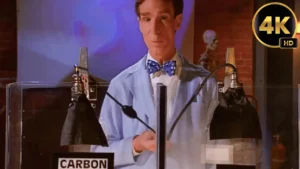
Think about the optical illusion of the straight tube passing through the metal nuts. Why is it important for scientists to understand that our brains sometimes misinterpret visual information sent from our eyes?
Episode Discussion
Share your thoughts on this Bill Nye episode