
Why is this journey to the Moon so special?
Right now, four humans are traveling roughly 380,000 kilometers (236,000 miles) from Earth. This marks the first time humanity has approached the Moon in over five decades. It is a monumental achievement. Our return to deep space is a cause for global celebration. But this journey is not just about planting flags or taking beautiful photographs.
Deep space is a highly dangerous environment. It is filled with extreme radiation and unique physical challenges. Therefore, the crew is using the Orion spacecraft as a cutting-edge laboratory. They are running groundbreaking science experiments. These tests push human tissue to its absolute limits in ways we simply cannot do on Earth.
The entire ten-day flight is packed with critical milestones. NASA is streaming the mission live to the world. However, if you missed the spectacular launch, you can watch the historic first ten minutes right here before we dive into the science.
Leaving the safe zone
To understand why this mission is so important, we have to look at where the astronauts are actually going. For the past twenty years, humans have lived on the International Space Station. The space station orbits very close to our planet. It sits safely inside the Earth’s magnetic field. This magnetic field acts like a giant invisible shield. It blocks the worst of the sun’s radiation from hitting the astronauts.
Artemis II is completely different. The Orion spacecraft has pierced right through that protective magnetic shield. The crew has entered the raw, unfiltered environment of deep space. Scientists call this area the cislunar environment. In this region, astronauts face five specific dangers known as the RIDGE hazards.
RIDGE stands for Radiation, Isolation, Distance, Gravity fields, and hostile Environments. NASA must solve these five problems before we can safely send humans to Mars. That is exactly why the Artemis II biological payloads are so incredibly vital.
What is the core finding of this mission?
The most critical test happening aboard Orion right now does not involve rocket engines or fuel tanks. Scientists are closely monitoring a small payload of living human cells. This is the AVATAR experiment. It acts as a personalized, cellular stand-in for the astronauts themselves. It tests exactly how human tissue reacts to the extreme RIDGE hazards of deep space.
How does a plastic chip become a living organ?
Let us look at how this remarkable biology works. The AVATAR experiment uses a brilliant new technology called an “organ-on-a-chip”. What exactly is that? Think of a flight simulator. The Artemis astronauts spent years training in a physical simulator on Earth. It perfectly mimicked the buttons and screens of the real Orion capsule. This allowed them to practice flying safely without leaving the ground. The organ-on-a-chip works the exact same way for human biology.1 Ingber, D. E. (2022). Human organs-on-chips for disease modelling, drug development and personalized medicine. Nature Reviews Genetics. https://doi.org/10.1038/s41576-022-00466-9
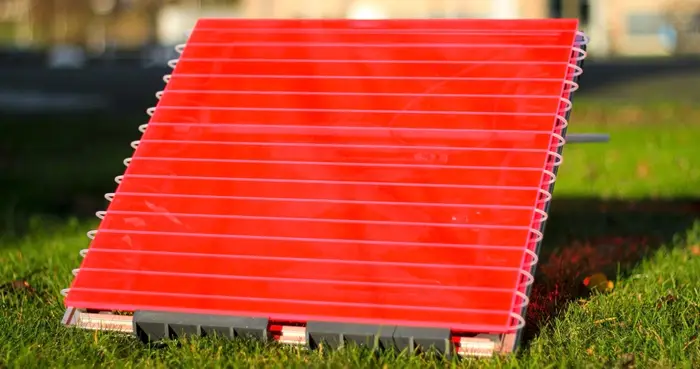
This device is not a literal miniature organ floating in a jar. Instead, it is a small piece of clear plastic. It is roughly the size of a computer flash drive. It contains tiny hollow channels lined with living human cells.
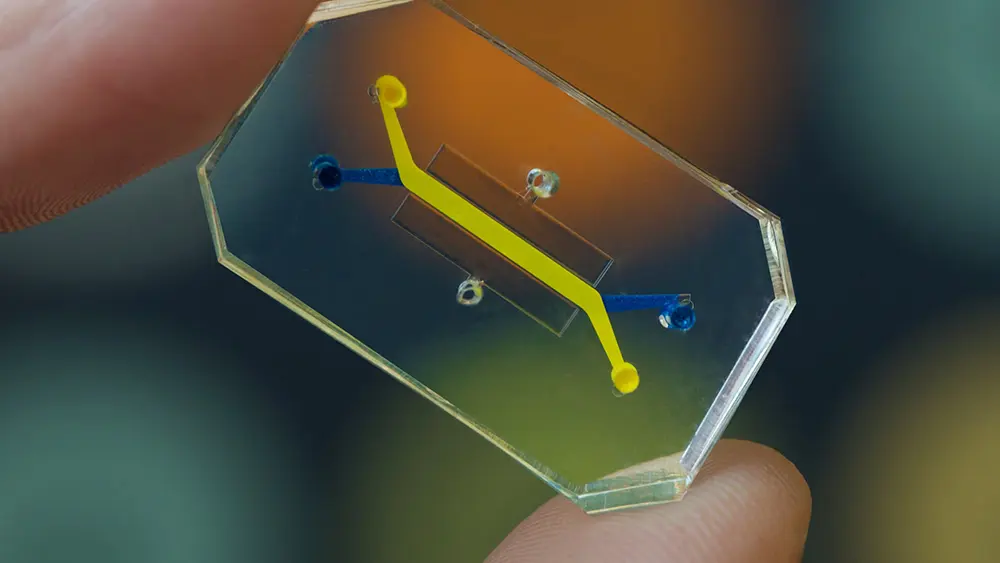
The raw AVATAR payload uses microfluidic chips to simulate the exact environment of human tissue. Credit: Wyss Institute, Harvard University.
For this specific lunar mission, researchers focused heavily on human bone marrow. You can think of your bone marrow as a dedicated blood cell factory. This factory works around the clock inside your bones. It produces the red blood cells that carry oxygen and the white blood cells that fight off infections.
However, we cannot simply put bone marrow cells in a petri dish in space. They would die quickly. The cells need to feel life. This is why the raw plastic chip is integrated into a larger automated system.
The automated heart of the mission
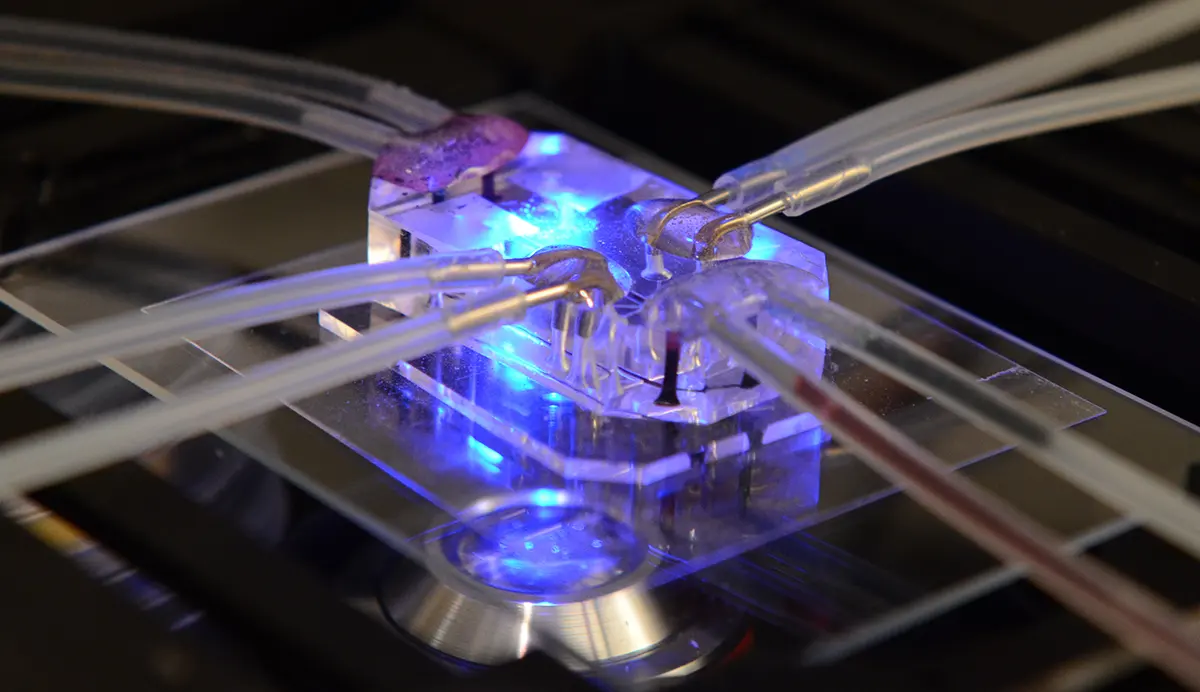
Think of this hardware as an automated heart. The chip connects to a sophisticated mounting system with dozens of tiny fluidic tubes. This mounting hardware contains pressure-driven pumps that actively mimic the pulse of human blood flow. (See the featured image at the top of this article for this device in operation.)
Inside the chip is a porous membrane. One channel carries the automated blood flow. The other channel contains the human cells. They cling tightly to the porous membrane. This physical structure tricks the cells into feeling the exact mechanical strain of a breathing lung or a pulsing blood vessel.
The automated hardware keeps these cells at a perfect 37 degrees Celsius (98.6 degrees Fahrenheit). It feeds them automatically. Most importantly, it allows scientists to measure radiation damage in real time.
Cannonballs in the laboratory
Deep space is filled with highly energetic particles called galactic cosmic rays. We can picture these cosmic rays as microscopic cannonballs. These invisible cannonballs blast straight through the metal walls of the Orion spacecraft. They punch directly into the connected chip. Once inside, they damage the delicate DNA instruction manuals hidden inside the living cells.
By running this automated lab, researchers can measure exactly how the radiation disrupts the blood cell factory. This helps them solve another massive cislunar medical mystery. That mystery is neocytolysis.
The microgravity mystery
Radiation is not the only threat to the blood cell factory. The lack of gravity also creates massive problems. When astronauts enter microgravity, the fluids in their body shift upwards toward their head. This makes the human body think it suddenly has far too much blood.
In response, the body triggers a strange process called neocytolysis. The body actively begins to hunt down and destroy its own newly formed red blood cells. This leaves astronauts feeling incredibly tired and weak. The automated AVATAR system will collect precise data on this process. Scientists hope to discover exactly how to stop neocytolysis from happening on longer flights.
Waking up dormant viruses
The connected chip is a mechanical marvel. However, it is not the only biological test happening on board. The crew is also running the crucial Immune Biomarkers experiment.
Spaceflight puts incredible psychological and physical stress on the human body. This intense stress severely weakens the immune system. When the immune system drops its guard, old and dormant viruses can actually wake up. For example, the virus that causes chickenpox can hide safely in your nerves for decades. Under extreme stress, it can wake up and cause a painful rash called shingles.
The Immune Biomarkers experiment uses saliva and blood samples to track this exact type of viral reactivation. Researchers want to know if the unique stress of flying to the Moon makes this problem worse than flying in Low Earth Orbit.
The ARCHER study and sleep in space
Additionally, the crew is participating in a major health tracking project known as the ARCHER study. This study relies heavily on advanced wearable technology.
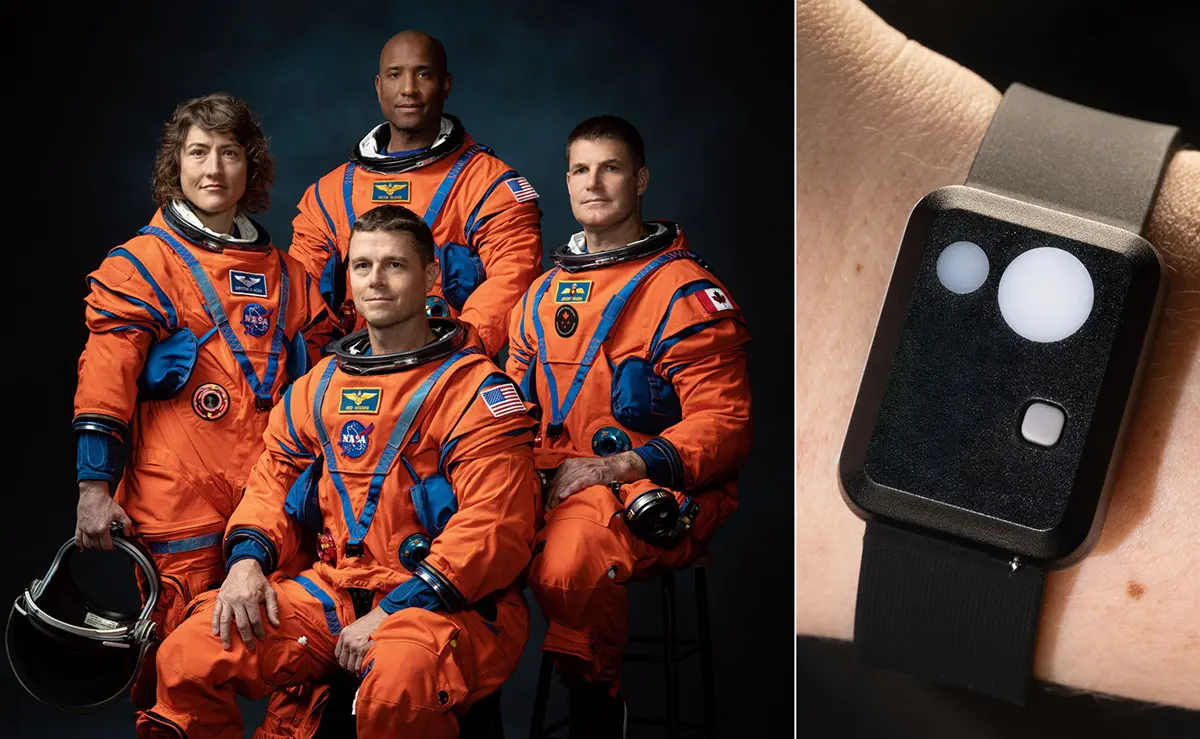
The complete Artemis II crew utilizes specialized biometric wristbands for the ARCHeR study. Credit: Seriously Scientific / NASA.
The astronauts wear specific biometric wristbands throughout the flight. These bands look very similar to the fitness trackers many people wear on Earth. The devices constantly monitor the crew’s heart rate, sleep patterns, and overall cognitive function.
Living in the artificial lighting of a spacecraft severely disrupts the natural human biological clock. You cannot simply look out the window to see if it is day or night. The ARCHER data will show researchers exactly how deep space travel impacts a person’s brain over a long duration.
What is the mission timeline so far?
The crew is currently hurtling through space at over 40,200 kilometers per hour (25,000 mph). They are right in the middle of their outbound journey. As you read this, the crew is actively executing their 10-day flight profile.
| Date (US ET) | Mission Day | Mission Phase | Primary Objective |
|---|---|---|---|
| April 1 | Day 1 | Launch and Ascent | SLS liftoff and orbit insertion. |
| April 2 | Day 2 | High Earth Orbit | Systems checkout and proximity ops. |
| April 3–5 | Days 3–5 | Outbound Transit | Deep space health monitoring. |
| April 6 | Day 6 | Lunar Flyby | Swinging around the Moon. |
| April 7–9 | Days 7–9 | Return Transit | Coasting back toward Earth. |
| April 10 | Day 10 | Reentry | Pacific Ocean splashdown. |
What happens when the crew returns?
This historic mission will come to a dramatic end on Day 10. The Orion capsule will hit the Earth’s atmosphere at blistering speeds. It will deploy its massive parachutes and splash down safely in the Pacific Ocean. Recovery teams on Navy ships will be waiting. They will quickly move in to secure the spacecraft.
The moment the hatch opens, the real scientific race begins. Scientists will immediately retrieve the automated AVATAR system from the cabin. They will rush these living biological samples back to a secure laboratory.
Then, researchers will carefully compare these space-flown chips to a set of identical control chips. These control chips stayed safely on Earth in a specialized facility for the entire mission. This direct comparison will reveal the true, isolated impact of the lunar journey on human tissue.
The results of this mission will undoubtedly help us protect the future astronauts heading to Mars. Even better, this research will help us build the future of precision health. Doctors will use this data to unlock new, highly personalized ways to treat immune disorders and bone marrow diseases right here at home. Artemis II is proving that the best way to heal the human body on Earth is sometimes to leave the planet entirely.
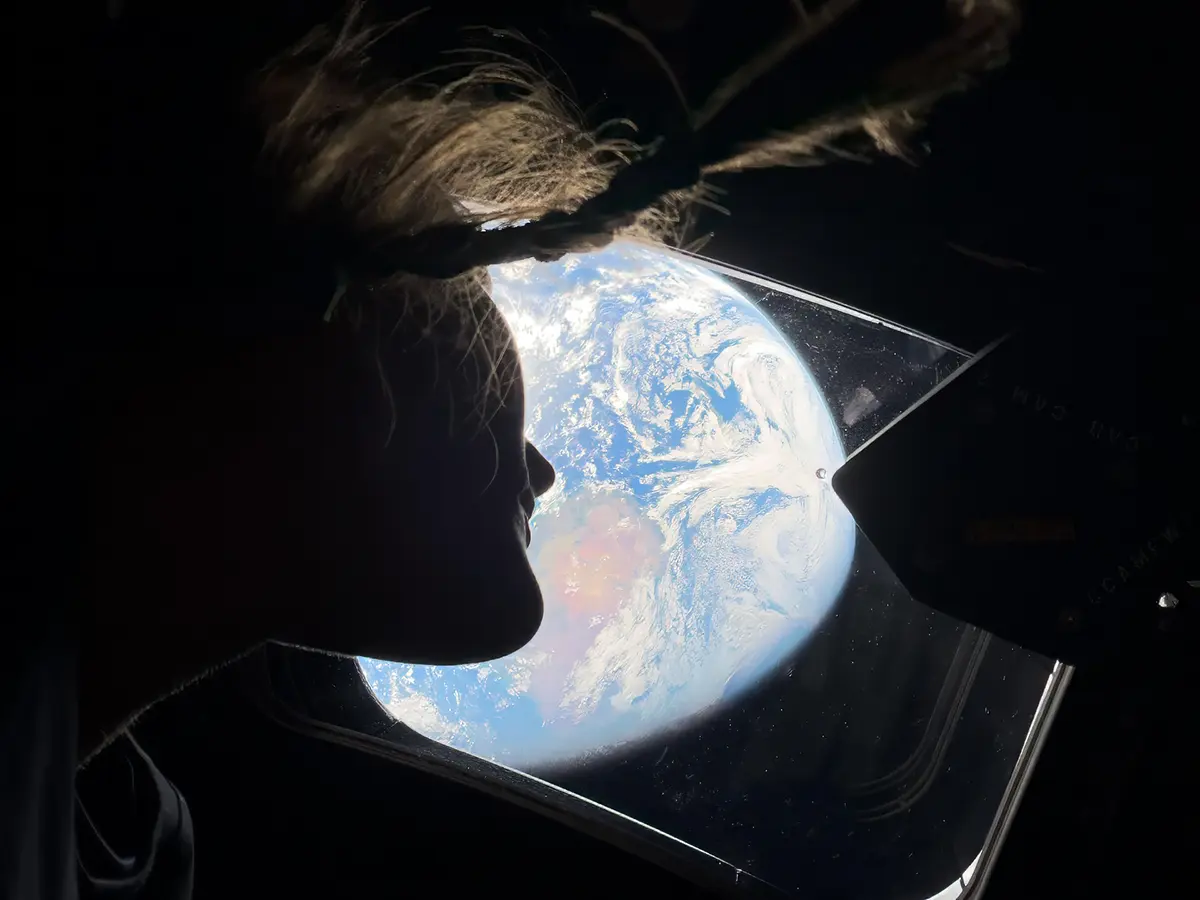
NASA astronaut Christina Koch looks out of the window to say goodbye to Earth before the epic journey to the Moon. Credit: NASA.














Artemis II is the ultimate testbed for the RIDGE hazards. If we can protect human biology at the Moon, Mars is the next logical step. Do you think we are on track to see a crewed Mars mission by the late 2030s? Share your thoughts below! 🌔👨🚀