For decades, biologists have looked at the history of life on Earth and seen a puzzle. About 541 million years ago, something incredible happened. This period, called the Cambrian Explosion, saw the fossil record suddenly fill with a stunning variety of complex animals. For a long time, the prevailing assumption was simple. To build bigger, more complex bodies, life must have needed more building blocks. This meant evolution must have invented a flood of new genes.
Here’s the problem. The math never quite added up. When scientists compared the genomes of complex animals to their tiny, single-celled ancestors, the number of new genes just wasn’t enough to explain the burst of creativity. It was like seeing someone build a skyscraper using the blueprints for a single-family home. How was it possible?
Now, a landmark 2025 study finally provides the answer. The revolution wasn’t in the hardware (the genes). It was a revolutionary software upgrade. The secret, it appears, was a new way to fold DNA. This invention gave life a new dimension of control, allowing the same old set of genes to build organisms of unprecedented complexity.
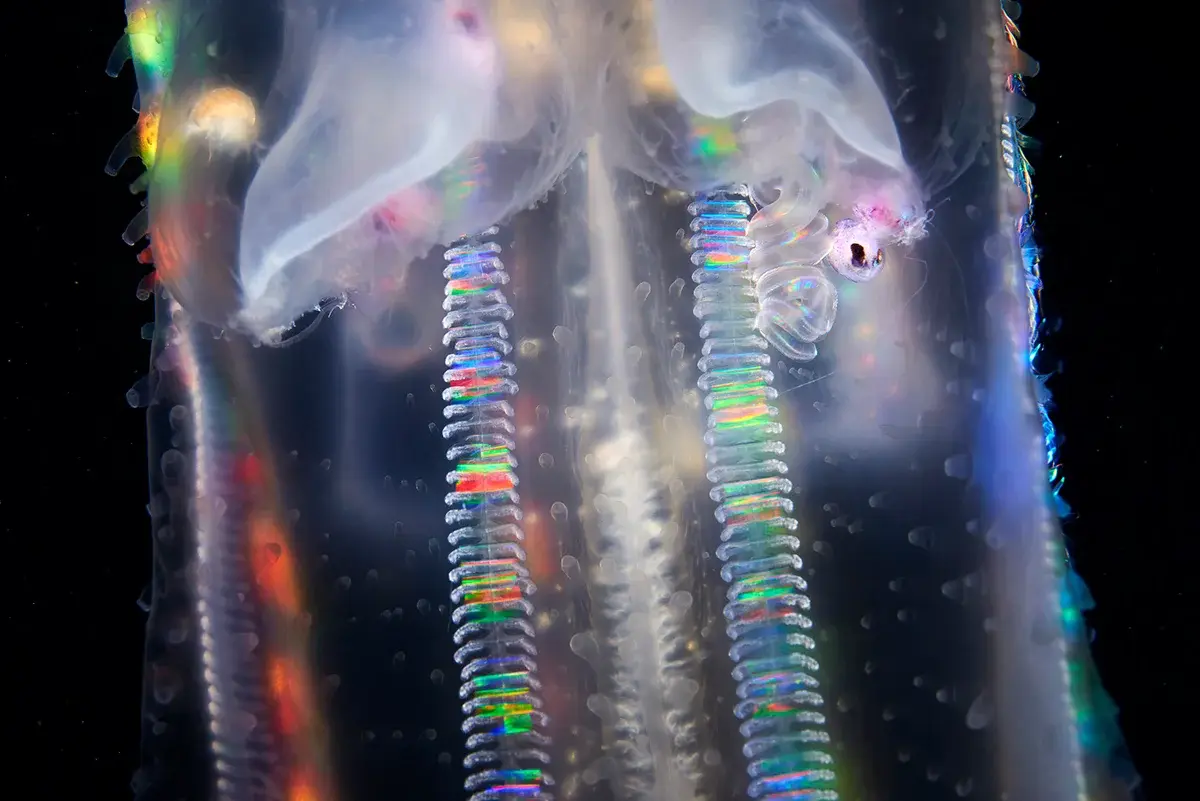
The core finding is this: researchers discovered that a sophisticated system of DNA folding, known as chromatin looping, was already present in some of the earliest multicellular animals, like jellyfish and comb jellies. This 3D genomic architecture was a brand-new invention. It was completely absent in their single-celled cousins. This discovery pushes back the origin of complex genome control by hundreds of millions of years. It identifies a “critical turning point” that helps explain how simple cells first built a complex animal body.
How Did Scientists Uncover 600-Million-Year-Old DNA Folds?
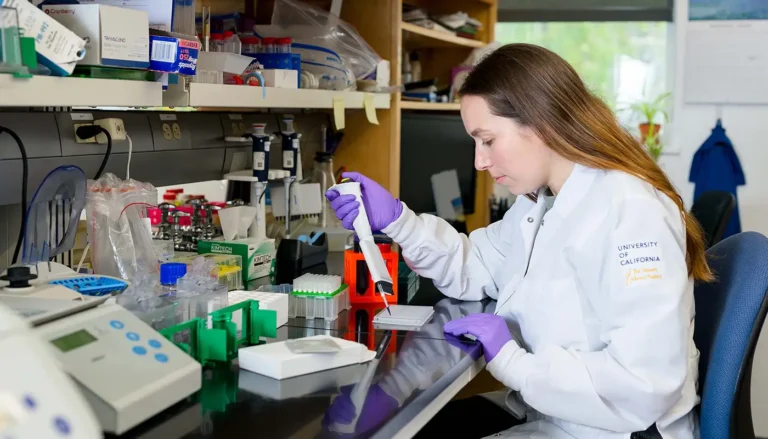
This breakthrough was possible because of a cutting-edge lab technique called Micro-C. For years, scientists have used an older method called Hi-C. You can think of Hi-C as taking a blurry, high-altitude photograph of a city. You can see the major neighbourhoods, but you cannot see the individual houses or the streets that connect them.
Micro-C is like a super-high-resolution, street-level map. It provides a picture of genome folding at “nucleosome resolution,” which is the most basic unit of DNA packaging. The technique uses a specific enzyme to snip the DNA at the fundamental protein spools (called nucleosomes) that it wraps around. This creates a much more detailed map. It reveals the precise, short-range loops and physical contacts that were completely invisible before. This technological leap was essential for seeing these ancient genomic structures for the first time.1Hsieh, T. S., et al. (2015). Mapping nucleosome resolution chromosome folding in yeast by Micro-C. PMC. https://pmc.ncbi.nlm.nih.gov/articles/PMC4509605/
The research team, led by Arnau Sebé-Pedrós and lana Kim, applied this technique to several of the earliest animals on the evolutionary tree. This included ctenophores (comb jellies) and cnidarians (like the sea anemone). Then, they contrasted this with the genomes of their closest living single-celled relatives. The results were unambiguous.
What Exactly Is This “Genomic Origami”?
To understand the finding, we first need to understand how genes are controlled. Gene regulation is the master process that tells a cell which genes to turn “on” and which to turn “off.” This process is controlled by specific DNA sequences that act like switches.
The two most important types are promoters and enhancers.
- A Promoter is a sequence located right next to a gene. You can think of it as the “on-switch” for that gene. It tells the cell’s machinery where to start reading the DNA.
- An Enhancer is a short stretch of DNA that acts like a “volume knob.” It can be located thousands, or even millions, of letters away from the gene it controls. When a protein binds to an enhancer, it can dramatically boost the gene’s activity.2BYJU’S. (n.d.). Difference between Enhancer and Promoter. BYJU’S. https://byjus.com/biology/difference-between-enhancer-and-promoter/
For decades, this “action at a distance” was a major puzzle. How could a switch so far away control a gene? The answer lies in the physical nature of DNA. Inside a cell, DNA is not a rigid rod. It is a long, flexible fibre packed into a structure called chromatin. This flexibility allows the genome to solve the distance problem with a simple, elegant solution. It folds.
The DNA strand physically loops back on itself, bringing that distant “volume knob” (the enhancer) into direct, three-dimensional contact with the “on-switch” (the promoter). This is chromatin looping. This physical connection is what allows the enhancer to amplify the gene’s activity. The new study found that the genomes of comb jellies and sea anemones were packed with thousands of these functional loops. Some genes were even connected to fifteen different enhancers, showing a stunning layer of control.
Why Was This Folding a “Critical Turning Point” for Life?
So, what’s the big idea? Why does this matter? Because it helps explain the very origin of complex bodies.
Think of your genome as a vast library containing thousands of instruction manuals. Every single cell in your body, from a brain neuron to a heart muscle cell, contains the exact same library. The profound difference between these cells comes from which books are being read. Gene regulation is the process of illuminating only the “kitchen” manuals in a kitchen cell, and only the “bedroom” manuals in a bedroom cell. This process is the absolute foundation of multicellular life.3Khan Academy. (n.d.). Overview of eukaryotic gene regulation. Khan Academy. https://www.khanacademy.org/science/biology/gene-regulation/gene-regulation-in-eukaryotes/a/overview-of-eukaryotic-gene-regulation
A single-celled organism is like a studio apartment. It only needs one “room” and one set of instructions. To build an animal, a “mansion,” you need a complex electrical system. You need a system that can light up specific, different sets of books in hundreds of different rooms. You need specialised cell types.

This is the core concept of 3D gene control. A distant “enhancer” (the volume knob) is brought into direct physical contact with a gene’s “promoter” (the on-switch) by forming a loop. Credit: ResearchGate
This 2025 study found that single-celled organisms, the “studio apartments,” had almost no chromatin looping. The earliest animals, the “mansions,” were full of it. This strongly suggests that chromatin looping was that new electrical wiring system. It was the “software” that allowed the first animals to create specialised cells like primitive nerves and muscles from the same set of genes.
Did This DNA Looping Evolve Twice?
The study also revealed a fantastic evolutionary puzzle. In humans and other vertebrates, these DNA loops are held together by a famous “master weaver” protein called CTCF. It acts like a molecular clamp, holding the loop in place.4Oudelaar, A. M., et al. (2020). CTCF: the protein, the binding partners, the binding sites and their chromatin loops. PMC. https://pmc.ncbi.nlm.nih.gov/articles/PMC3682731/
When the researchers looked for CTCF in the comb jellies, it was missing. The gene for it simply doesn’t exist in their genome. Yet, their genomes are full of loops. So how do they do it? The analysis suggests they use a different, unrelated architectural protein to do the exact same job.
This is a stunning example of convergent evolution. It shows that the function of 3D genome looping was so fundamentally important to building an animal that life invented it at least twice using different molecular parts. The principle of folding, it seems, is more essential than the specific clamp used to hold the fold.

The study focused on early-branching animals like ctenophores (comb jellies) and cnidarians (sea anemones). They found these animals had complex DNA looping, while their single-celled ancestors did not. This pinpoints *when* this crucial software upgrade evolved. Credit: ResearchGate
Is Looping the Whole Story?
Science is always a dynamic conversation. This discovery adds a crucial new piece to the puzzle, but it doesn’t end the debate. In recent years, some surprising experiments have added a new layer of complexity. Scientists in other studies have tried destroying the looping proteins (like CTCF) in adult mammal cells. They were shocked to find that even when the loops disappeared, most of the genes stayed on.
This has forced the field to refine its thinking. If loops are not always needed to maintain a gene’s status, what is their primary job? The scientific consensus is now shifting. Chromatin looping may be most critical during the dynamic process of embryonic development. It may be the system that orchestrates the building of the animal, setting up the “neighbourhoods” of gene expression that are then maintained by other methods once the cell is mature.5Adan, E., et al. (2022). Coming full circle: On the origin and evolution of the looping model. PMC. https://pmc.ncbi.nlm.nih.gov/articles/PMC9283939/
What Does This Mean for the Future of Biology?
This discovery is a huge validation for the field of Evolutionary Developmental Biology, or Evo-Devo. The core idea of Evo-Devo is that evolution doesn’t just invent new genes from scratch. It acts by tinkering with the developmental “recipes” that build an embryo. To build a new kind of animal, you just change the instructions for how, when, and where to deploy the genes you already have.6Carroll, S. B. (2000). The evolution of evo-devo biology. PMC. https://pmc.ncbi.nlm.nih.gov/articles/PMC18255/
The discovery of ancient looping provides a powerful, physical mechanism that explains how this tinkering was first possible. It’s also relevant to our own health. The regulatory circuits established by these ancient loops are conserved in humans. When these loops are broken by mutations, the misregulation of genes can lead to developmental disorders and many types of cancer.
This research is just the beginning. It’s part of an ambitious project called the Biodiversity Cell Atlas, which aims to map the molecular profile of every cell type for a vast diversity of organisms. By comparing these atlases, scientists can trace the evolution of every neuron, muscle, and skin cell, and pinpoint the exact changes in their regulatory code.
Ultimately, this discovery proves that to understand ourselves, we must study the “weird sea creatures” that branched off our family tree 600 million years ago. They are the keepers of life’s original blueprints. The ultimate goal is to move from just mapping these connections to finally understanding the “regulatory logic” at the heart of all animal life.