









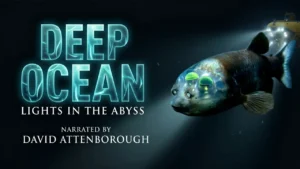
Monterey Bay: Deep Ocean Life in the Abyss
Dive deep into the Monterey Submarine Canyon, a spectacular underwater gorge rivalling the Grand Canyon in sheer size! In a twilight world with virtually zero sunlight, discover how bizarre and wonderful creatures use 'living light' to survive, communicate, and hunt in the pitch black.
Journey into the Earth's Darkest Frontier
To camouflage themselves! This is called counter-illumination. Predators looking up from below will just see the faint glow of the surface, and the creature's belly lights help it blend into the background completely.
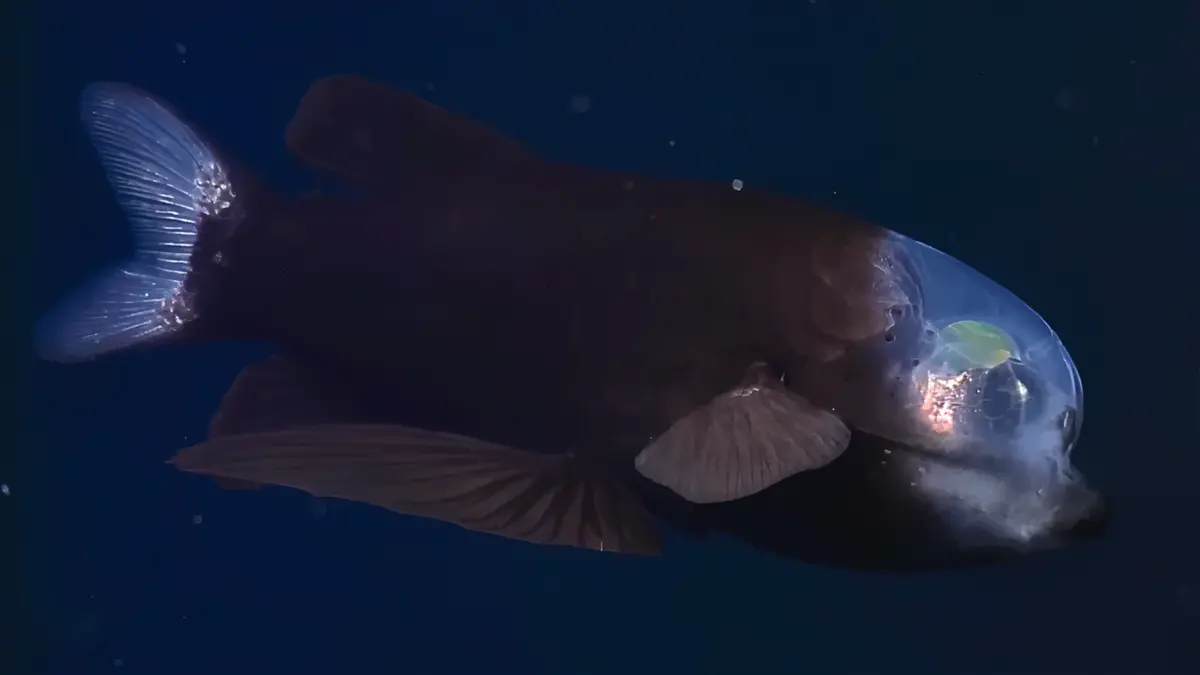
It rotates its eyes inside its head! The barrel-eye approaches stealthily from below. As it rises to the level of its prey, it remarkably rotates its green, glowing eyes forward through its transparent head shield to strike.
Put Your Instincts to the Test
Think about what you already know about biology and extreme environments. Pick an answer for each question, then see if your instincts were right.
It sheds its glowing tentacles to cause a distraction. This jellyfish sheds its tentacles on purpose. While the predator follows the glowing, discarded appendages, the jellyfish makes a swift escape into the dark.
To detect the faintest traces of light. In an environment that is almost completely black, every single photon of light is a valuable clue to finding prey or avoiding danger.
Vast numbers of deep-sea creatures migrate upwards to feed. This massive movement of animals is driven by the search for abundant food in shallower waters under the cover of darkness.
Understanding the Science of the Abyss
Tap each card to uncover the biological adaptations and chemical processes that allow life to thrive in the deepest, darkest parts of the ocean.
Key Concepts
Bioluminescence
Tap to learn moreThe biochemical emission of light by living organisms. In the deep ocean, 90 percent of creatures produce light, using it for defence, hunting, and complex communication.
Photophore
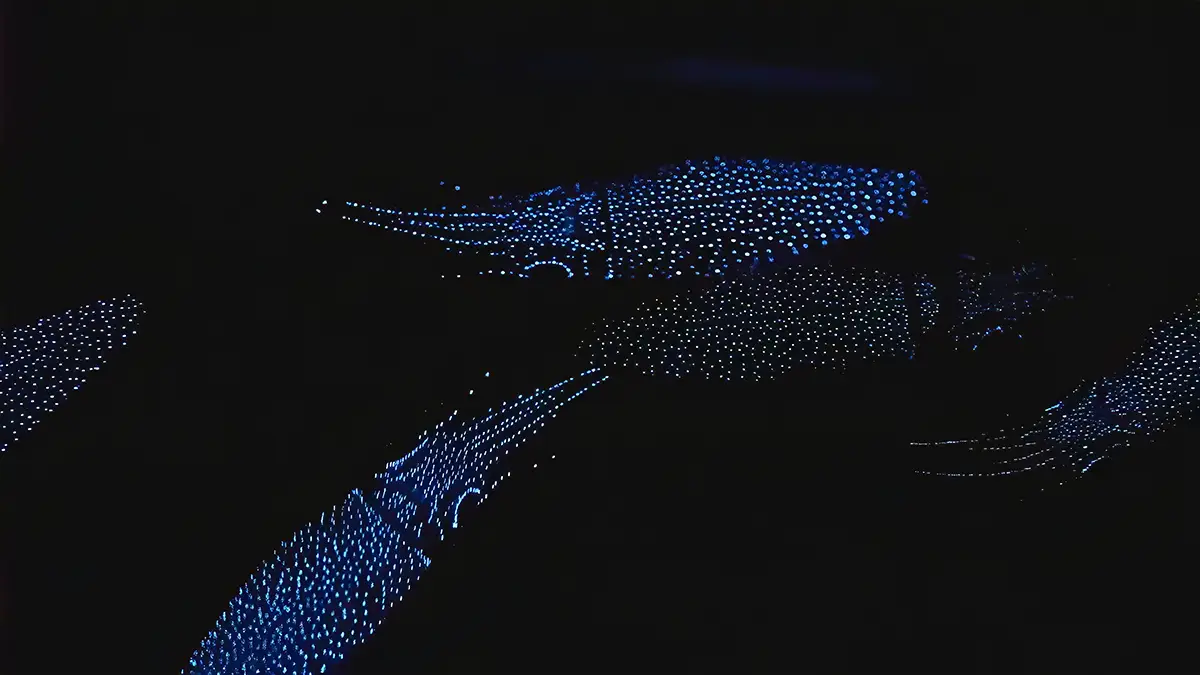
Tap to learn moreA highly specialized, light-emitting organ found on many deep ocean fish and squid. Some fish, like the deep-sea dragonfish, have multiple photophores that can glow in different colours simultaneously.
Coelenterazine
Tap to learn moreThe specific chemical molecule responsible for producing light in most deep ocean animals. Many creatures cannot make it themselves and must acquire it through the food chain by eating copepods.
Twilight Zone
Tap to learn moreThe layer of the ocean spanning from roughly 200 to 1,000 metres deep. So little light from the surface reaches these depths that to human eyes, it is virtually pitch black.
Counter-illumination
Tap to learn moreA camouflage technique used by many twilight zone animals. They produce light from photophores on their undersides that exactly matches the faint glow filtering down from above. Seen from below, their silhouette disappears against the lit water. The barreleye fish defeats this trick with green eye pigments that screen out the bioluminescence.
Vertical Migration
Tap to learn moreEvery night as the sun drops below the horizon, vast numbers of deep-sea creatures rise towards the surface to feed on plankton. This daily mass migration of krill, copepods and other small crustaceans is the largest animal movement on the planet. As they ascend, larger predators like the electric torpedo ray follow them up from the depths to hunt.
Bioluminescent Food Chain
Tap to learn moreThe Japanese researcher Yuichi Oba discovered that one species of copepod, Metridia pacifica, can manufacture coelenterazine inside its own body. Copepods are the main food source for shrimps and small fish, so the molecule is passed to their predators. Those predators are then eaten by larger hunters, and so the light-emitting molecule spreads through the entire deep-sea community via the food chain.
Marine Detritus
Tap to learn moreA constant rain of nutrients drifts down from the surface waters and accumulates on the sea floor. This sinking organic material is the primary food source for the rich communities of bottom-dwelling animals at 770 metres, including the sea pens, fish and scavengers that thronged the floor when Bruce Robison's submersible touched down.
Try It: Pilot the Submersible into the Abyss
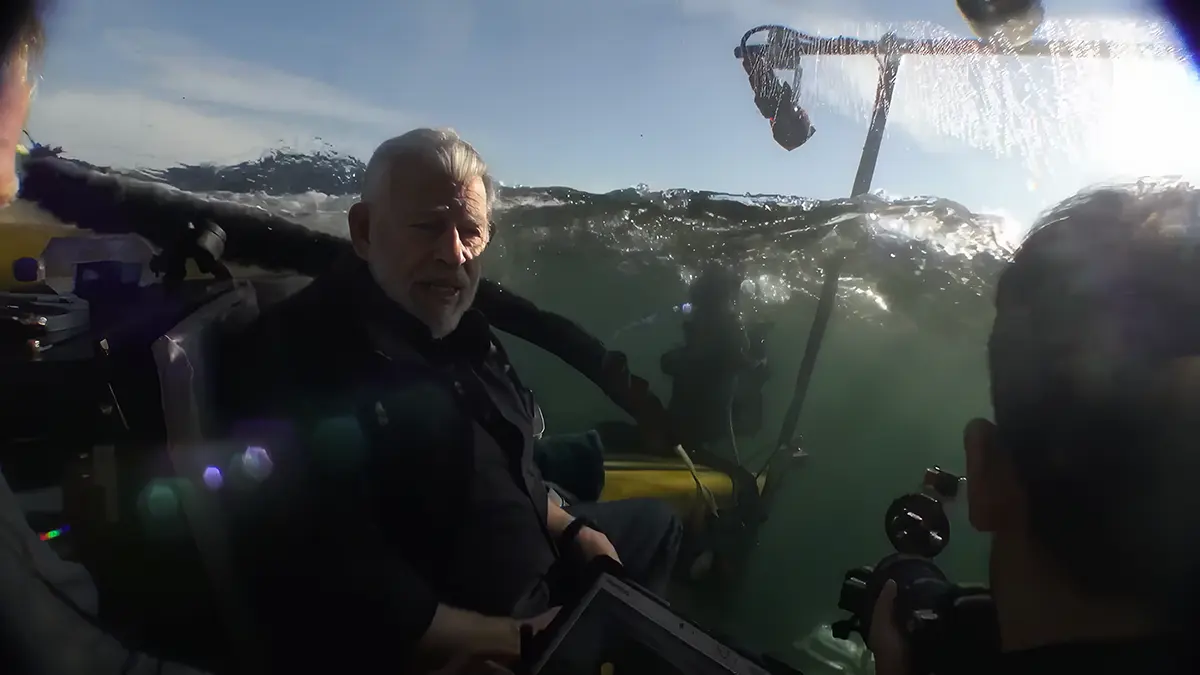
Press Begin Dive to launch the submersible. The sub will descend automatically through the Monterey Submarine Canyon. Move your mouse over the water and the headlight beam will follow. Click a creature when one drifts past to study it in the light. Can you document all six species before reaching the canyon floor?
- Sea Salp 80 m
- Comb Jelly 250 m
- Colobonema 570 m
- Barreleye Fish 600 m
- Atolla Jellyfish 680 m
- Luminous Sea Pen 770 m
Creatures of the Abyss
Discover the remarkable and bizarre animals featured in David Attenborough's deep-sea exploration.
Barrel-eye Fish
Tap to learn moreAn extraordinary fish whose head is encased in a transparent dome. It hangs almost motionless, directing its massive green eyes upwards to search for the faint silhouettes of prey overhead, ignoring other animals' bioluminescent camouflage.
Siphonophore
Tap to learn moreWhile it looks like a single piece of string, this creature is actually a huge colony of individuals linked together. Some individuals use jet propulsion to move the colony, while others deploy hair-like tentacles to catch passing prey.
Atolla Jellyfish
Tap to learn moreWhen stimulated or attacked, this jellyfish produces a spectacular strobing pinwheel of blue light. Scientists believe this is not to scare the predator, but acts as a "burglar alarm" to attract an even larger predator to eat its attacker.
Red Torpedo Jellyfish
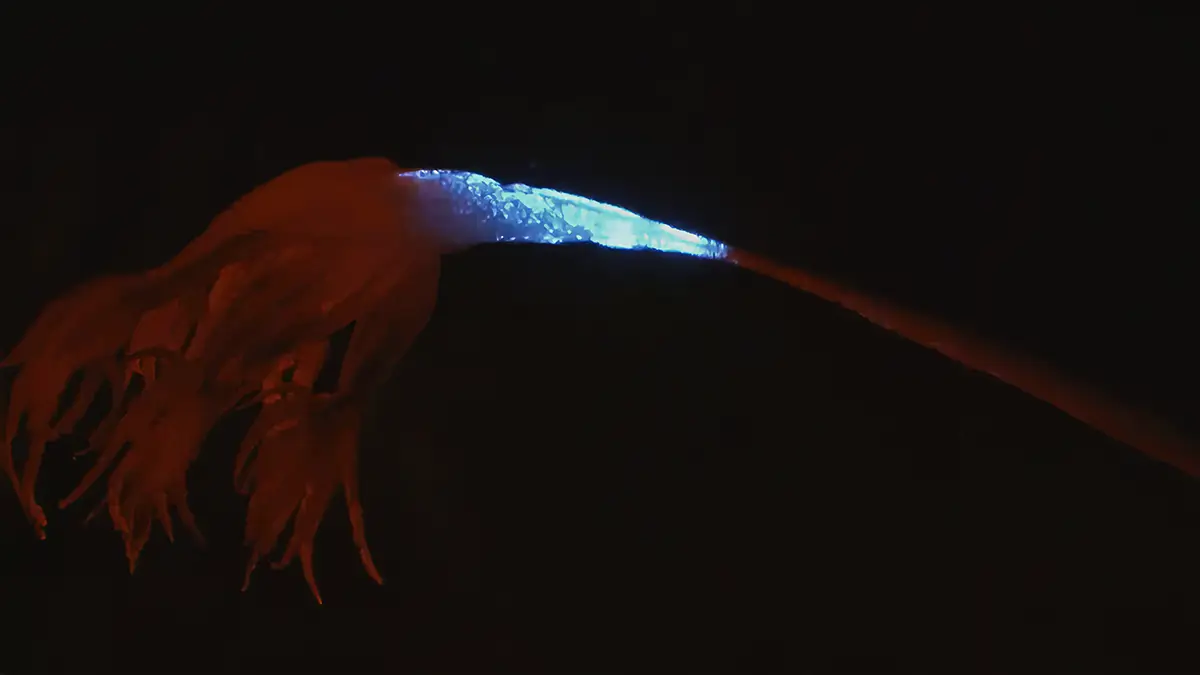
Tap to learn moreA voracious hunter with stiff tentacles. When threatened, it ejects tiny blue glowing particles that drift away, tricking predators into following the glowing trail while the jelly escapes in the dark.
Sea Salp
Tap to learn moreWhat looks like a single creature is in fact a chain of nearly 50 individuals linked together. Sea salps are jelly-like filter feeders that suck water in through their tubular mouths and strain out tiny food particles. They drift through the sunlit zone in long, transparent ribbons.
Comb Jelly (Beroe)
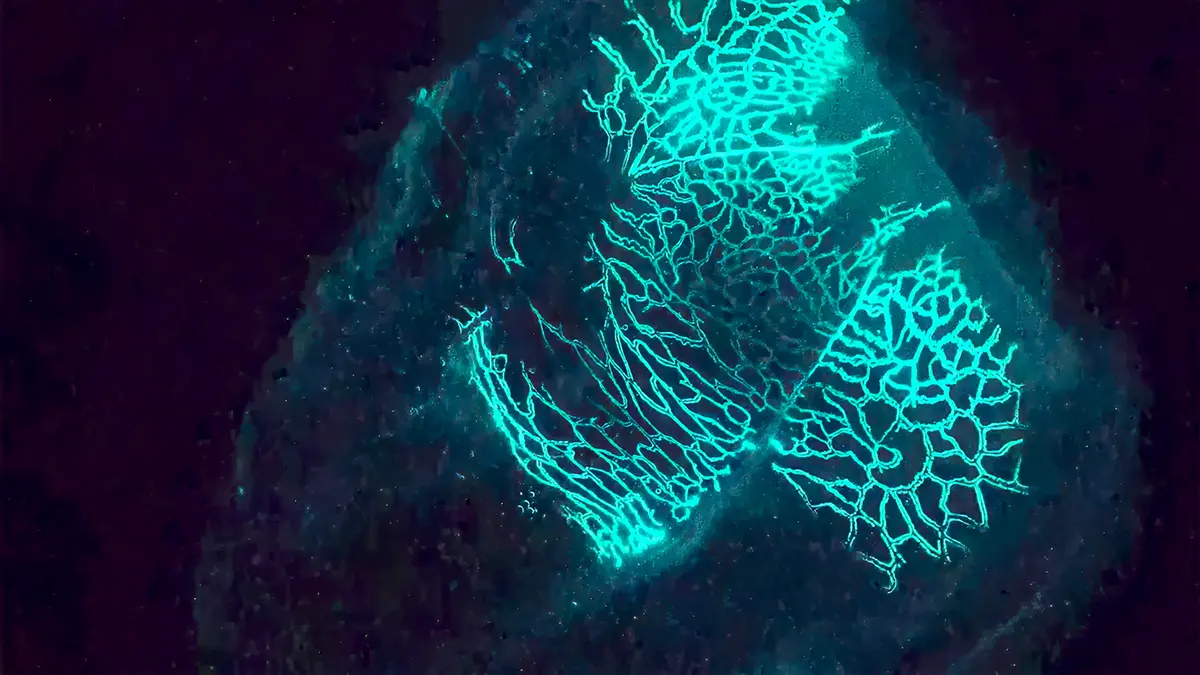
Tap to learn moreRows of tiny beating hairs called cilia run the entire length of its body and propel it through the water. The shimmering rainbow flashes that ripple along the comb jelly are not bioluminescence at all. The shimmer is light from the submersible reflected and split into colours by the moving cilia.
Colobonema Jellyfish
Tap to learn moreA small but strong-swimming medusa, just five centimetres long. As Bruce Robison's submersible closed in at 570 metres, the Colobonema put on a sudden turn of speed and dropped its tentacles deliberately. While the predator's eyes follow the discarded glowing appendages, the jellyfish makes its escape into the dark.
Pacific Sleeper Shark
Tap to learn moreA gigantic deep-sea predator nearly three metres long. When Edith Widder used her electronic jelly to mimic the Atolla's distress flashes, this shark was drawn in by the light show. It came not for the jellyfish itself but for the smaller fish gathered around. Its visit confirmed the burglar alarm hypothesis: the Atolla's pinwheel really does summon larger hunters.
Apply Your Knowledge
Connect what you have learned about deep-sea creatures to their extraordinary survival strategies.
Match the Concepts
Click an organism to select it, then click the matching description to place it.
Real-World Challenge
Imagine you are a marine biologist working in Monterey Bay. If you could design a new instrument or underwater drone to observe deep ocean life without disturbing their natural behaviour or blinding them, what would it look like and what sensors would it use?
Protecting This Ecosystem Today
The deepest parts of our oceans are fragile and highly sensitive to human intervention. Explore the real-world threats facing this ecosystem and how scientists are responding.
Response: The Monterey Bay National Marine Sanctuary is now one of the most highly protected marine areas in the world. Strict regulations prevent drilling and mining, preserving the delicate balance of the food chain—from the microscopic copepods to the giant sleeper sharks.
Response: Shining bright human lights into the abyss blinds the animals and prevents us from seeing their natural bioluminescence. Scientists and engineers developed ultra-sensitive low-light cameras and red-light rigs (which deep-sea creatures cannot see) to study them safely.
What Has Changed Since This Documentary Aired
Technology and science are always advancing. Here is how deep-sea exploration has evolved.
Updated: Back then, capturing footage required newly developed camera rigs mounted directly to manned submersibles like the Nadir. Today, institutes use advanced Autonomous Underwater Vehicles (AUVs) equipped with AI-driven low-light cameras. These robots can map the ocean floor and track delicate comb jellies without human pilots!
Test Your Understanding
Answer these questions and get instant feedback. How many can you get right?
Results
Your score:
Reflection
The documentary reveals how extreme darkness forces incredible adaptations in marine life. If humans were forced to live in permanent darkness, how do you think our bodies or technology would adapt over thousands of years?
Episode Discussion
Share your thoughts on this David Attenborough documentary