There has been a millhouse on this bend of the river since the Domesday Book. Sarah and Henry are the latest in a thousand years of owners. Sarah describes living there the way you’d describe living on a boat: water at the front, water at the back and the whole place marooned in between. When the river is high, two thirds of their garden goes underwater. Everything that survives in it has organised its life around that fact.
What happens in this episode
A garden that floods on purpose
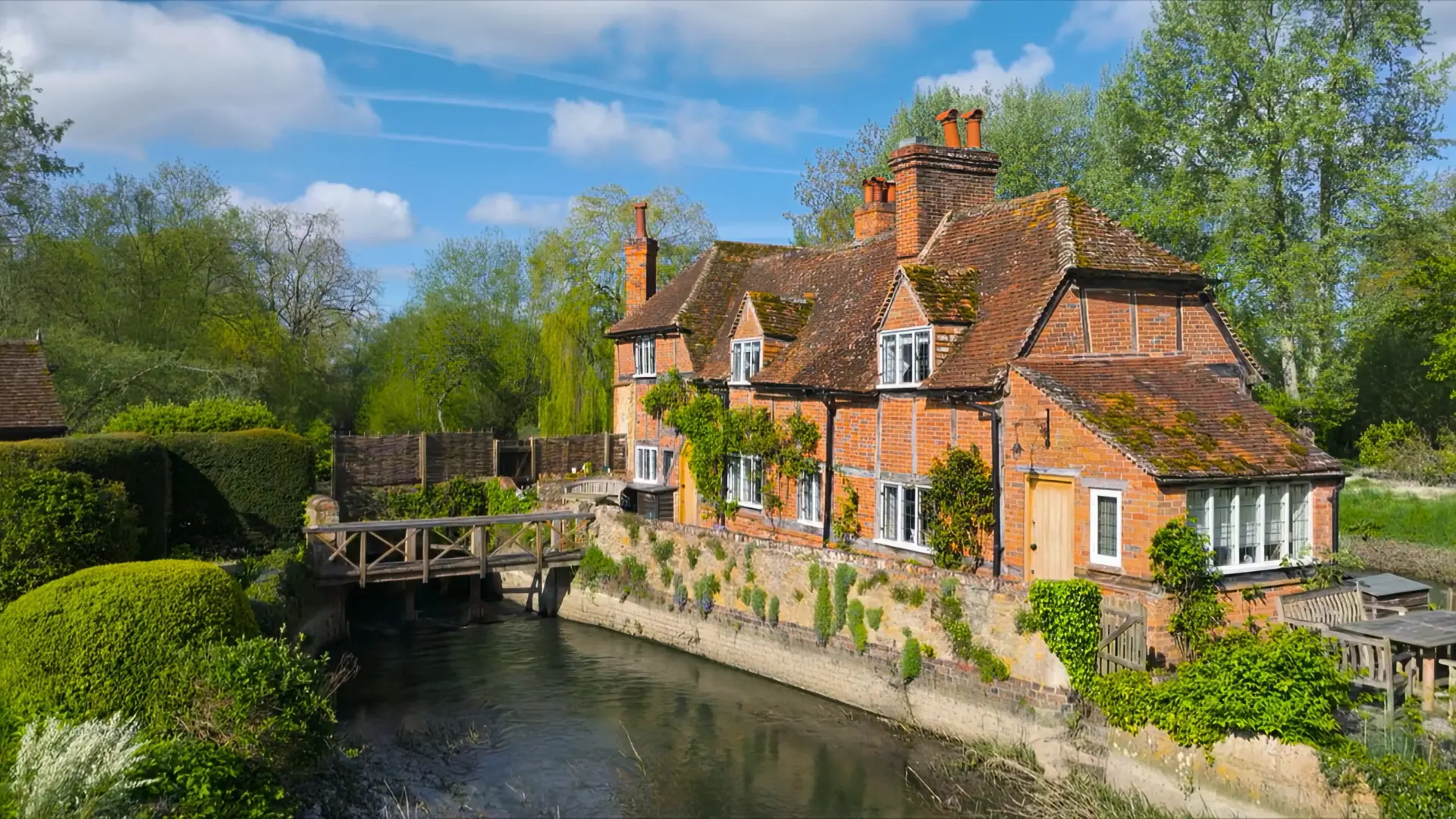
The millhouse sits on its floodplain, which is the whole reason the wildlife here does so well. Photograph: BBC / Plimsoll Productions.
Sarah and Henry don’t fight the water. The wood and the meadow are left completely wild; only the ground above the floodplain gets managed as a garden at all. Grass goes uncut and deadwood is left to rot where it falls. When Sarah mows near the river she deliberately leaves the verge intact so the current can’t eat into the bank.
That last decision turns out to matter more than any of the others, because a pair of kingfishers dig their nest burrow into that bank and it sits barely above the waterline.
Fifteen fish a day, into a burrow that floods
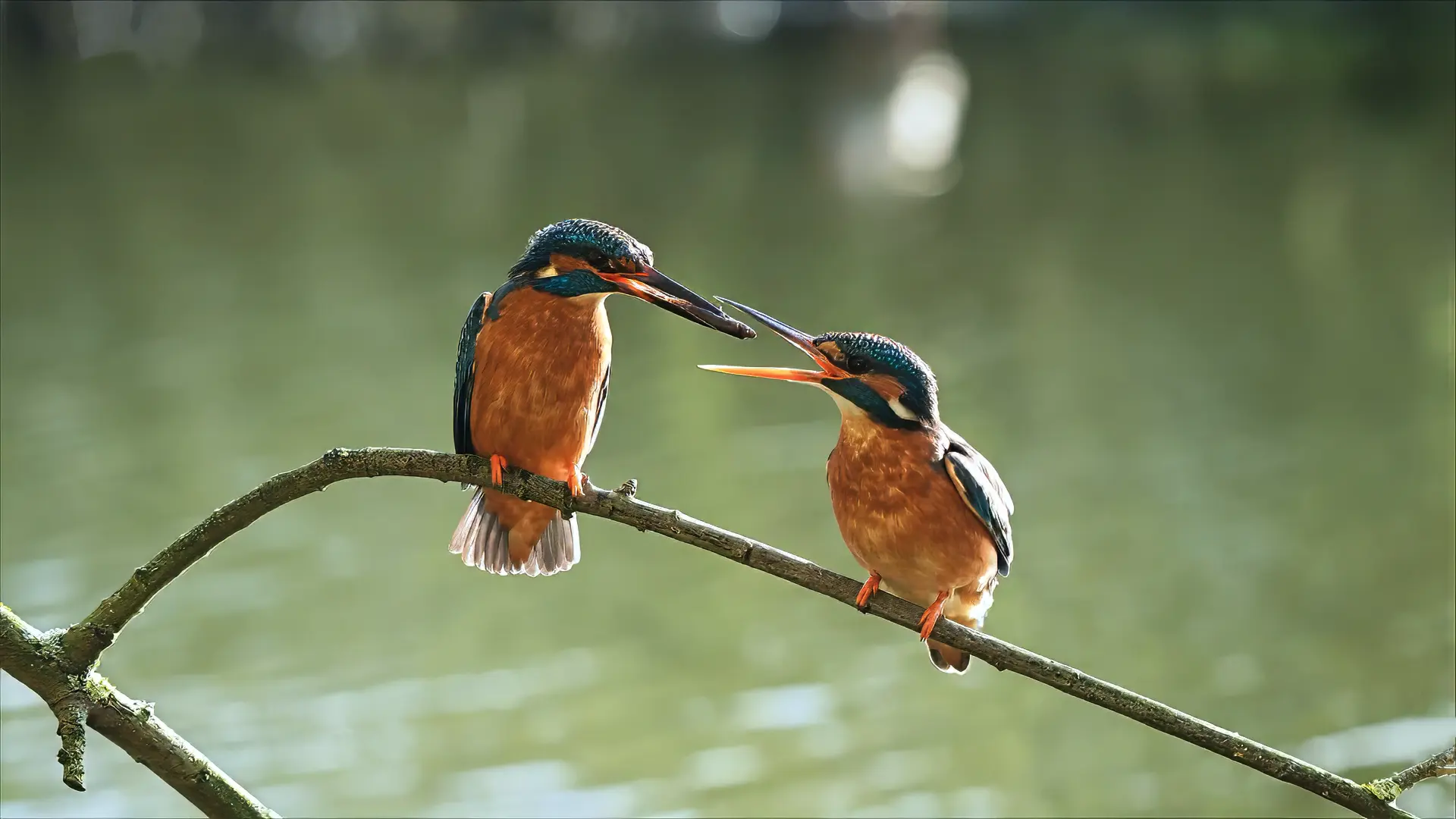
The fish is the argument. A male kingfisher courts by proving he can catch enough for two. Photograph: BBC / Plimsoll Productions.
The kingfisher is about as British as a bird gets in the public imagination, which makes it slightly odd that the family first evolved in the jungles of Asia. This male holds half a mile of river on each side of the millhouse and needs fifteen fish a day just to keep himself going. Only one kingfisher in four lives beyond its first year, so every failed dive is expensive.
Spring makes it harder. The river runs high and thick with silt, which is close to useless for a bird that hunts by sight. He hits the water at 25 miles an hour. Special oils in his eyes cut the glare bouncing off the surface, which is the difference between seeing a minnow and guessing where one might be.
Then a female arrives and the arithmetic changes again. He can’t just feed himself now; he has to prove he can feed a family, one minnow at a time, handed over on a branch. Once six chicks hatch, the pair are catching over a hundred minnows a day between them into a burrow a metre long that will flood if the river comes up a foot.
Staying still is usually the right answer
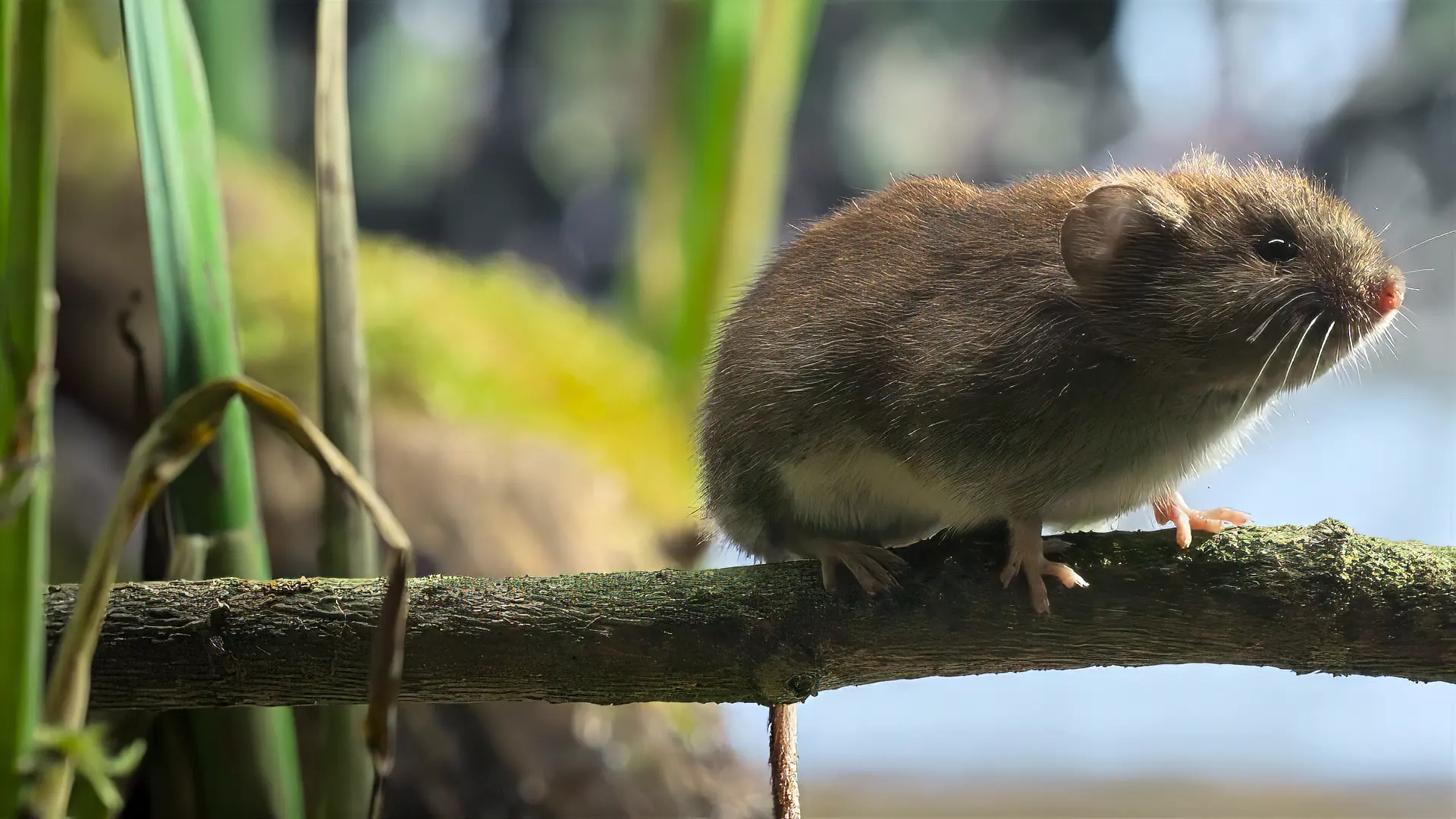
Freezing is a bank vole’s best defence against anything that hunts by spotting movement. A robot mower isn’t hunting and doesn’t care. Photograph: BBC / Plimsoll Productions.
There are around 25 million bank voles in Britain and Sarah and Henry hardly ever see one. This female spent the winter in a burrow under the lawn, just above the flood line and comes out in spring badly needing food.
Most things that hunt her find her by spotting movement, so her instinct when threatened is to freeze. It’s a good instinct, honed over a very long time. On this lawn it’s close to lethal. Robotic mowers are becoming common in British gardens and a lot of them can’t detect a small mammal at all. An animal whose best defence is holding perfectly still is exactly the animal a machine like that will run over.
She gets a reprieve when Henry builds a log pile in the drying woodland. It’s an afternoon’s tidying to him; to her it’s a nursery, with more food around it than the lawn ever had. A male turns up following her scent within days.
Britain’s largest reptile finds the nest
Her pups arrive three weeks later, smaller than a jelly baby and completely blind. Then a grass snake comes through the log pile.
At a metre and a half it’s the largest reptile we have. It hunts with senses that are hard to hide from. Resting its lower jaw on the ground lets it pick up the tiniest vibrations. Its forked tongue smells in stereo, so it can work out which direction a scent is strongest from and follow it. It finds the nest.
The mother has one option, which is to move every pup somewhere else, one at a time, while the snake is still in the pile. She does it. Deep inside the logs the family is safe.
Doris
Mallards are the commonest of Britain’s 22 species of duck. Sarah and Henry have an affectionate name for the one that owns their stretch of water. Doris isn’t the sweet little duck she looks like. When the drakes gather she assesses them, dismisses the lightweights one by one, then nods her head to signal which one she has picked.
She nests in a pollarded willow rather than on the ground, which is a considerably better decision than most mallards make. Nine eggs, laid one a day over nine days, then four weeks of sitting almost without a break.
Eggs laid on different days should hatch on different days; ducklings that hatch on different days don’t survive, because the whole brood has to leave the nest together. So the chicks talk to each other through the shell and coordinate. All nine hatch inside a few hours.
Less than a day later they jump. The willow is well above the ground and none of them can fly; their down cushions the landing and they all get up and follow her.
What Doris did about the otter
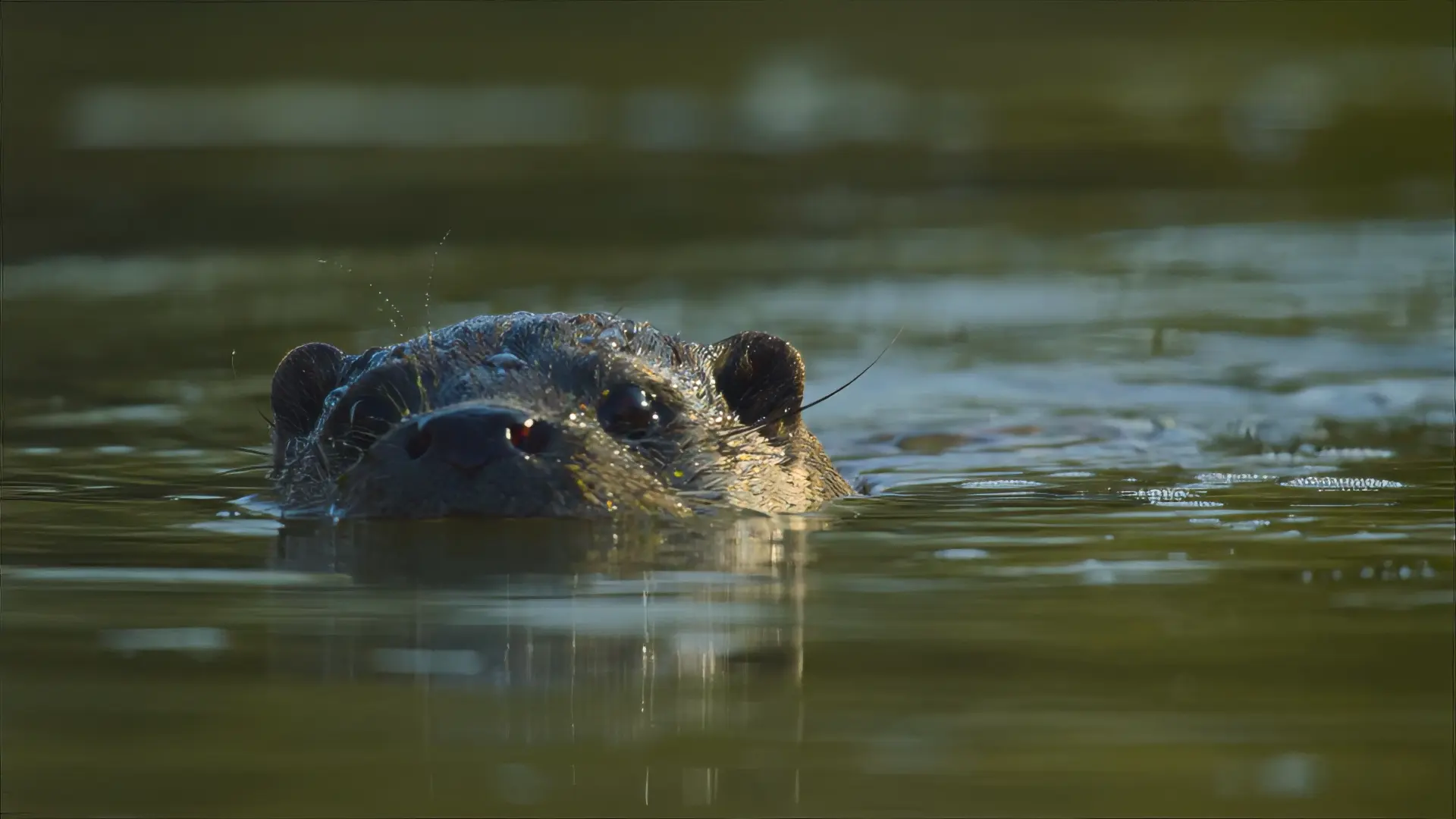
The otter lives in the old mill channel directly under the TV room. In thirty years the owners have seen it three times. Photograph: BBC / Plimsoll Productions.
The old mill channel runs directly under the TV room. An otter has made it home. She takes over a kilo of fish a night. In thirty years of living above her, Sarah and Henry have seen an otter three times.
As the season turns, her diet moves on to larger and plumper prey, which in this garden means Doris’s ducklings. When she comes for them the ducklings are still too young to fly, so Doris puts herself in the water between the otter and her brood and acts as a decoy.
It works. The otter takes something smaller and the ducklings get away. Doris raises all nine to six weeks, against odds of roughly one in three surviving to adulthood. Sarah and Henry have very little idea any of it happened.
A good day to be a damselfly
On a hot May bank holiday the lawn fills with dancing mayflies, which is one of those sights that reads as pure decoration until you know what it costs.
The nymph has spent two years underwater. She makes one run for the surface, past larval damselflies that hunt with a 95 per cent success rate, sheds her exoskeleton and spreads a set of wings. She then does something no other winged insect does: she moults a second time, as an adult, before she’s ready to join the dance.
Mayflies mate on the wing. The female flies back to the river, lays her eggs and dies. One day as an adult, after two years in the water. The bodies feed the next generation, along with the Daubenton’s bats working the river overhead. Six of Britain’s 18 bat species come regularly into gardens for insects; a single Daubenton’s takes 3,000 in a night.
The wettest September on record
Autumn arrives early and hard. Oxfordshire has its wettest September since records began, rain falling across miles of countryside gets funnelled between banks a few metres apart. The river bursts.
The vole has to abandon the log pile. She carries a mental map of her territory, but the flood has drowned most of the landmarks she navigates by. Bank voles avoid water. She works her way back to the highest ground she knows, which is the lawn.
The kingfishers can’t move at all. Their chicks are in a burrow with a river rising towards it.
What saves both of them is the thing that makes the garden inconvenient in the first place. The floodplain does its job: the water spreads sideways into the surrounding fields instead of climbing. The waterline stops just below the nest. The same mechanism has protected the millhouse for a thousand years.
The chicks fledge. One of them refuses to leave and has to be tempted out with fish by a visibly patient father.
The science underneath it
Quick facts
- A male kingfisher hits the water at 25 miles an hour and needs 15 fish a day to keep himself alive.
- Only one kingfisher in four survives beyond its first year.
- There are roughly 25 million bank voles in Britain and almost nobody sees one.
- A grass snake reaches a metre and a half, which makes it Britain’s largest reptile.
- A mayfly nymph spends two years underwater and one day as an adult.
- Damselfly larvae hunt with a 95 per cent success rate.
- A single Daubenton’s bat catches around 3,000 insects in one night’s hunting over the river.
- Just one duckling in three reaches adulthood. Doris got all nine of hers there.
How they filmed it
Otters are shy, spend a lot of their time underwater and were comfortably the hardest animal here to get on camera. Cinematographer Sam Oakes ended up sitting in a chair in the river inside a sunken hide, in 20 degree air and considerably colder water, describing it on camera as his flooded office. Sarah brought him tea.
Five days in, he had no otter. Meanwhile assistant producer Matt Tomlinson, sitting on the bank filming Doris to pass the time, watched an otter come out of nowhere and charge the ducklings. That footage, of an otter hunting in a domestic garden, has barely been captured before.
I like that the best sequence in the episode came from the person who wasn’t sitting in the river. It also happened to be the wettest year on record, so the crew spent a good deal of time hauling equipment out before the water took it.
Where this leaves us
The ecology in this episode is ordinary in the best sense. Nothing here is rare or exotic; it’s a kingfisher, a vole, a duck and an otter, in a garden, doing what they’ve always done.
What has changed is how much the garden matters. British rivers are in poor shape for water quality. A stretch like this one, with an owner who leaves the bank alone and lets two thirds of the place run wild, is now a genuine hotspot rather than a normal piece of countryside. Sarah and Henry are clear that they don’t think of it as theirs. As Sarah puts it, the kingfishers have been here a lot longer, and they just hope to stay out of the way.