When Matt Wilson moved into this glen on the west coast of Scotland, it was rough grassland with no trees on it. Nearly forty years later it runs from bog to mature woodland. He’s written down what visits it every single morning of that time. His diary is the reason this episode can tell you what has changed here, and it’s a better piece of long-term recording than most funded surveys manage.
What happens in this episode
Minus eighteen, and a hunk of venison
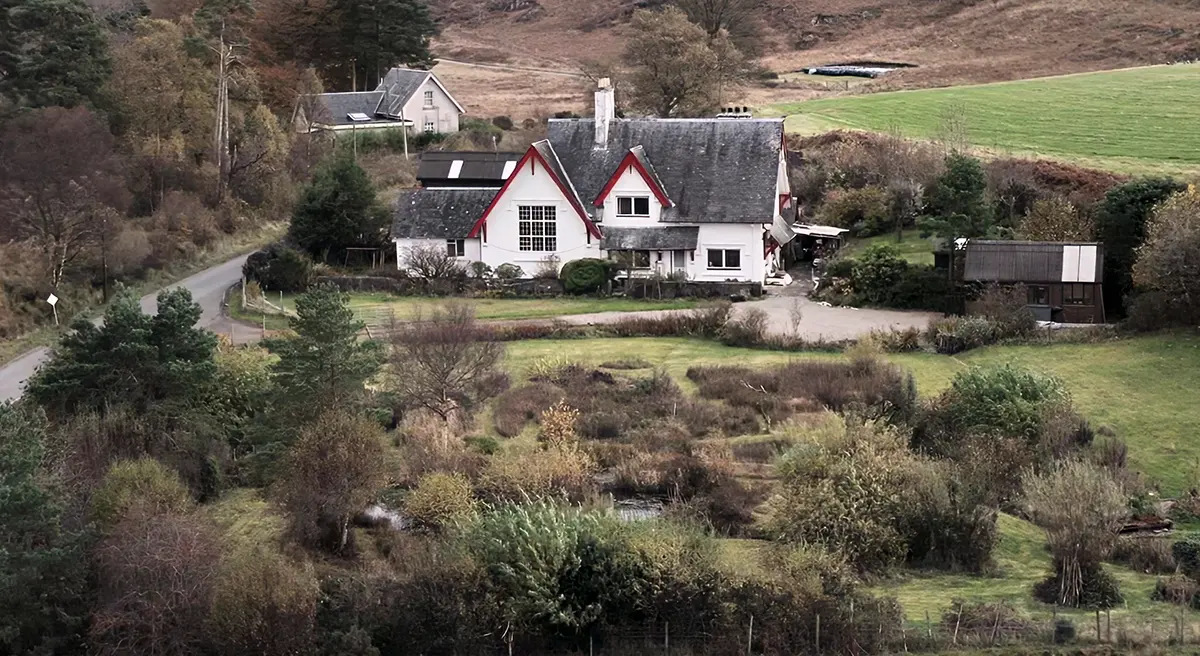
Forty years ago this was rough grassland with nothing on it. Photograph: BBC / Plimsoll Productions.
Winter here doesn’t mess about. The Met Office recorded minus 18 in Sutherland during filming, the coldest January night in the UK for fifteen years. It rains here on more than 200 days a year, which puts the glen among the wettest places in Britain.
Into that comes a female buzzard. Buzzards are the most widespread bird of prey we have, so it’s easy to forget that having one actually land in your garden is rare. Snow has made hunting almost impossible and she’s close to starving, so Matt puts out a hunk of venison.
Her eyesight is about three times sharper than ours and she can see trouble coming from a mile off. What she can’t do is watch and eat at the same time. A young male drops in on her.
She pins him. Buzzards can and do kill each other with their beaks and talons; she’s the bigger bird, so she could finish it. She doesn’t. The likeliest reason is that he’s her own son. He’s still not welcome and he leaves to find territory of his own.
The rarest thing in the garden
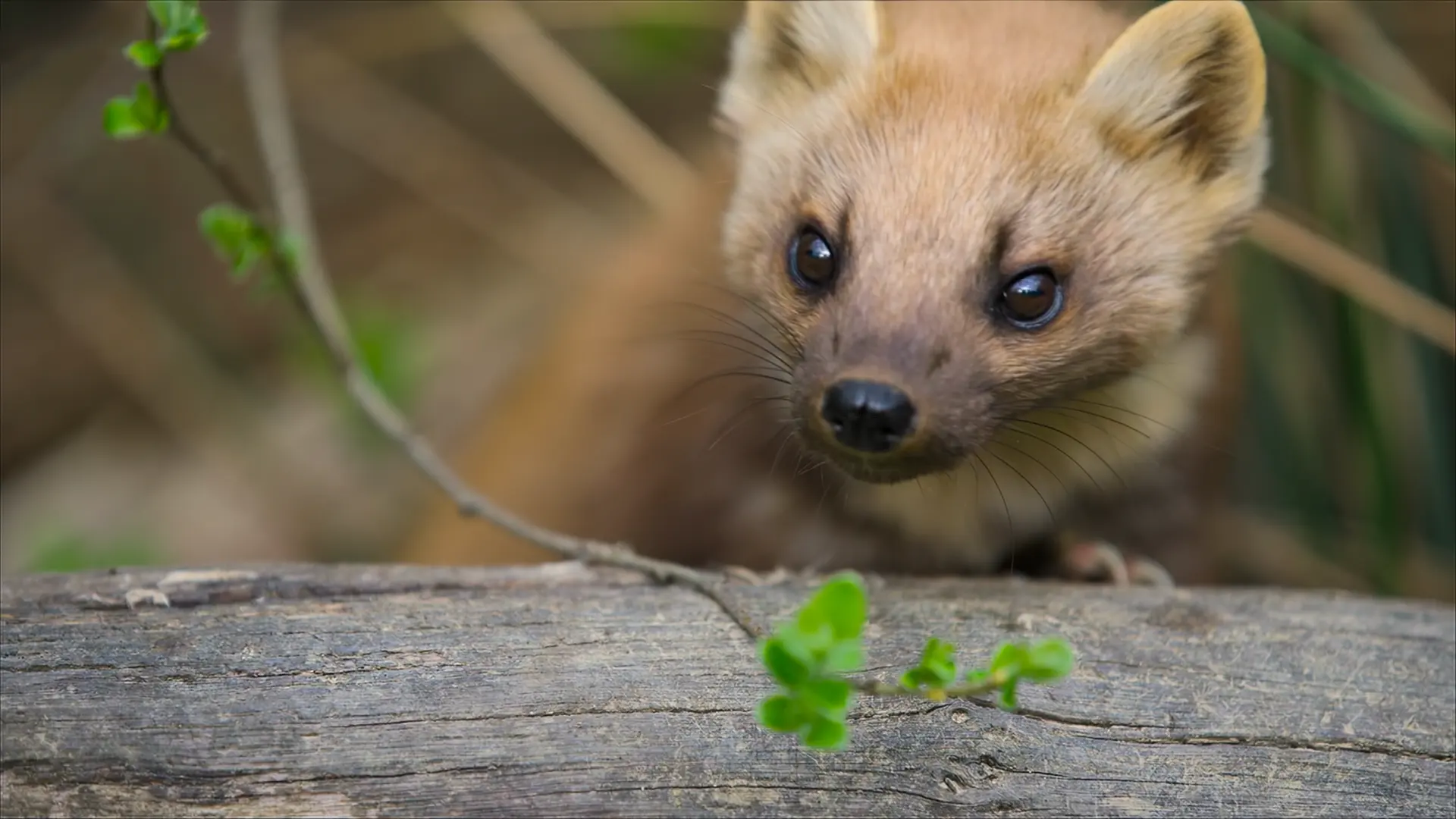
Cat-sized and a member of the weasel family. Hunted almost to extinction a century ago. Photograph: BBC / Plimsoll Productions.
A pine marten is a cat-sized member of the weasel family and one of Britain’s rarest mammals. Its natural home is mature woodland, which is exactly what Scotland stopped having: by the early twentieth century all but five per cent of the country’s forest had been felled; pine martens were hunted to the edge of extinction on top of that.
The Western Highlands stayed a stronghold. The forest here is now fragmented, so the animals have adapted by using gardens instead. At one property down the road from Matt they’ve been coming for twenty years. Up to sixteen pine martens can visit that garden in a single night.
Matt’s is a different proposition: a female under a year old, looking for a territory and far more cautious. She only comes in when he’s out of sight. He’s careful not to let her lose that wariness of people, which is the right call and costs him the pleasure of seeing her up close.
She takes peanuts, which are useful to her because they’re dense in calories and fat, but pine martens are omnivores with a serious taste for meat.
Climbing a vertical sandbank for a bird
The meat arrives in spring, in a bank at the bottom of the garden. Sand martins turn up, having flown around 3,000 miles from Africa, and dig nesting burrows about a metre deep into the sand so they’re out of reach of predators.
The pine marten disagrees about the “out of reach” part. She has strong claws and, unusually, ankles that rotate, which lets her work a vertical face the way a squirrel does. She gets onto the bank and starts trying to reach the holes.
The sand is too unstable to dig into, so she changes tactics and works along the face flushing the adults out into the air instead. It takes a while. It works.
Nobody had filmed this before.
A ten-night absence
There may be fewer than a thousand pairs of barn owls left in Scotland, because the cold and the wet put this at the northern limit of what the species can handle. Matt built them a retreat that’s sheltered from the weather and, importantly, impossible for a pine marten to get into.
His female is five years old and has already raised ten owlets in that box. Then her mate disappears for ten nights.
The likely reason is a good piece of biology. Barn owls have given up waterproofing in their feathers in order to have completely silent wings, which is what makes them such effective hunters. The trade-off is that heavy rain grounds them. In a place with 200 wet days a year, that’s a real cost.
He comes back and she won’t have him. He has to court her again from scratch. He brings a plump vole; she’s unimpressed. A mouse; still no. Gift after gift after gift, until finally she accepts him.
Four eggs, three owlets, thirty days from laying to the first hatch. Each owlet needs up to four meals a day and should double its weight every ten days, so between them the parents may catch a thousand small mammals over three months. Two months on, all three fly. Only one barn owl in four survives its first year, but Matt has now watched this one female raise thirteen.
A toad, a road and three years
A common toad left this garden as a toadlet nearly three years ago. Now he’s coming back, because the pond here is the only one in the glen.
Between him and it is a road. Tens of thousands of toads are killed on British roads every year making exactly this journey. The film follows him across in a sequence far tenser than a toad crossing a road has any right to be.
He makes it. He pairs up. The female lays something like a thousand eggs, hatching in ten days. Only around one in 500 toad eggs becomes an adult toad.
Four months later one of them surfaces, no bigger than a human fingernail. The first thing he has to get past is Matt, who’s thinning the pond edge. What he has to get past after that is stranger: sundews, which are native carnivorous plants that catch insects on sticky tentacles and dissolve them with enzymes. Matt actively encourages them because they keep the midges down. The toadlet walks straight through them and is big enough to survive it.
Coming back
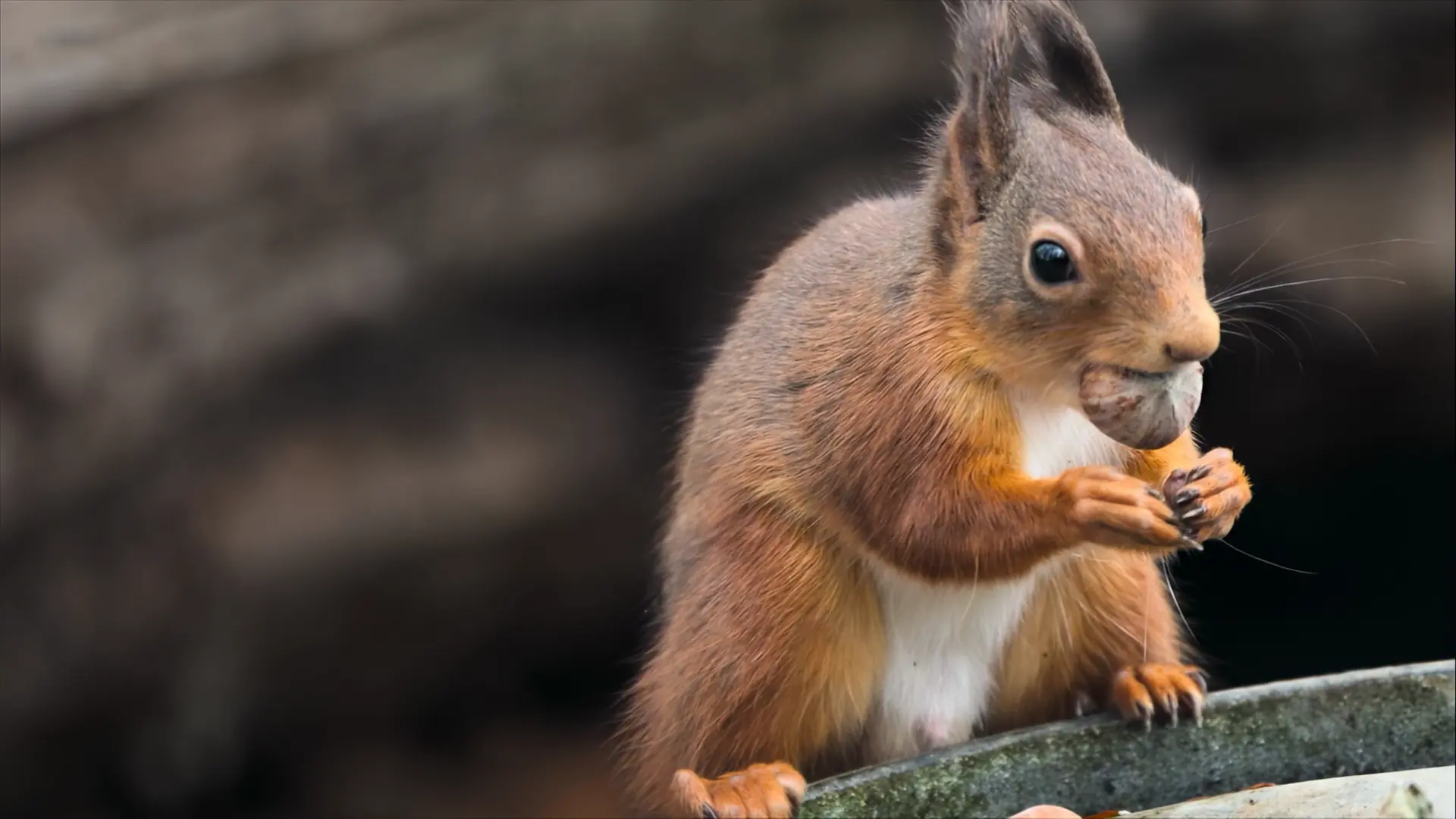
Reintroduced a few miles away and moving back through the glen one garden at a time. Photograph: BBC / Plimsoll Productions.
Red squirrels have been pushed out of most of Britain by American greys and have held on in parts of Scotland, helped by thick coats and tufted ears that suit the climate. They’ve been absent from Matt’s area for years.
A few miles away they’re being reintroduced and spreading back by using gardens as stepping stones between the fragments of woodland. This year’s young may travel ten miles looking for territory. Matt’s trees are still maturing. The suggestion, left open at the end, is that they’ll reach him.
Elsewhere in the garden the cold-blooded residents come up to bask once March gets to about nine degrees: slow worms and common lizards out of their winter burrows, the slow worms breeding in the warmth of the compost heap. Crossbills work the pines, prising seeds out of the cones with beaks whose tips cross over. Redwings arrive from further north, where the winter is worse than this one.
A den above the lounge
By autumn the pine marten needs somewhere to den: safe, high off the ground, away from foxes. She tries Matt’s shed and can’t find anything suitable in it.
So he builds her one. A properly designed box, filled with comfortable bedding, positioned in the gap under the eaves where he knows she can get in, with a ladder leading up to it. Then he leaves it alone, because she has to find it herself.
She finds it. It sits directly above his lounge, so it’s warm. With more than one pine marten now using the garden, there’s a decent chance of kits in the spring.
The science underneath it
Quick facts
- Temperatures during filming fell to minus 18 in Sutherland, the coldest January night in the UK for fifteen years.
- It rains here on more than 200 days a year.
- By the early twentieth century all but five per cent of Scotland’s forest had been cut down.
- Up to sixteen pine martens can visit a single Highland garden in one night.
- There may be fewer than a thousand pairs of barn owls left in Scotland.
- A barn owl pair may catch a thousand small mammals over three months to raise a brood. Only one owl in four survives its first year.
- Only around one in 500 common toad eggs becomes an adult.
- A buzzard’s eyesight is roughly three times sharper than ours.
How they filmed it
Simon King has known Matt for over thirty years and is used to working in wilderness. His assessment of a Highland garden is that it may sound domestic but it’s every bit as wild. He was under no illusions about the job.
Pine martens have exceptional hearing. The click of a camera switch is enough; even putting up a hide risks changing their behaviour. He sat out night after night being eaten by midges and got nothing for a long time.
The first shots came after a six-hour wait, lit by nothing more than the light spilling out of Matt’s kitchen window onto the grass, caught on an ultra-sensitive camera. He then rigged the whole garden with camera traps, remote cameras and den cameras. Those finally caught the sand martin hunt.
Watching it back with Matt, the two of them land on the honest problem with it: the sand martins are charming, the pine marten is charming and the two of them coming together is hard to watch. Everything is interlaced.
Where this leaves us
Four decades of planting turned bare grassland into somewhere a starving buzzard, a barn owl at the northern edge of its range and one of Britain’s rarest mammals can all get through a Highland winter. That’s one person, one garden and a lot of patience.
Matt’s own summary is the line the whole series has been working towards, so I’ll leave it to him: it’s their garden, not his, and it gives him enormous pleasure to share it with them.