
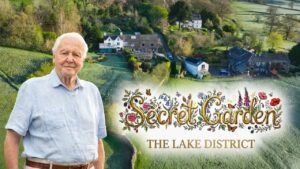
Secret Garden | The Lake District
Episode Info
01 // ARCHIVE_DATAAcross the British Isles, magical places exist right under our noses, often disguised as ordinary domestic spaces. In this spectacular third episode, Sir David Attenborough reveals that an idyllic country garden in Cumbria is actually as diverse and competitive as a tropical rainforest. The hidden lives of navigating field mice, migrating swallows, and acrobatic flies prove that extraordinary wildlife dramas unfold daily when our backs are turned. Discovering these secrets highlights exactly how crucial our own gardens are for native conservation.
What Happens in This Episode
An Idyllic Cumbrian Haven
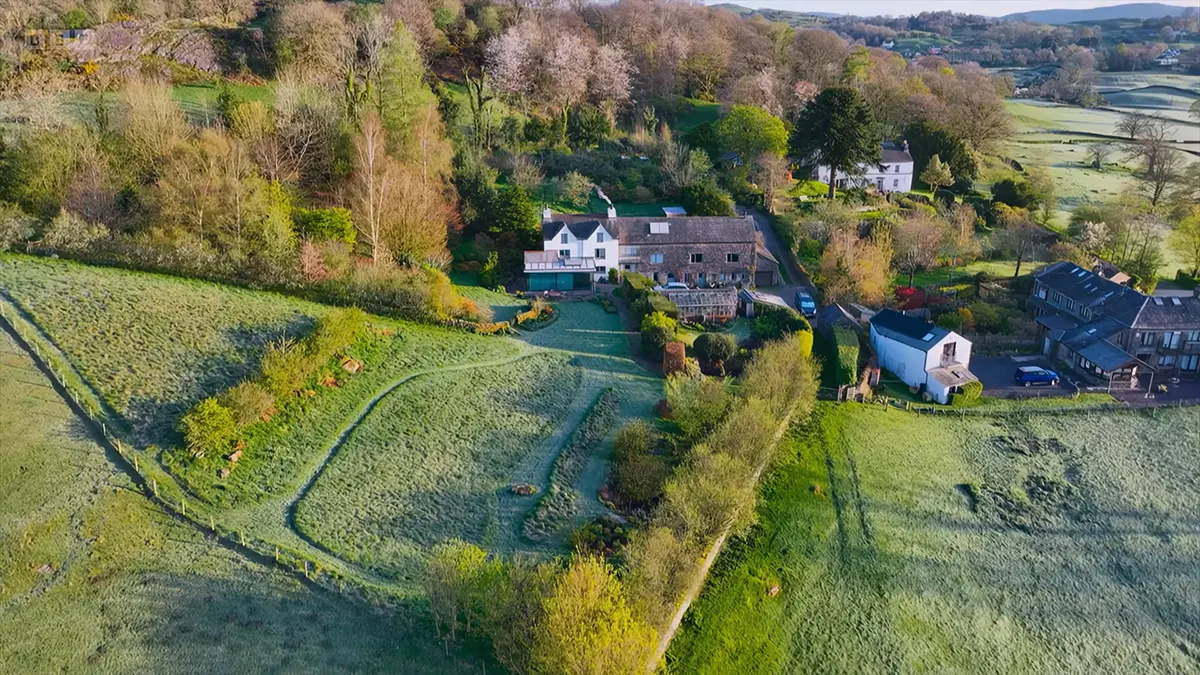
Chris and Liz have transformed their stunning Lake District property into a vital, wild sanctuary for native animals in David Attenborough’s Secret Garden The Lake District Episode 3.
The story begins at a remarkable property nestling in the heart of the Lake District. Ten years ago, owners Chris and Liz left the city to find a rural retreat, and they fell completely in love with this sprawling garden. They practice a specific philosophy of wild gardening. They leave patches of meadow uncut, maintain traditional dry stone walls, and cherish their pond, actively choosing to preserve the natural habitat. This hands-off approach creates a sanctuary for native wildlife, transforming their backyard into a bustling ark of biodiversity.
The Resourceful Field Mouse

Field mice use incredible navigation skills to avoid predators while searching for a mate in David Attenborough’s Secret Garden The Lake District Episode 3.
Life on the ground is highly perilous. A brave four-month-old female field mouse emerges from the dry stone wall looking for a mate. To find him across a wide, featureless lawn, she listens for a secret, ultrasonic serenade that is entirely inaudible to predatory owls. Furthermore, to ensure she can safely return home, she utilises an incredible survival strategy. She actively creates a trail of physical objects to signpost her way back. Astoundingly, field mice are the only mammals other than humans known to position objects as landmarks in this way.
The Swallow’s Epic Return

After an epic migration, swallows return to specific British outbuildings to nest in David Attenborough’s Secret Garden The Lake District Episode 3.
Meanwhile, the garden welcomes a long-distance traveller. A male barn swallow completes an epic 6,000-mile journey from southern Africa. Out of 25 million gardens in Britain, he returns to the exact one where he was raised, arriving at Chris and Liz’s tool shed. Swallows mate for life, but the pair only reunites for the breeding season. Time is incredibly tight. After weeks of waiting, his female partner finally arrives, and they must immediately begin rearing their five demanding chicks. They face a monumental task, as each chick requires a thousand insects every single day.
The Zebra Jumping Spider’s Hunt
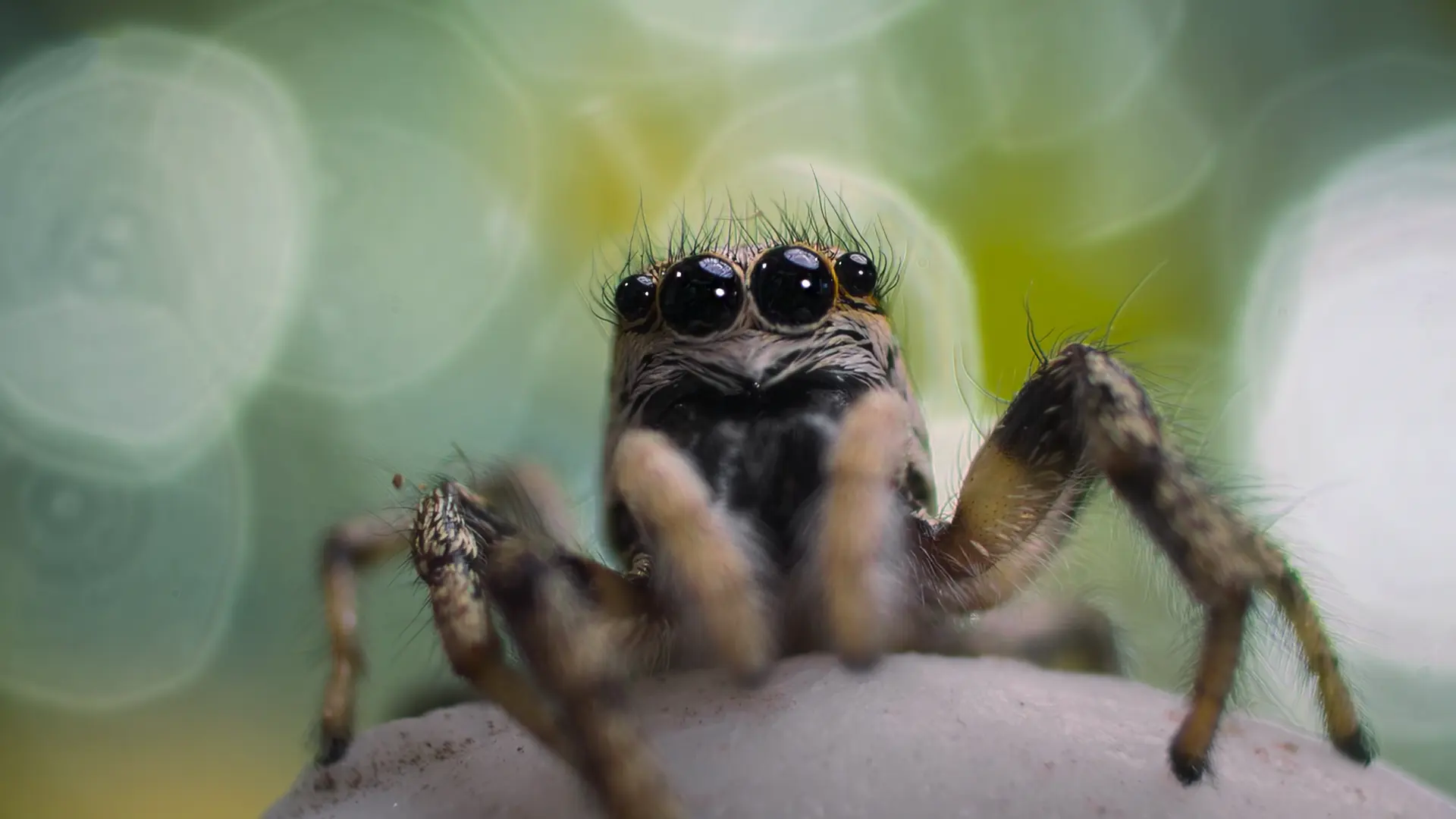
The eight-eyed zebra jumping spider proves to be an incredible pest controller in David Attenborough’s Secret Garden The Lake District Episode 3.
Down among the greenhouse seedlings, a miniature pest controller is hard at work. The zebra jumping spider is one of over a hundred spider species found in British gardens. Unlike traditional spiders, he does not spin a web. Instead, he actively stalks his prey. He relies on eight highly specialised eyes; six detect peripheral movement, while two large front eyes bring his target into sharp focus. Consequently, he eats the tiny pests that would otherwise destroy the vegetables, proving to be an invaluable asset to the garden ecosystem.
The Semaphore Fly’s Spectacle

A tiny female semaphore fly waits patiently for a mate’s acrobatic display in David Attenborough’s Secret Garden The Lake District Episode 3.
Over by the pond, the breeding season brings out bizarre behaviours. A female semaphore fly waits patiently on the vegetation. She is waiting for the male to perform his elaborate courtship routine. To win her affection, the male must wave his uniquely shaped, paddle-like white front feet like signal flags. If that fails to impress her, he will perform the fastest backflip in the insect world, executing a complete rotation in just a twenty-fifth of a second.
The Danger of the Pheasant
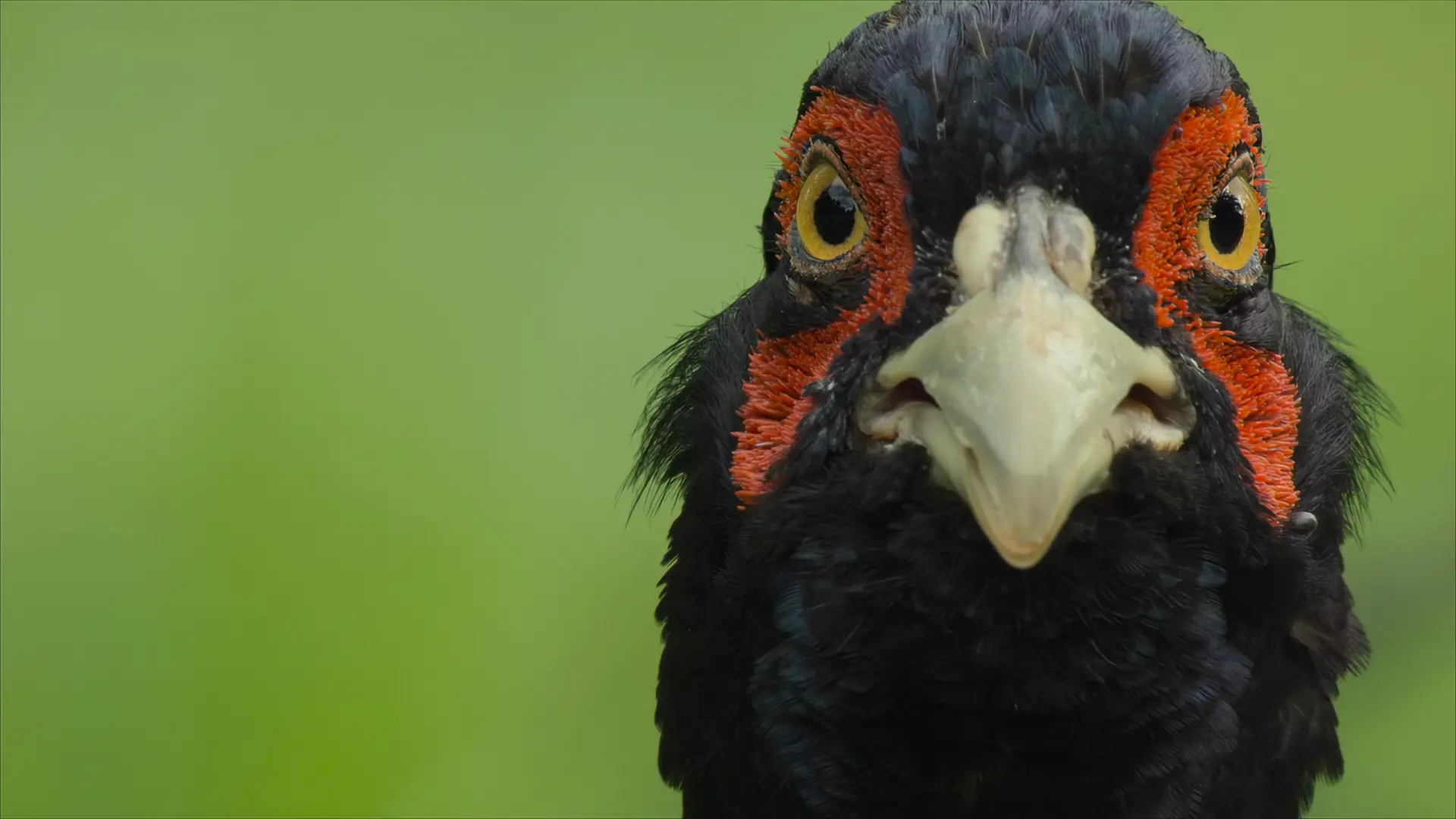
The beautifully coloured male pheasant poses a major threat to garden amphibians in David Attenborough’s Secret Garden The Lake District Episode 3.
However, not all garden visitors are welcome to the smaller inhabitants. While Chris carefully scythes the meadow to protect resting amphibians like the palmate newt, a much larger threat roams the borders. The brightly coloured male pheasant looks stunning, but these birds are voracious predators of insects, reptiles, and amphibians. With over 30 million pheasants released into the British countryside annually, they represent a significant challenge to the delicate balance of the garden’s native ecosystem.
Key Scientific Concepts
Ultrasonic Communication
Many small mammals communicate at frequencies too high for human ears or predators to detect. Field mice use these hidden sonic serenades to safely locate mates across open, dangerous ground.
Spatial Memory and Landmarking
Animals use various methods to navigate their environments. Field mice possess exceptional spatial memory and deliberately arrange physical objects to act as visual waymarks, ensuring they can retrace their steps safely.
Avian Migration Navigation
Migratory birds like swallows perform astonishing feats of navigation. They use a combination of the earth’s magnetic field, the position of the sun, and visual landmarks to return to the exact same nesting sites year after year.
Quick Science Facts
- Field mice are the only mammals other than humans known to actively position objects as navigational landmarks.
- Barn owls undertake an incredible 6,000-mile migration from southern Africa to reach the UK each spring.
- A single growing swallow chick requires approximately 1,000 insects every single day to survive.
- To attract a mate, the male semaphore fly performs a backflip in just a twenty-fifth of a second, the fastest in the insect world.
- Over 30 million pheasants are released into the British countryside every year, severely impacting native insect and amphibian populations.
Looking to The Future
- The observational ecology documented in this 2026 broadcast remains a highly accurate representation of British wildlife struggles. The severe decline in flying insect populations due to pesticides and habitat loss continues to put immense pressure on migratory birds like swallows.
- Ecologists now heavily promote the exact methods used by Chris and Liz. Leaving patches of grass untrimmed and tolerating “weeds” like nettles and brambles are proven, scientifically backed ways to support local biodiversity.
- Furthermore, the impact of released game birds on native ecosystems is a growing field of study, confirming that the sheer density of pheasants puts immense strain on vulnerable amphibians and reptiles trying to survive in rural gardens.
Explore Further with The Open University
This magnificent series is a proud collaboration between the BBC and The Open University. If this episode has inspired you to investigate the wildlife in your own backyard, you can dive deeper into these topics. Discover more about the animals on your doorstep with the Open University’s Secret Garden Interactive Experience. It is a brilliant resource for learning how to identify and protect the urban and rural ecology right outside your window.
David Attenborough
02 // EPISODE_INDEX10 nature documentaries and films remastered for modern classrooms
🌎 Earth Science (1 episodes)

🌱 Living Things (9 episodes)

David Attenborough's Galapagos - Origin
David Attenborough's Tasmania - Full Documentary

Kingdom of Plants - Part 03
David Attenborough's Galapagos - Adaptation
David Attenborough's Galapagos - Evolution

David Attenborough | Kingdom of Plants - Part 01

Kingdom of Plants - Part 02

Secret Garden | Bristol Town House
Secret Garden | The Lake District
Loading Biography...
Episode Discussion
Share your thoughts on this David Attenborough lecture