

































































Earth's Crust
We spend our entire lives walking on the Earth's surface, but have you ever wondered what is right below your feet? It might feel completely solid and still, but the ground is actually a thin, cracked shell floating on a sea of boiling, liquid rock! Let us dig deep and explore the fiery science of the Earth's crust.
What Lies Beneath the Ground You Walk On?
Not at all! The solid ground we walk on is just an incredibly thin outer layer. Just a few kilometres down, the rock is so hot that it actually melts and flows like a thick liquid.
Volcanoes and earthquakes! The intense heat and pressure from deep inside our planet eventually have to get to the outside, shifting the ground and causing fiery eruptions.
Put Your Instincts to the Test
Think about what you already know about our planet. Pick an answer for each question, then see if your instincts were right.
The thin outer shell! The crust is incredibly thin compared to the rest of the planet, just like the delicate shell of a hard-boiled egg.
They are moving very slowly! The giant tectonic plates we live on shift a few centimetres every year, which is roughly the exact same speed that your fingernails grow.
They push upward to form mountains! Massive mountain ranges, like the towering Himalayas, were created by two tectonic plates slowly crashing into one another over millions of years.
Understanding the Science
Let us break down the massive layers of our planet and understand what makes the ground shake with Bill Nye the Science Guy.
Key Concepts
Crust
Tap to learn moreThe crust is the thin, solid outer layer of the Earth where all human, animal, and plant life exists. Instead of being one solid piece, it is broken into giant puzzle pieces.
Mantle
Tap to learn moreThe mantle is the incredibly thick layer of hot, molten rock right beneath the crust. The intense heat from this layer slowly bubbles and flows, causing the solid crust above it to constantly move.
Core
Tap to learn moreThe core is the super-hot, solid metal centre of the Earth, made mostly of iron and nickel. It is as hot as the surface of the Sun, providing the heat that drives all the geology on our planet!
Tectonic Plates
Tap to learn moreTectonic plates are the giant, puzzle-like pieces of the Earth's crust that constantly shift and slide around the globe, carrying the oceans and continents on their backs.
Pangaea
Tap to learn morePangaea was a giant supercontinent that existed millions of years ago. All the Earth's landmasses were once connected into one huge island before the tectonic plates drifted apart to where they are today.
Volcano
Tap to learn moreA volcano is an opening or vent in the crust where hot gases and molten rock escape to the surface. Bill Nye the Science Guy explains this is just the inside of the Earth finding a way to get to the outside.
Magma vs. Lava
Tap to learn moreMolten rock has two different names depending on where it is! It is called magma when it is trapped underground, and it becomes lava the moment it erupts onto the surface.
Seismometer
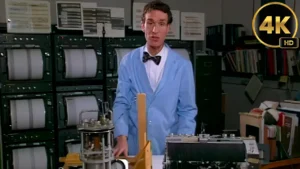
Tap to learn moreA seismometer is a highly sensitive scientific instrument used to measure and record the vibrations of earthquakes. It uses a heavy weight to draw squiggly lines when the ground shakes.
Try It: Interactive Plate Boundary Simulator
Take control of the forces beneath your feet. Pick a scenario, set the mantle heat, then press Start and watch the convection currents drag the crust. Each scenario tells a different geological story: continents colliding into mountains, oceanic plates diving beneath continents to build volcanoes, or plates pulling apart while new seafloor is born at the ridge.
Apply Your Knowledge
Let us see if you can match these geological terms to their descriptions.
Match the Concepts
Click an object to select it, then click the matching description to place it.
Real-World Challenge
Imagine you are a structural engineer planning a new city. Based on how tectonic plates move, what specific safety features would you include in your skyscraper designs if the city sits directly on an active fault line?
What Has Changed Since This Episode Aired
This episode first aired in 1993. While the massive tectonic plates still move just as slowly, our ability to measure them and predict danger has advanced incredibly!
Updated: With advanced GPS satellites orbiting the Earth, scientists can track tectonic plate movements down to the exact millimetre in real-time! This is the exact same technology that powers the maps on a mobile phone.
Updated: Not in the 1990s! Today, thanks to deep-ocean sensors and artificial intelligence, we now have Early Warning Systems. These systems detect the very first, fastest seismic waves and instantly send alerts to mobile phones, giving cities critical seconds to stop trains and shut off gas lines before the damaging waves arrive.
Updated: Digging all the way through the crust used to be considered science fiction. Now, scientists on specially designed drilling ships are actively drilling deep into the ocean floor, where the crust is thinnest. They have successfully brought up enormous core samples from the deepest layers, getting us closer than ever to touching the actual mantle!
Test Your Understanding
Answer these questions and get instant feedback. How many can you get right?
Results
Your score:
Reflection
Think about the mountains, oceans, and valleys near where you live. How do you think the slow, steady movement of tectonic plates shaped your local landscape over millions of years?
Episode Discussion
Share your thoughts on this Bill Nye The Science Guy episode