
















Biodiversity
Bill Nye the Science Guy Explains the Secrets of Biodiversity
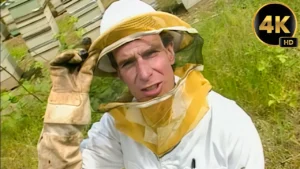
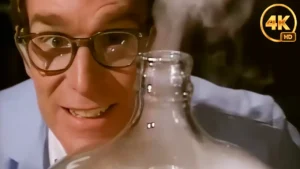
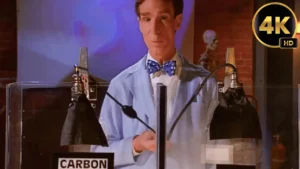
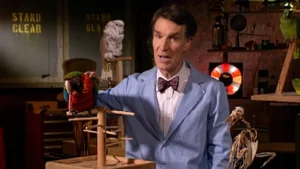
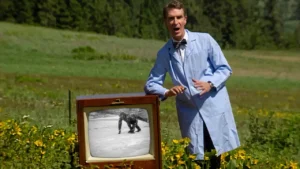
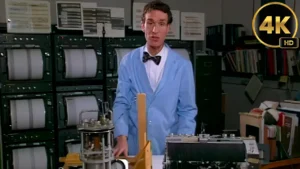
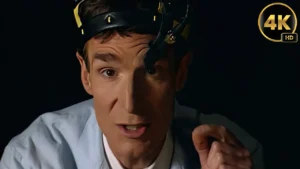
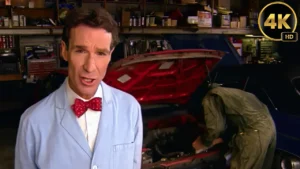
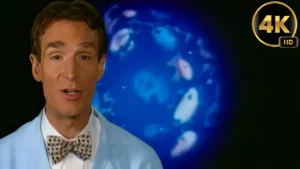
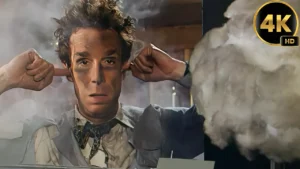
Science rules! In this classic remastered episode, our favourite bow-tied educator, Bill Nye, takes us on a journey to explore the variety of life on Earth. Between where we stand and where we sit, there are millions of different species all living together in environments called ecosystems. But what makes an ecosystem successful? The answer is biodiversity.
The Ecosystem Puzzle with Bill Nye
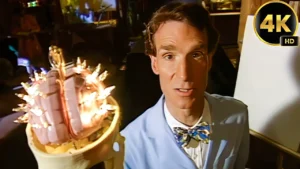
An ecosystem is a community where plants and animals interact with their surroundings. Bill Nye explains that for an environment to be healthy, it must have many different types of living things. To help us understand this, Bill uses the analogy of a wooden puzzle. Each species represents a single piece that fits into the larger structure.
While an ecosystem might survive the loss of one or two species, losing too many makes the entire system rickety and unstable. Consequently, the whole chain can fall apart. This demonstrates that humans, as a species, must be extremely careful about how we manage these delicate natural balances.
Interdependence and Human Impact with Bill Nye
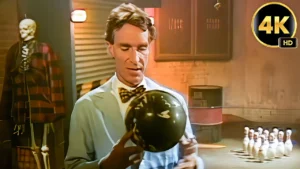
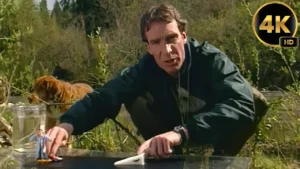
The principle of interdependence is central to the work of Bill Nye. He shows that every living thing depends on other organisms for survival. In a visual experiment using a game of sticks, Bill proves that you cannot remove one part of an environment without disturbing almost all the others.
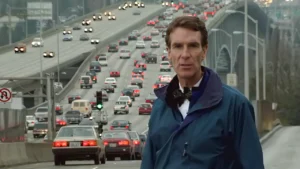
Humans often change these environments by introducing non-living things like roads and buildings. This alters the available food, light, and water for local species. For example, a farm field with only one type of crop, also known as a monoculture, is far less successful and diverse than a natural woodland. We must remember that nature’s problems are our problems because we are part of nature too.
Helping Local Wildlife with Bill Nye the Science Guy
One of the most practical lessons from Bill Nye involves supporting biodiversity in our own gardens. Bill demonstrates how to build a bird box to provide a home for local species. However, the placement of the box is a matter of precise science.
You should always nail your bird box to the northeast side of a building or tree. This specific placement supports thermoregulation, ensuring the young birds do not get too hot in the afternoon sun. Furthermore, small actions like recycling glass and paper or staying on marked trails while hiking can promote a healthier ecosystem for everyone.
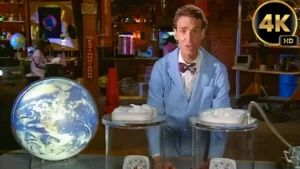
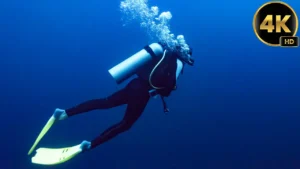
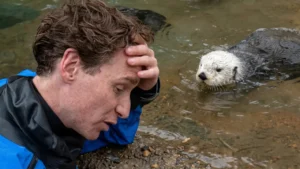
From the deep sea, which covers seventy-one percent of our planet, to the microscopic mould spores in the air, biodiversity is everywhere. As the saying goes: you cannot pick a flower without jiggling a star. We are all connected in the great lattice of life.
SCIENCE SINCE THE 90’s
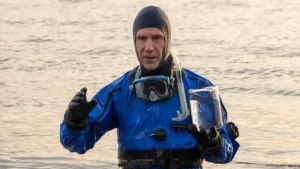
Since this episode originally aired in the 1990s, the study of biodiversity has moved into the digital age. While Bill Nye correctly highlighted the importance of species variety, modern scientists now use environmental DNA, or eDNA, to track species. By simply analysing a sample of water from a pond or the ocean, researchers can identify every organism that has passed through, from microscopic bacteria to giant whales. This technology allows for much faster monitoring of ecosystem health than was possible during the original broadcast.
More Seriously Scientific Links
Visit our homepage for more Seriously Scientific news and documentaries: https://seriouslyscientific.com.
Subscribe to our YouTube channel for more science content: https://youtube.com/@seriouslyscientific.
Get free science worksheets for students and educators: https://teacherspayteachers.com/Store/Seriously-Scientific.
Follow us on BlueSky: https://bsky.app/profile/seriouslysci.bsky.social.
Bill Nye The Science Guy
02 // EPISODE_INDEX100 remastered episodes across 5 seasons of science education
Season 1 (20 episodes)
Bill Nye The Science Guy | Flight
Bill Nye The Science Guy | Earth's Crust
Bill Nye The Science Guy | Dinosaurs
Bill Nye The Science Guy | Skin
Bill Nye The Science Guy | Buoyancy
Bill Nye The Science Guy | Gravity
Bill Nye The Science Guy | Digestion
Bill Nye The Science Guy | Phases of Matter
Bill Nye The Science Guy | Biodiversity
Bill Nye The Science Guy | Simple Machines
Bill Nye The Science Guy | The Moon
Bill Nye The Science Guy | Sound
Bill Nye The Science Guy | Garbage
Bill Nye The Science Guy | Structures
Bill Nye The Science Guy | Earth's Seasons
Bill Nye The Science Guy | Light & Color
Bill Nye The Science Guy | Cells
Bill Nye The Science Guy | Electricity
Bill Nye The Science Guy | Outer Space
Bill Nye The Science Guy | Eyeballs
Season 2 (20 episodes)
Bill Nye The Science Guy | Magnetism
Bill Nye The Science Guy | Wind
Bill Nye The Science Guy | Blood & Circulation
Bill Nye The Science Guy | Chemical Reactions
Bill Nye The Science Guy | Static Electricity
Bill Nye The Science Guy | Food Webs
Bill Nye The Science Guy | Light Optics
Bill Nye The Science Guy | Bones & Muscle
Bill Nye The Science Guy | Oceanography
Bill Nye The Science Guy | Heat
Bill Nye The Science Guy | Insects
Bill Nye The Science Guy | Balance
Bill Nye The Science Guy | The Sun
Bill Nye The Science Guy | The Brain
Bill Nye The Science Guy | Forests
Bill Nye The Science Guy | Communication
Bill Nye The Science Guy | Momentum
Bill Nye The Science Guy | Reptiles
Bill Nye The Science Guy | Atmosphere
Bill Nye The Science Guy | Respiration
Season 3 (21 episodes)
Bill Nye The Science Guy | Planets & Moons
Bill Nye The Science Guy | Pressure
Bill Nye The Science Guy | Plants
Bill Nye The Science Guy | Rocks & Soil
Bill Nye The Science Guy | Energy
Bill Nye The Science Guy | Evolution
Bill Nye The Science Guy | The Water cycle
Bill Nye The Science Guy | Friction
Bill Nye The Science Guy | Germs
Bill Nye The Science Guy | Climates
Bill Nye The Science Guy | Waves
Bill Nye The Science Guy | Ocean Life
Bill Nye The Science Guy | Mammals
Bill Nye The Science Guy | Spinning Things
Bill Nye The Science Guy | Fish
Bill Nye The Science Guy | Human Transportation
Bill Nye The Science Guy | Wetlands
Bill Nye The Science Guy | Birds
Bill Nye The Science Guy | Populations
Bill Nye The Science Guy | Animal Locomotion
Bill Nye The Science Guy | Invertebrates
Season 4 (19 episodes)
Bill Nye The Science Guy | Rivers & Streams
Bill Nye The Science Guy | Nutrition
Bill Nye The Science Guy | Marine Mammals
Bill Nye The Science Guy | Earthquakes
Bill Nye The Science Guy | NTV Music Videos
Bill Nye The Science Guy | Spiders
Bill Nye The Science Guy | Pollution Solutions
Bill Nye The Science Guy | Probability
Bill Nye The Science Guy | Pseudoscience
Bill Nye The Science Guy | Flowers
Bill Nye The Science Guy | Archaeology
Bill Nye The Science Guy | Deserts
Bill Nye The Science Guy | Amphibians
Bill Nye The Science Guy | Volcanoes
Bill Nye The Science Guy | The Heart
Bill Nye The Science Guy | Inventions
Bill Nye The Science Guy | Computers
Bill Nye The Science Guy | Fossils
Bill Nye The Science Guy | Time
Season 5 (20 episodes)
Bill Nye The Science Guy | Forensics
Bill Nye The Science Guy | Space Exploration
Bill Nye The Science Guy | Genes
Bill Nye The Science Guy | Architecture
Bill Nye The Science Guy | Farming
Bill Nye The Science Guy | Life Cycles
Bill Nye The Science Guy | The Scientific Method
Bill Nye The Science Guy | Atoms
Bill Nye The Science Guy | Ocean Exploration
Bill Nye The Science Guy | Lakes and Ponds
Bill Nye The Science Guy | Smell
Bill Nye The Science Guy | Caves
Bill Nye The Science Guy | Erosion
Bill Nye The Science Guy | Fluids
Bill Nye The Science Guy | Comets and Meteors
Bill Nye The Science Guy | Measurement
Bill Nye The Science Guy | Patterns
Bill Nye The Science Guy | Storms
Bill Nye The Science Guy | Music
Bill Nye The Science Guy - Motion
Loading Biography...
Biodiversity
Based on Bill Nye the Science Guy · Season 1, Episode 9 · 23 min
Have you ever noticed how many different types of plants and animals live in your neighbourhood? From the tiny insects in the grass to the birds in the trees, our world is crowded with life. Let us explore what happens when all these species live together.
Are We the Only Species Around Here?
No! Ecosystems are anywhere living and nonliving things interact. Cities are ecosystems too, where humans share spaces with birds, bugs, and plants.
The whole system can become rickety. As Bill Nye the Science Guy demonstrates with a game of sticks, pulling out just one piece can disturb the entire structure because living things depend on each other.
Put Your Instincts to the Test
Think about what you already know about ecosystems and the animals in them. Pick an answer for each question, then see if your instincts were right.
It can disturb the entire ecosystem because living things depend on each other. Ecosystems are connected. As Bill Nye the Science Guy demonstrates with a game of sticks, pulling out just one piece can make the whole structure rickety.
Both! Ecosystems are anywhere living and nonliving things interact. You might think nature only exists in the woods, but cities are ecosystems too. Humans are living things, and we share our spaces with birds, bugs, and plants.
Having many different kinds of plants and animals. The more diverse the species, the healthier the system. Different kinds of life mean there are more ways for plants and animals to support one another.
Understanding the Science
Tap each card to uncover the secrets of how living things survive together.
Key Concepts
Biodiversity
Tap to learn moreBiodiversity refers to the variety of different types of plants and animals living together in an environment. A high level of biodiversity makes an ecosystem stronger and more successful.
Ecosystem
Tap to learn moreAn ecosystem is a community where living things (like plants and animals) and nonliving things (like water and rocks) interact. A puddle, a wild forest, and a city are all examples of ecosystems.
Interdependence
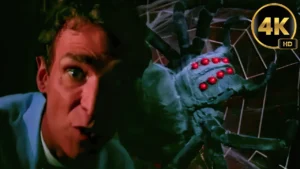
Tap to learn moreInterdependence describes how living things rely on other living things to survive. For example, a spider needs a fern to build its web, and moss needs a dead tree to grow on.
Monoculture
Tap to learn moreA monoculture is an environment where just one species of plant is grown in a field, like on a farm. This makes the ecosystem much less diverse, meaning the plants and animals rely on a farmer instead of each other.
Extinction
Tap to learn moreExtinction happens when an entire species of plant or animal disappears from the Earth forever. Losing too many species causes the ecosystem to become rickety and fall apart.
Try It: Natural Selection Simulation
Explore how variations in traits within a population can help a species survive in different environments.
Apply Your Knowledge
Now let us see if you can connect what you have learned to the real world.
Match the Concepts
Click an object to select it, then click the matching description to place it.
Real-World Challenge
Imagine a local council wants to replace a wild meadow with a massive, perfectly manicured lawn. Based on what you have learned about biodiversity, what advice would you give them to keep the ecosystem healthy?
What Has Changed Since This Episode Aired
This episode of Bill Nye the Science Guy first aired in 1993. While the core science remains accurate, here are a few things that have been expanded since then.
Updated: Today, scientists know that rapid climate change is one of the biggest threats to biodiversity globally. Rising temperatures and changing weather patterns force species to adapt quickly, migrate, or face extinction. Modern conservation always includes climate action.
Updated: While those are still excellent actions, today ecologists highly recommend planting native species in gardens and creating wildlife corridors. These corridors connect fragmented habitats in urban areas, helping pollinators like bees and butterflies thrive.
Updated: Since 1993, scientists have discovered the "Wood Wide Web." Trees in a forest are actually connected underground by vast fungal networks. They use these networks to share nutrients, water, and even send chemical warning signals to each other about pests. It shows that interdependence goes much deeper than we originally thought!
Test Your Understanding
Answer these questions and get instant feedback. How many can you get right?
Results
Your score:
Reflection
What is one thing you can do this week to help protect the biodiversity in your local neighbourhood?
Episode Discussion
Share your thoughts on this Bill Nye episode