






























Food Webs
Every living thing on Earth needs energy to survive. But where does that energy come from, and where does it go when a plant or animal dies? Join Bill Nye the Science Guy as we untangle the invisible threads that connect every living creature on our planet!
Who Is Really Having Who for Dinner?
The Sun! It sounds crazy, but whether you are eating a salad or a hamburger, the energy in that food originally came from sunlight captured by green plants. We are all solar powered!
It gets completely recycled! Bill Nye the Science Guy shows us that millions of tiny organisms, like fungi and bacteria, break down the dead wood and turn it back into rich soil for new plants to use.
Put Your Instincts to the Test
Think about what you already know about nature. Pick an answer for each question, then see if your instincts were right.
By capturing light energy directly from the sun! Plants are incredible because they do not need to eat. They use sunlight to make their own food, which forms the foundation of almost every food web on the planet.
Special living things break them down! As Bill Nye the Science Guy shows us, organisms like worms, bacteria, and mushrooms are nature's ultimate recyclers. They break down dead matter and return the nutrients to the soil.
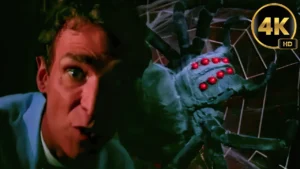
A complex, interconnected web! Because most animals eat more than one type of food, the lines cross over each other and create a massive network that looks exactly like a spider's web.
Understanding the Science
Tap each card to discover the different roles living things play in the great circle of life.
Key Concepts
Producers
Tap to learn moreThese are organisms like green plants and ocean algae. They are called producers because they use sunlight to produce their own food from scratch.
Consumers
Tap to learn moreThese are animals that cannot make their own food. To get the energy they need to survive, they must consume other living things.
Herbivores
Tap to learn moreThis is a specific type of consumer that only eats plants. Rabbits, deer, and caterpillars are all herbivores.
Carnivores
Tap to learn moreThis is a type of consumer that hunts and eats other animals. Owls, lions, and spiders are all carnivores.
Omnivores
Tap to learn moreThese are highly adaptable consumers that eat both plants and other animals. Bears, raccoons, and human beings are usually omnivores.
Decomposers
Tap to learn moreThese are the essential recyclers of the ecosystem. Mushrooms, worms, and bacteria break down dead material and return its raw nutrients back to the soil.
Food Chain
Tap to learn moreThis is a very simple diagram that shows just one straight path of energy. For example, a leaf is eaten by a bug, and the bug is eaten by a bird.
Food Web
Tap to learn moreThis is a much more realistic model. It connects many different food chains together, showing how all the plants and animals in an ecosystem rely on each other.
Try It: The Web Weaver Mission
Can you build a stable ecosystem? Tap an organism to start drawing an energy line, then tap what it gives its energy to.
The Mission: Trace the energy from the Sun all the way up to the Fox. Finally, ensure the Plant, Rabbit, and Fox are all connected to the Mushroom so their nutrients get recycled!
Apply Your Knowledge
Let us see if you can connect these organisms to their roles in the food web.
Match the Concepts
Click an object to select it, then click the matching description to place it.
Real-World Challenge
Imagine a new disease suddenly wipes out all the frogs in a large pond ecosystem. Based on what you know about how food webs are connected, how would this affect the insects that the frogs normally eat, and how would it affect the large birds that normally hunt the frogs?
What Has Changed Since This Episode Aired
This episode aired in 1994. While the core rules of ecology remain completely accurate, our understanding of ecosystems has expanded.
Updated: While this is true for almost all life on the surface, oceanographers have since discovered thriving ecosystems at the very bottom of the ocean where sunlight never reaches! Down there, the food web starts with special bacteria that use heat and chemicals from underwater volcanoes to make their food. This amazing process is called chemosynthesis.
Updated: Modern ecologists now emphasise how incredibly fragile and dynamic these webs are. We now study "trophic cascades", which show that removing just one apex predator (like a wolf) can completely change the shape of rivers and the growth of forests!
Test Your Understanding
Answer these questions and get instant feedback. How many can you get right?
Results
Your score:
Reflection
If you mapped out your own personal food web based on what you ate for dinner last night, how many different plants, animals, and natural resources do you think you would be connected to?
Episode Discussion
Share your thoughts on this Bill Nye The Science Guy episode