




Garbage
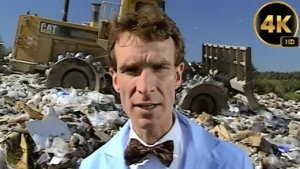
Every day, people throw things away. But where does all that garbage go? In this episode, Bill Nye explores what happens to trash, how landfills work, and why recycling matters.
Garbage doesn’t just disappear. Some trash gets buried in landfills, while other waste is burned or recycled. However, too much trash harms the environment. Bill Nye explains how we can reduce waste and keep the planet clean.
Where Does Garbage Go?
When people throw things away, the trash usually ends up in one of three places:
- Landfills – Workers bury garbage in massive sites.
- Incinerators – Special facilities burn waste to reduce its size.
- Recycling centers – Machines and workers sort materials to create new products.
Because landfills fill up quickly, cities must manage waste carefully. Some garbage takes hundreds of years to break down. For example, plastic can last for centuries in a landfill.
Bill Nye’s Fun Experiments
Bill Nye makes garbage science fun with exciting experiments!
- Decomposition test – He buries different items to show how long they take to break down.
- Recycling in action – He demonstrates how cans, paper, and plastic transform into new products.
- Trash sorting challenge – Bill explains how sorting waste keeps recyclables out of landfills.
These experiments prove that waste doesn’t just disappear—it affects the planet in big ways.
Why Recycling Matters
Recycling saves resources, energy, and space. When people reuse materials, fewer natural resources are needed to make new products. For example:
- Recycling paper protects trees and reduces deforestation.
- Reusing plastic keeps pollution out of oceans and landfills.
- Recycling aluminum cans saves energy compared to producing new ones.
Bill Nye explains how small changes, like using reusable bags and bottles, can help reduce waste.
The Impact of Too Much Trash
When garbage is not managed properly, it harms the environment. Overflowing landfills pollute the air and water. Plastic waste enters the ocean, where it injures animals. Additionally, burning trash releases chemicals that affect air quality.
Scientists and engineers continue developing new waste management strategies, including composting and biodegradable materials. These solutions reduce pollution and protect the planet.
How We Can Reduce Waste
There are many ways to cut down on garbage. Bill Nye shares simple but effective strategies:
- Reduce – Buy products with less packaging and use fewer disposable items.
- Reuse – Find new purposes for old items instead of throwing them away.
- Recycle – Sort waste properly so materials can be used again.
By following these steps, people can help keep the planet clean and reduce landfill waste.
Conclusion
Trash doesn’t just disappear—it must go somewhere. Bill Nye reminds viewers that reducing, reusing, and recycling are the best ways to protect the environment.
The next time you throw something away, think about where it’s going. Small changes make a big impact on the world around us!
Home Page Link
Visit our homepage for more Seriously Scientific news and documentaries: SeriouslyScientific.com.
YouTube Channel Link
Subscribe to our YouTube channel for more science content: Seriously Scientific YouTube.
Free Worksheets for Teachers & Students
Get free science worksheets for students and educators: Seriously Scientific on TPT.
Bill Nye The Science Guy
02 // EPISODE_INDEX100 remastered episodes across 5 seasons of science education
Season 1 (20 episodes)
Bill Nye The Science Guy | Flight
Bill Nye The Science Guy | Earth's Crust
Bill Nye The Science Guy | Dinosaurs
Bill Nye The Science Guy | Skin
Bill Nye The Science Guy | Buoyancy
Bill Nye The Science Guy | Gravity
Bill Nye The Science Guy | Digestion
Bill Nye The Science Guy | Phases of Matter
Bill Nye The Science Guy | Biodiversity
Bill Nye The Science Guy | Simple Machines
Bill Nye The Science Guy | The Moon
Bill Nye The Science Guy | Sound
Bill Nye The Science Guy | Garbage
Bill Nye The Science Guy | Structures
Bill Nye The Science Guy | Earth's Seasons
Bill Nye The Science Guy | Light & Color
Bill Nye The Science Guy | Cells
Bill Nye The Science Guy | Electricity
Bill Nye The Science Guy | Outer Space
Bill Nye The Science Guy | Eyeballs
Season 2 (20 episodes)
Bill Nye The Science Guy | Magnetism
Bill Nye The Science Guy | Wind
Bill Nye The Science Guy | Blood & Circulation
Bill Nye The Science Guy | Chemical Reactions
Bill Nye The Science Guy | Static Electricity
Bill Nye The Science Guy | Food Webs
Bill Nye The Science Guy | Light Optics
Bill Nye The Science Guy | Bones & Muscle
Bill Nye The Science Guy | Oceanography
Bill Nye The Science Guy | Heat
Bill Nye The Science Guy | Insects
Bill Nye The Science Guy | Balance
Bill Nye The Science Guy | The Sun
Bill Nye The Science Guy | The Brain
Bill Nye The Science Guy | Forests
Bill Nye The Science Guy | Communication
Bill Nye The Science Guy | Momentum
Bill Nye The Science Guy | Reptiles
Bill Nye The Science Guy | Atmosphere
Bill Nye The Science Guy | Respiration
Season 3 (21 episodes)
Bill Nye The Science Guy | Planets & Moons
Bill Nye The Science Guy | Pressure
Bill Nye The Science Guy | Plants
Bill Nye The Science Guy | Rocks & Soil
Bill Nye The Science Guy | Energy
Bill Nye The Science Guy | Evolution
Bill Nye The Science Guy | The Water cycle
Bill Nye The Science Guy | Friction
Bill Nye The Science Guy | Germs
Bill Nye The Science Guy | Climates
Bill Nye The Science Guy | Waves
Bill Nye The Science Guy | Ocean Life
Bill Nye The Science Guy | Mammals
Bill Nye The Science Guy | Spinning Things
Bill Nye The Science Guy | Fish
Bill Nye The Science Guy | Human Transportation
Bill Nye The Science Guy | Wetlands
Bill Nye The Science Guy | Birds
Bill Nye The Science Guy | Populations
Bill Nye The Science Guy | Animal Locomotion
Bill Nye The Science Guy | Invertebrates
Season 4 (19 episodes)
Bill Nye The Science Guy | Rivers & Streams
Bill Nye The Science Guy | Nutrition
Bill Nye The Science Guy | Marine Mammals
Bill Nye The Science Guy | Earthquakes
Bill Nye The Science Guy | NTV Music Videos
Bill Nye The Science Guy | Spiders
Bill Nye The Science Guy | Pollution Solutions
Bill Nye The Science Guy | Probability
Bill Nye The Science Guy | Pseudoscience
Bill Nye The Science Guy | Flowers
Bill Nye The Science Guy | Archaeology
Bill Nye The Science Guy | Deserts
Bill Nye The Science Guy | Amphibians
Bill Nye The Science Guy | Volcanoes
Bill Nye The Science Guy | The Heart
Bill Nye The Science Guy | Inventions
Bill Nye The Science Guy | Computers
Bill Nye The Science Guy | Fossils
Bill Nye The Science Guy | Time
Season 5 (20 episodes)
Bill Nye The Science Guy | Forensics
Bill Nye The Science Guy | Space Exploration
Bill Nye The Science Guy | Genes
Bill Nye The Science Guy | Architecture
Bill Nye The Science Guy | Farming
Bill Nye The Science Guy | Life Cycles
Bill Nye The Science Guy | The Scientific Method
Bill Nye The Science Guy | Atoms
Bill Nye The Science Guy | Ocean Exploration
Bill Nye The Science Guy | Lakes and Ponds
Bill Nye The Science Guy | Smell
Bill Nye The Science Guy | Caves
Bill Nye The Science Guy | Erosion
Bill Nye The Science Guy | Fluids
Bill Nye The Science Guy | Comets and Meteors
Bill Nye The Science Guy | Measurement
Bill Nye The Science Guy | Patterns
Bill Nye The Science Guy | Storms
Bill Nye The Science Guy | Music
Bill Nye The Science Guy - Motion
Loading Biography...
Garbage
Based on Bill Nye the Science Guy · Season 1, Episode 13 · 22 min
Every day we throw away mountains of food, plastic wrappers, and broken toys. But there is no magical away! Everything we throw out has to go somewhere, and it stays right here on our planet. Let us dive into the messy science of waste and discover how we can reduce the massive piles of garbage we leave behind.
Where Does All Our Trash Go?
It turns back into soil! Natural items are biodegradable, meaning tiny living organisms will eat them and break them down perfectly to feed the Earth.
Hundreds of years! Plastic is a human made material that natural bacteria cannot easily eat, so it just sits buried in the dirt almost forever.
Put Your Instincts to the Test
Think about what you already know about recycling and rubbish. Pick an answer for each question, then see if your instincts were right.
It can be broken down naturally by living organisms! Fungi and bacteria act as natures clean up crew, turning natural waste back into usable nutrients.
A huge hole designed to safely bury human garbage! We pack the trash tightly into the ground, cover it with dirt, and permanently seal it away.
Reduce the amount of stuff we use! If we simply buy less and use less, we stop the garbage from existing before it is even created.
Understanding the Science
Let us break down the science of decomposition, toxic waste, and the amazing power of recycling with Bill Nye the Science Guy.
Key Concepts
Waste
Tap to learn moreWaste is any leftover physical material that is no longer needed or wanted by human beings.
Biodegradable
Tap to learn moreBiodegradable items are natural materials that can be broken down easily by tiny living organisms like bacteria and fungi.
Landfill
Tap to learn moreA landfill is a massive, specially designed hole in the ground where human garbage is buried, crushed, and permanently sealed away.
Recycle
Tap to learn moreTo recycle is the scientific process of taking old waste materials like aluminium cans and melting them down to create completely new products.
Compost
Tap to learn moreCompost is a completely natural recycling process where food scraps and dead leaves rot down into incredibly rich, dark soil for plants.
Toxic Waste
Tap to learn moreToxic Waste consists of highly dangerous chemicals and materials that can cause severe harm to plants, animals, and human beings if they leak into the environment.
Ecosystem
Tap to learn moreAn ecosystem is a perfectly connected community of living things interacting with their physical environment. In a healthy ecosystem, nothing is ever wasted!
Conservation
Tap to learn moreConservation is the practice of carefully protecting and managing our natural resources so they do not get destroyed or completely run out.
Try It: The Interactive Biodegradation Timeline
Take control of a virtual testing ground! Below, we have dropped four different items into the dirt: a natural apple core, a newspaper, an aluminium soda can, and a human made plastic bottle.
Use the slider to speed up the clock by hundreds of years! Watch very closely to see which natural items decompose and dissolve quickly to feed the soil, and which human made items stay buried in the dirt almost forever.
Live Decomposition Data
Apply Your Knowledge
Let us see if you can match these waste management concepts to their correct definitions.
Match the Concepts
Click an object to select it, then click the matching description to place it.
Real World Challenge
Imagine you are the manager of a massive school cafeteria. Every single day, hundreds of students throw away untouched food, plastic forks, and paper trays. Using your knowledge of recycling and composting, how would you radically redesign the cafeteria waste system to stop all this garbage from going to a landfill?
What Has Changed Since This Episode Aired
This episode first aired in the 1990s. While organic material still breaks down the exact same way, modern science has uncovered new dangers and brilliant new solutions for our global waste!
Updated: Yes! Scientists have discovered that old plastic breaks down into tiny, invisible pieces called microplastics. These tiny particles are now found absolutely everywhere, from the deepest ocean trenches to the water we drink!
Updated: Electronic waste! Millions of discarded mobile phones, computers, and highly toxic batteries are thrown away every single year. Modern engineers are scrambling to find safe ways to recycle these incredibly valuable but dangerous parts.
Updated: Brilliant engineers are trying to change that by building a circular economy! They specifically design new products so that every single piece can be endlessly recycled and reused, meaning nothing ever becomes permanent garbage.
Test Your Understanding
Answer these questions and get instant feedback. How many can you get right?
Results
Your score:
Reflection
Think about all the different things you have thrown into the bin today. If you had to carry all your own garbage around in a backpack for an entire month, what specific habits would you change immediately to make your backpack lighter?
Episode Discussion
Share your thoughts on this Bill Nye episode