







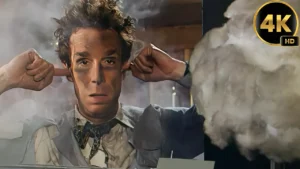
Heat
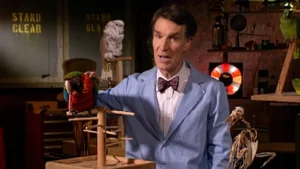
Heat is everywhere. It warms the Sun, cooks our food, and keeps us comfortable on a cold day. In this episode of Bill Nye The Science Guy, Bill explores how heat moves, why it matters, and how it affects everything from weather to energy production.
The Three Ways Heat Moves
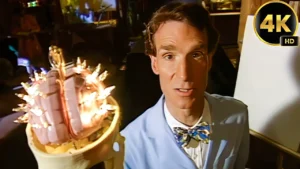
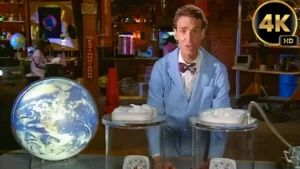
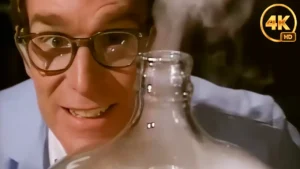
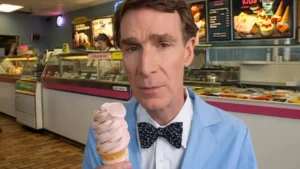
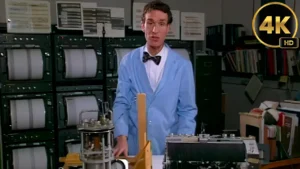
Bill demonstrates all three heat transfer methods using the kitchen. Conduction transfers heat from a hot griddle directly into pancake batter through contact. Convection cooks fruit suspended above boiling water, with heat moving through fluid. Radiation roasts marshmallows over a flame without touching anything at all. Three methods, one kitchen, one episode.

Bill Nye demonstrates conduction, convection and radiation in Season 2 Episode 10 of Bill Nye The Science Guy, remastered in 4K at seriouslyscientific.com
Heat and Molecules
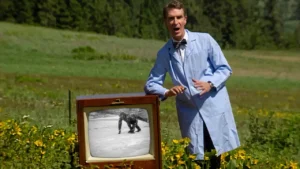
Bill explains that everything with molecules has heat. The difference between hot and cold is simply how fast those molecules are moving. Cold things have slowly-moving molecules while warm things have fast-moving ones. He compares an ice sculpture to a glass of water: the sculpture has more molecules, so more total heat energy, even though it feels cold.
Seeing Invisible Heat
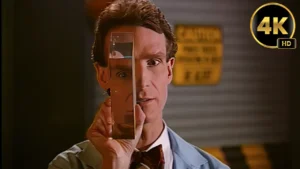
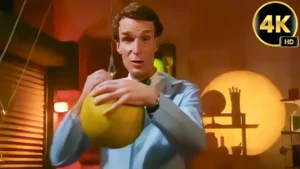
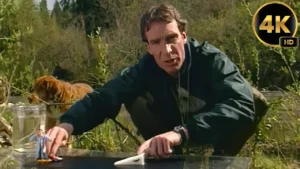
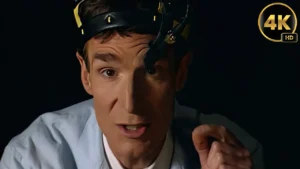
Using a special infrared camera, Bill reveals heat radiation that is completely invisible to the naked eye. Objects as cold as liquid nitrogen (-200 degrees C) still emit thermal radiation and the camera sees it all. He also demonstrates an infrared heat lamp to show how radiation transfers heat without any physical contact.

Bill Nye reveals invisible thermal radiation using an infrared camera in Season 2 Episode 10, remastered in 4K at seriouslyscientific.com
Insulation and Heat Pumps
Coats and jackets work by trapping air. Since air molecules are far apart, heat transfers slowly between them, keeping your body heat in. Bill then introduces the heat pump: a device that works as both a heater and air conditioner by pumping heat from one place to another depending on the season.
Key Scientific Concepts
Heat Transfer
Heat moves via conduction (direct contact), convection (through fluids and gases), and radiation (through waves). All three methods are demonstrated in the kitchen scene.
Molecular Kinetic Energy
Temperature measures how fast molecules are moving. Hot means fast molecules. Cold means slow molecules. Even liquid nitrogen at -200 degrees C still emits thermal radiation because its molecules are still moving.
Infrared Radiation
All objects emit infrared radiation based on their temperature. Infrared cameras detect this invisible heat and are now used in medicine, engineering, and climate science.
Quick Science Facts
- Metal feels colder than wood at the same temperature because it conducts heat away from your hand faster
- Liquid nitrogen at -200 degrees C still emits thermal radiation because everything above absolute zero does
- Hot air rises because warm air molecules spread out, making it less dense than the cooler air around it
- A glass baking dish cooks differently to a metal one because infrared radiation passes through glass but reflects off metal
- Heat pumps can both heat and cool a building by reversing the direction they move heat
- Your winter coat does not generate warmth. It traps your body heat by slowing conduction through air pockets
Science Updates Since This Episode First Aired
- Infrared cameras are now built into smartphones — technology Bill demonstrated with bulky specialist lab equipment in 1994
- Heat pumps are now 3 to 4 times more efficient than 1990s models and are central to modern renewable energy strategies worldwide
- Climate science has confirmed that greenhouse gases trap infrared radiation in the atmosphere, exactly the same principle Bill demonstrates with the heat lamp
- Thermal imaging is now used in medicine to detect infections, inflammation and some cancers without any invasive procedures
NGSS Alignment
MS-PS3-4
MS-PS3-5
This episode info was written and fact-checked by Seriously Scientific. Science updates reflect current understanding as of 2025.
Bill Nye The Science Guy
02 // EPISODE_INDEX100 remastered episodes across 5 seasons of science education
Season 1 (20 episodes)
Bill Nye The Science Guy | Flight
Bill Nye The Science Guy | Earth's Crust
Bill Nye The Science Guy | Dinosaurs
Bill Nye The Science Guy | Skin
Bill Nye The Science Guy | Buoyancy
Bill Nye The Science Guy | Gravity
Bill Nye The Science Guy | Digestion
Bill Nye The Science Guy | Phases of Matter
Bill Nye The Science Guy | Biodiversity
Bill Nye The Science Guy | Simple Machines
Bill Nye The Science Guy | The Moon
Bill Nye The Science Guy | Sound
Bill Nye The Science Guy | Garbage
Bill Nye The Science Guy | Structures
Bill Nye The Science Guy | Earth's Seasons
Bill Nye The Science Guy | Light & Color
Bill Nye The Science Guy | Cells
Bill Nye The Science Guy | Electricity
Bill Nye The Science Guy | Outer Space
Bill Nye The Science Guy | Eyeballs
Season 2 (20 episodes)
Bill Nye The Science Guy | Magnetism
Bill Nye The Science Guy | Wind
Bill Nye The Science Guy | Blood & Circulation
Bill Nye The Science Guy | Chemical Reactions
Bill Nye The Science Guy | Static Electricity
Bill Nye The Science Guy | Food Webs
Bill Nye The Science Guy | Light Optics
Bill Nye The Science Guy | Bones & Muscle
Bill Nye The Science Guy | Oceanography
Bill Nye The Science Guy | Heat
Bill Nye The Science Guy | Insects
Bill Nye The Science Guy | Balance
Bill Nye The Science Guy | The Sun
Bill Nye The Science Guy | The Brain
Bill Nye The Science Guy | Forests
Bill Nye The Science Guy | Communication
Bill Nye The Science Guy | Momentum
Bill Nye The Science Guy | Reptiles
Bill Nye The Science Guy | Atmosphere
Bill Nye The Science Guy | Respiration
Season 3 (21 episodes)
Bill Nye The Science Guy | Planets & Moons
Bill Nye The Science Guy | Pressure
Bill Nye The Science Guy | Plants
Bill Nye The Science Guy | Rocks & Soil
Bill Nye The Science Guy | Energy
Bill Nye The Science Guy | Evolution
Bill Nye The Science Guy | The Water cycle
Bill Nye The Science Guy | Friction
Bill Nye The Science Guy | Germs
Bill Nye The Science Guy | Climates
Bill Nye The Science Guy | Waves
Bill Nye The Science Guy | Ocean Life
Bill Nye The Science Guy | Mammals
Bill Nye The Science Guy | Spinning Things
Bill Nye The Science Guy | Fish
Bill Nye The Science Guy | Human Transportation
Bill Nye The Science Guy | Wetlands
Bill Nye The Science Guy | Birds
Bill Nye The Science Guy | Populations
Bill Nye The Science Guy | Animal Locomotion
Bill Nye The Science Guy | Invertebrates
Season 4 (19 episodes)
Bill Nye The Science Guy | Rivers & Streams
Bill Nye The Science Guy | Nutrition
Bill Nye The Science Guy | Marine Mammals
Bill Nye The Science Guy | Earthquakes
Bill Nye The Science Guy | NTV Music Videos
Bill Nye The Science Guy | Spiders
Bill Nye The Science Guy | Pollution Solutions
Bill Nye The Science Guy | Probability
Bill Nye The Science Guy | Pseudoscience
Bill Nye The Science Guy | Flowers
Bill Nye The Science Guy | Archaeology
Bill Nye The Science Guy | Deserts
Bill Nye The Science Guy | Amphibians
Bill Nye The Science Guy | Volcanoes
Bill Nye The Science Guy | The Heart
Bill Nye The Science Guy | Inventions
Bill Nye The Science Guy | Computers
Bill Nye The Science Guy | Fossils
Bill Nye The Science Guy | Time
Season 5 (20 episodes)
Bill Nye The Science Guy | Forensics
Bill Nye The Science Guy | Space Exploration
Bill Nye The Science Guy | Genes
Bill Nye The Science Guy | Architecture
Bill Nye The Science Guy | Farming
Bill Nye The Science Guy | Life Cycles
Bill Nye The Science Guy | The Scientific Method
Bill Nye The Science Guy | Atoms
Bill Nye The Science Guy | Ocean Exploration
Bill Nye The Science Guy | Lakes and Ponds
Bill Nye The Science Guy | Smell
Bill Nye The Science Guy | Caves
Bill Nye The Science Guy | Erosion
Bill Nye The Science Guy | Fluids
Bill Nye The Science Guy | Comets and Meteors
Bill Nye The Science Guy | Measurement
Bill Nye The Science Guy | Patterns
Bill Nye The Science Guy | Storms
Bill Nye The Science Guy | Music
Bill Nye The Science Guy - Motion
Episode Discussion
Share your thoughts on this Bill Nye episode
1 Comments
Join the Discussion Cancel Reply
Loading Biography...
Heat
Based on Bill Nye the Science Guy · Grades 6 to 8 · 22 min
Did you know that even a freezing cold block of ice contains heat? Join Bill Nye the Science Guy as we explore the invisible energy that keeps us warm, cooks our food, and drives the entire universe!
What is heat, really?
We feel it every day, but heat isn't a fluid or a solid object you can hold in your hand. So what exactly is it?
They zip around like crazy! Heat is simply energy that can do work. When things get hot, their tiny molecules move much faster and spread further apart. That spreading out is exactly what makes a hot air balloon expand and float!
Yes! Because a glacier is made of molecules, and those molecules are still moving (just very slowly), it still contains heat energy. In fact, everything in the entire universe has at least a little bit of heat!
Put Your Instincts to the Test
Test your instincts before we dive into the science of heat transfer. Pick an answer for each scenario.
The ice swan! Even though it is much colder, the massive ice swan has billions more molecules than the tiny match. Because heat energy depends on the amount of matter, more molecules mean more total heat energy.
The metal knife! Metal is an excellent conductor. The fast-moving hot water molecules bump into the metal molecules, passing the heat energy right up the handle.
It travels as invisible light waves! This is called radiation. Because space is a vacuum (meaning it has almost no molecules), heat cannot travel by conduction or convection. It must travel as radiant infrared waves.
Understanding the Science
Let us break down exactly how heat moves around the universe and why molecules are the secret to understanding temperature.
Key Concepts
Conduction
Tap to learn moreThe transfer of heat directly from one object to another when they are physically touching. Fast-moving molecules bump into slower ones, passing the energy along. Example: A pancake cooking on a hot metal griddle.
Convection
Tap to learn moreThe transfer of heat by currents moving through a liquid or a gas. As air or water heats up, the molecules spread out, become lighter, and rise. Cooler, heavier fluid sinks to replace it, creating a loop. Example: Hot air rising from a toaster to spin a paper snake.
Radiation
Tap to learn moreHeat energy travelling as invisible infrared waves through space. It does not need molecules to travel, which is why it can move through a vacuum. Example: The warmth you feel on your skin from a campfire, even if the wind is blowing cold air toward you.
Molecules & Speed
Tap to learn moreEverything is made of tiny particles called molecules. The temperature of an object is just a measurement of how fast its molecules are moving. More heat = faster molecules.
Try It: Energy Forms and Changes
Explore how heating and cooling iron, brick, water, and olive oil adds or removes energy. See how energy is transferred between objects in real time!
Apply Your Knowledge
Let us see if you can connect what you have learned about heat transfer to the real world.
Match the Scenario to the Heat Transfer Type
Click an object to select it, then click the matching description to place it.
Real-World Challenge
You are an engineer designing a brand new winter coat for explorers in Antarctica. Based on what Bill Nye the Science Guy taught us about trapping "puffy pillows of air", explain how your coat will prevent the explorer's body heat from conducting away into the freezing environment.
What Has Changed Since This Episode Aired
This episode aired in 1994. While the laws of thermodynamics have not changed, our technology definitely has!
Updated: Today, modern "cold climate heat pumps" use highly advanced refrigerants and variable-speed compressors. They can efficiently extract heat from the outside air even when temperatures drop down to -20 degrees Celsius! They are now a crucial tool in fighting global climate change because they do not burn fossil fuels.
Updated: Thermal imaging technology has shrunk drastically. Today, you can buy a tiny infrared camera attachment that plugs directly into the bottom of a standard smartphone. Firefighters use modern, highly portable versions built right into their helmets to see through smoke and find people in burning buildings.
Test Your Understanding
Answer these questions and get instant feedback. How many can you get right?
Results
Your score:
The iceberg and the match analogy is such a classic science brain-teaser from this episode. I’ve built an interactive lesson to go along with it, including a model where you can control the molecules yourself. Did you get a chance to try it out and test your knowledge yet?