














Communication
Unlocking the Science of Communication
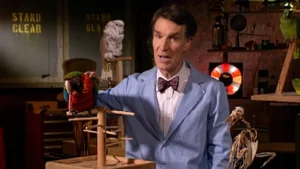
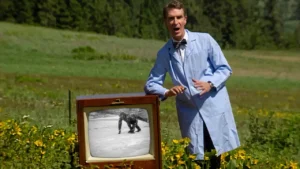
Communication is everywhere. From talking to texting, from hand signals to high-speed internet, the way we share information is constantly evolving. In this episode of Bill Nye the Science Guy, Bill breaks down the science behind communication, exploring how humans, animals, and even computers exchange messages.
How Do We Communicate?
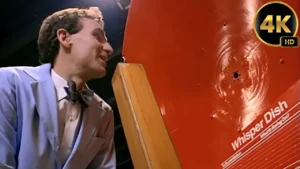
Every conversation you have involves more than just words. Facial expressions, tone of voice, and body language all play a role. Bill Nye demonstrates how non-verbal cues can sometimes say even more than spoken words. He also dives into the fascinating world of sound waves, explaining how vibrations travel through the air to allow us to hear and speak.
But communication isn’t just about talking. Written language allows us to share ideas across time and space, while digital technology has revolutionized the way we connect. Bill explores how signals, like those used in Morse code and computers, can turn information into patterns that machines and humans alike can understand.
Experiments and Demonstrations
Bill doesn’t just talk about communication—he shows it in action! In one experiment, he uses a string telephone to demonstrate how sound travels through different materials. Another demonstration highlights the science of echoes, showing how sound waves bounce off surfaces. Viewers also get a glimpse into the way the brain processes language, with fun tests that challenge how we hear and interpret speech.
For a unique perspective, Bill looks at how animals communicate. From dolphins using sonar to bees dancing to share directions, the natural world is full of fascinating ways to send messages. Even plants use chemical signals to warn each other about dangers like insects or disease.
The Future of Communication
While humans have been communicating for thousands of years, technology continues to shape how we interact. The episode explores inventions like the telephone, radio, and internet, and how they’ve changed our world. Bill also touches on artificial intelligence and how computers are learning to understand human speech.
Scientific Adjustment
Since this episode originally aired, communication technology has advanced rapidly. Smartphones, social media, and AI-powered chatbots have transformed the way people exchange information. Today, speech recognition software allows computers to understand and respond to human voices with remarkable accuracy. Scientists are also studying how brain signals could one day allow us to communicate directly with machines, opening up possibilities for people with disabilities and even new forms of human connection.
Links
More science shows and documentaries – SeriouslyScientific.com
Subscribe for more episodes – Seriously Scientific YouTube
Free Worksheets for Teachers & Students – Seriously Scientific on TPT
Bill Nye The Science Guy
02 // EPISODE_INDEX100 remastered episodes across 5 seasons of science education
Season 1 (20 episodes)
Bill Nye The Science Guy | Flight
Bill Nye The Science Guy | Earth's Crust
Bill Nye The Science Guy | Dinosaurs
Bill Nye The Science Guy | Skin
Bill Nye The Science Guy | Buoyancy
Bill Nye The Science Guy | Gravity
Bill Nye The Science Guy | Digestion
Bill Nye The Science Guy | Phases of Matter
Bill Nye The Science Guy | Biodiversity
Bill Nye The Science Guy | Simple Machines
Bill Nye The Science Guy | The Moon
Bill Nye The Science Guy | Sound
Bill Nye The Science Guy | Garbage
Bill Nye The Science Guy | Structures
Bill Nye The Science Guy | Earth's Seasons
Bill Nye The Science Guy | Light & Color
Bill Nye The Science Guy | Cells
Bill Nye The Science Guy | Electricity
Bill Nye The Science Guy | Outer Space
Bill Nye The Science Guy | Eyeballs
Season 2 (20 episodes)
Bill Nye The Science Guy | Magnetism
Bill Nye The Science Guy | Wind
Bill Nye The Science Guy | Blood & Circulation
Bill Nye The Science Guy | Chemical Reactions
Bill Nye The Science Guy | Static Electricity
Bill Nye The Science Guy | Food Webs
Bill Nye The Science Guy | Light Optics
Bill Nye The Science Guy | Bones & Muscle
Bill Nye The Science Guy | Oceanography
Bill Nye The Science Guy | Heat
Bill Nye The Science Guy | Insects
Bill Nye The Science Guy | Balance
Bill Nye The Science Guy | The Sun
Bill Nye The Science Guy | The Brain
Bill Nye The Science Guy | Forests
Bill Nye The Science Guy | Communication
Bill Nye The Science Guy | Momentum
Bill Nye The Science Guy | Reptiles
Bill Nye The Science Guy | Atmosphere
Bill Nye The Science Guy | Respiration
Season 3 (21 episodes)
Bill Nye The Science Guy | Planets & Moons
Bill Nye The Science Guy | Pressure
Bill Nye The Science Guy | Plants
Bill Nye The Science Guy | Rocks & Soil
Bill Nye The Science Guy | Energy
Bill Nye The Science Guy | Evolution
Bill Nye The Science Guy | The Water cycle
Bill Nye The Science Guy | Friction
Bill Nye The Science Guy | Germs
Bill Nye The Science Guy | Climates
Bill Nye The Science Guy | Waves
Bill Nye The Science Guy | Ocean Life
Bill Nye The Science Guy | Mammals
Bill Nye The Science Guy | Spinning Things
Bill Nye The Science Guy | Fish
Bill Nye The Science Guy | Human Transportation
Bill Nye The Science Guy | Wetlands
Bill Nye The Science Guy | Birds
Bill Nye The Science Guy | Populations
Bill Nye The Science Guy | Animal Locomotion
Bill Nye The Science Guy | Invertebrates
Season 4 (19 episodes)
Bill Nye The Science Guy | Rivers & Streams
Bill Nye The Science Guy | Nutrition
Bill Nye The Science Guy | Marine Mammals
Bill Nye The Science Guy | Earthquakes
Bill Nye The Science Guy | NTV Music Videos
Bill Nye The Science Guy | Spiders
Bill Nye The Science Guy | Pollution Solutions
Bill Nye The Science Guy | Probability
Bill Nye The Science Guy | Pseudoscience
Bill Nye The Science Guy | Flowers
Bill Nye The Science Guy | Archaeology
Bill Nye The Science Guy | Deserts
Bill Nye The Science Guy | Amphibians
Bill Nye The Science Guy | Volcanoes
Bill Nye The Science Guy | The Heart
Bill Nye The Science Guy | Inventions
Bill Nye The Science Guy | Computers
Bill Nye The Science Guy | Fossils
Bill Nye The Science Guy | Time
Season 5 (20 episodes)
Bill Nye The Science Guy | Forensics
Bill Nye The Science Guy | Space Exploration
Bill Nye The Science Guy | Genes
Bill Nye The Science Guy | Architecture
Bill Nye The Science Guy | Farming
Bill Nye The Science Guy | Life Cycles
Bill Nye The Science Guy | The Scientific Method
Bill Nye The Science Guy | Atoms
Bill Nye The Science Guy | Ocean Exploration
Bill Nye The Science Guy | Lakes and Ponds
Bill Nye The Science Guy | Smell
Bill Nye The Science Guy | Caves
Bill Nye The Science Guy | Erosion
Bill Nye The Science Guy | Fluids
Bill Nye The Science Guy | Comets and Meteors
Bill Nye The Science Guy | Measurement
Bill Nye The Science Guy | Patterns
Bill Nye The Science Guy | Storms
Bill Nye The Science Guy | Music
Bill Nye The Science Guy - Motion
Loading Biography...
Communication
Based on Bill Nye the Science Guy · Season 2, Episode 16 · 23 min
Animals use smells and sounds, computers use invisible lasers, and humans use absolutely everything! Join Bill Nye the Science Guy as we decode the brilliant science of how living creatures and modern machines share information across the globe.
Send The Message!
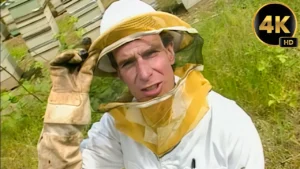
They perform a complex physical dance! When a bee finds nectar, it returns to the hive and performs a figure eight waggle dance. The specific angle and length of the dance tell the other bees the exact direction and distance to the food!
We can store information completely outside of our bodies! While animals only communicate in the present moment, humans use books, photographs, and computer hard drives to store knowledge so it can be read centuries later!
Put Your Instincts to the Test
Think about how information travels from one place to another. Pick an answer for each question, then see if your instincts were right.
As pulses of light travelling through thin glass cables! The internet relies on massive bundles of fibre optic cables stretching entirely across the ocean floor, sending digital information at the speed of light!
Radio waves! These incredible electromagnetic waves can travel massive distances through the open air, carrying complex video and audio information directly to your television set.
Binary Code! Computers communicate complex information using a continuous sequence of only two symbols, zeros and ones, which represent electrical switches turning on and off.
Understanding the Science
Tap each card to uncover the spectacular biological and digital methods we use to share our thoughts with the world.
Key Concepts
Information Exchange
Tap to learn moreThe fundamental concept of sharing ideas, feelings, or urgent warnings between living creatures.
Body Language
Tap to learn moreNon verbal communication using posture, facial expressions, and physical movements, like a dog wagging its tail.
Morse Code
Tap to learn moreA traditional communication method using short and long pulses of sound or light to represent the letters of the alphabet.
Radio Waves
Tap to learn moreInvisible electromagnetic energy that carries audio and data signals over massive distances through the open air.
Sound Waves
Tap to learn morePhysical vibrations travelling through the air or water that our biological ears interpret as speech or animal calls.
External Storage
Tap to learn moreThe unique human ability to safely preserve information outside our brains using books, computers, and digital media.
Fibre Optics
Tap to learn moreIncredibly thin strands of pure glass that transmit massive amounts of computer data using extremely fast pulses of light.
Binary Code
Tap to learn moreThe digital language of machines, using a continuous sequence of only zeros and ones to communicate complex information.
Try It: The Analogue versus Digital Storm
Welcome to the transmission valley!
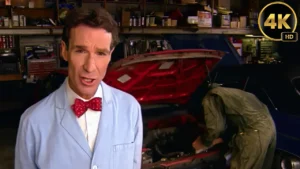
The Mission: You must send a clear digital photograph of a bow tie to the receiver on the right side of the screen. Press the massive round buttons to choose between sending an Analogue wave or a Digital binary signal. Then, activate the Lightning Storm to see which signal survives the weather interference!
Apply Your Knowledge
Let us see if you can correctly identify how different biological and technological methods of communication work.
Match the Concepts
Click a communication term to select it, then click the matching description to place it.
long pulses to build alphabet letters
to communicate digital computer data
communicate without making a sound
and pictures safely outside their brains
Real World Challenge
Bill Nye the Science Guy demonstrates how Morse Code uses a specific pattern of short dots and long marks to send messages. If a computer only understands Binary Code which uses zeros and ones, explain how Binary is actually very similar to Morse Code!
What Has Changed Since This Episode Aired
This episode originally aired in 1995. While the fundamental concepts of sending and receiving messages remain true, the incredible technology we use to communicate has completely transformed our world!
Updated: Artificial Intelligence is helping us decode animal language! Researchers are now using advanced machine learning to discover hidden grammatical structures in animal sounds. They have recently discovered that whale clicks contain complex patterns similar to human vowels, and that baby bats actually babble exactly like human infants!
Updated: Fibre optic technology has absolutely exploded! Modern glass cables now use incredible digital signal processors to bend and modulate the physical phase of the light itself. This coherent optical technology allows us to send one hundred times more data through a single microscopic glass fibre than we could in 1995!
Updated: Brain Computer Interfaces have arrived! Scientists have developed microscopic electrodes that can be safely placed directly onto the human brain. This breathtaking breakthrough allows paralysed patients to type messages, play video games, and completely communicate through a computer using nothing but their thoughts!
Updated: Welcome to the Internet of Things! Today, machines communicate directly with other machines without any human help at all. Your smart refrigerator can send a wireless signal to your mobile phone, and your car can automatically communicate with satellites to instantly report heavy traffic jams!
Test Your Understanding
Answer these questions and get instant feedback. How many can you get right?
Results
Your score:
Reflection
Think about how the invention of the telephone completely changed the world in the past. How do you think advanced artificial intelligence will change the way human beings communicate with computers in the future?
Episode Discussion
Share your thoughts on this Bill Nye episode