










































Flowers
Flowers are not just pretty to look at; they are essential for our survival. Most of the food we eat comes directly from flowers! Let's explore how these stationary plants use clever tricks, vibrant colours, and animal helpers to travel the world and create new life.
The Colourful Cycle of Life!
It is a fruit! If a plant part comes from a flower, has a fleshy texture, and contains seeds, scientists classify it as a fruit. We call things like potatoes 'vegetables' because we are eating the root, not the fruit.
To attract insects and birds! Because plants cannot walk around, they use bright colours and sweet smells to trick animals into picking up their pollen and delivering it to other flowers.
Test Your Botanical Instincts
Think about how plants survive without being able to move. Pick an answer below to test your knowledge.
To avoid competition! If all the seeds dropped right below the parent plant, they would block each other from getting the sunlight, water, and soil nutrients needed to survive.
To create genetic changes! By mixing pollen and eggs, a flower creates thousands of unique seeds. This gives the plant species thousands of chances to adapt and survive if the environment changes.
The Anatomy of an Angiosperm
Tap each card to uncover the anatomy of a flowering plant and the secrets of plant reproduction.
Key Concepts
Stamen (Male)
Tap to learn moreThe stamen is the male part of the flower. It is responsible for producing tiny grains of pollen.
Pistil (Female)
Tap to learn moreThe pistil is the female part of the flower that holds the eggs. When pollen enters the pistil, the eggs become fertilised.
Pollination
Tap to learn moreThis is the transfer of pollen from the stamen of one flower to the pistil of another. This is usually done by wind, bees, or birds.
Seeds
Tap to learn moreFertilised eggs grow into seeds. Each seed contains the genetic blueprint to grow an entirely new plant!
Seed Dispersal
Tap to learn morePlants need their seeds to travel! Some seeds have hooks to catch on animal fur, some float on water like coconuts, and some spin in the wind like helicopters.
Ultraviolet Markings
Tap to learn moreMany flowers have secret markings that humans cannot see. Bees see in ultraviolet light, so flowers use these invisible patterns to guide bees directly to the nectar.
Genetic Variation
Tap to learn moreBy mixing pollen and eggs from different plants, flowers create thousands of unique seeds. This gives the species thousands of chances to adapt and survive new environments.
Water Transport
Tap to learn moreFlowers drink water through their stems. If you put a white flower in coloured water, you can watch the colour travel up the stem and dye the petals!
Interactive: Build an Angiosperm
Add anatomical parts to build a complete flower. You can toggle parts on and off to see how they connect. Once constructed, trigger pollination to hear the bee and see how seeds and fruits are formed!
Apply Your Knowledge
Let us see if you can correctly identify the essential biological terminology associated with flowering plants.
Match the Concepts
Click a biological term to select it, then click the matching description to place it.
The Adaptation Challenge
Imagine an island where a rare disease causes all the birds and flying insects to suddenly disappear. How would the flowers on this island need to adapt and evolve over a long period of time to ensure their pollen still reaches other flowers? Write a short hypothesis on what these new flowers might look like and how they would function.
What Has Changed Since This Episode Aired
This episode originally aired in 1996. Since then, botanical science and conservation have advanced significantly!
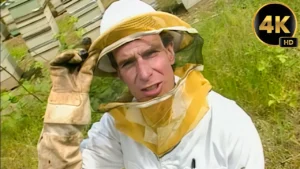
Updated: Bill Nye showed how bees see ultraviolet "landing strips" on petals. Today, scientists are using this exact concept to program agricultural drones and miniature robotic bees. These robots use UV sensors to artificially pollinate crops in areas suffering from declining natural bee populations!
Updated: The episode stated flowers have been reproducing for 100 million years. However, recent fossil discoveries in places like China and Spain suggest that angiosperms (flowering plants) actually originated much earlier, possibly over 130 million years ago during the Early Cretaceous period!
Updated: The orchid expert highlighted how fragile and slow-growing orchid seeds are. Because many wild orchids are now critically endangered due to habitat loss, modern botanists use advanced "tissue culture" cloning in sterile labs to rapidly grow them and save rare species from extinction.
Updated: Flowers rely on the seasons to bloom at the precise time insects are active. Global warming is causing a "phenological mismatch." Flowers are now blooming weeks earlier due to warmer temperatures, sometimes before their specific pollinating insects have even hatched, threatening the food web.
Updated: Edible flowers were showcased purely for adding flavour to salads. Now, nutritional science is analysing edible flowers (like nasturtiums and hibiscus) for their incredibly high levels of antioxidants and anti-inflammatory compounds, making them a major focus in modern dietary medicine.
Test Your Understanding
Answer these 10 questions and get instant feedback. How many can you get right?
Results
Your score:
Episode Discussion
Share your thoughts on this Bill Nye The Science Guy episode