








































































Fish
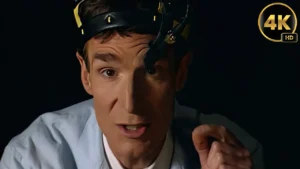
They do not walk, and they do not breathe air! Join Bill Nye the Science Guy to explore the incredible adaptations that allow fish to thrive in a world entirely underwater. Discover how they extract invisible oxygen, communicate without making a sound, and use built-in armor to survive the depths.
Dive Into an Alien World!
They feel pressure changes in the water! Fish have a special sensory system called a lateral line that detects tiny changes in water pressure, allowing the whole school to feel when one fish turns and instantly follow along.
They breathe tiny bubbles of air mixed into the water! Aquatic plants and the churning of waves mix microscopic amounts of "dissolved oxygen" into the water, which fish absorb directly through their gills.
Put Your Instincts to the Test
Think about the biology required to survive completely submerged. Pick an answer for each question, then see if your instincts were right.
They attach muscles to it to pull into an "S" shape! The central framework of bone allows strong swimming muscles to attach and pull from side to side, creating a powerful "S" shaped swimming motion.
To control their chemical exchange with the water! Slime is incredibly important for fish. Not only does it reduce swimming friction, but it is vital for regulating their osmotic chemical exchange with their surrounding saltwater or freshwater environment.
Understanding the Science
Tap each card to uncover the incredible biological adaptations that allow fish to conquer almost every aquatic environment on Earth.
Key Concepts
Backbone (Vertebrae)
Tap to learn moreThe central framework of bone that supports a fish's body, allowing strong swimming muscles to attach and pull to create a powerful "S" shaped swimming motion.
Gills
Tap to learn moreDelicate, feathery organs filled with blood vessels that extract dissolved oxygen directly from the water and release carbon dioxide back into the environment.
Scales
Tap to learn moreFlexible, overlapping plates that grow out of a fish's skin. They provide tough protection against bumps and scrapes while remaining light enough to allow for free and rapid movement.
Fins
Tap to learn moreAppendages made of a thin skin membrane supported by rigid, bony structures called rays, used to cup the water and propel the fish forward.
Lateral Line
Tap to learn moreA highly sensitive system of pores along a fish's side that detects microscopic changes in water pressure, allowing them to swim in perfectly synchronized schools.
Cartilage
Tap to learn moreA tough, flexible tissue that makes up the skeletons of sharks and rays instead of heavy bone, making them incredibly light and agile predators.
Dissolved Oxygen
Tap to learn moreThe microscopic bubbles of breathable air trapped within water, generated by aquatic plants and the churning of waves and rapids on the surface.
Slime (Mucus)
Tap to learn moreA vital slippery coating that reduces friction for swimming and crucially regulates a fish's osmotic chemical exchange with its surrounding saltwater or freshwater environment.
Interactive: Aquatic Respiration Laboratory
Fish constantly consume oxygen to survive. In this realistic simulation, the water naturally tries to pull in oxygen from the air until it hits its limit.
Instructions: Press Start Lab. Adjust the parameters to find a stable equilibrium. Notice that warm water holds much less oxygen, but causes the fishes' metabolism to speed up exponentially! Try turning the heat to 30°C and see if you can save them!
Apply Your Knowledge
Let us see if you can correctly identify the unique vocabulary that allows fish to conquer the oceans and rivers.
Match the Concepts
Click a scientific term to select it, then click the matching description to place it.
Real-World Challenge
Salmon are born in freshwater rivers, migrate to the salty ocean to grow, and then incredibly find their way back to the exact same river to lay their eggs years later. How do they navigate thousands of miles to find one specific stream?
What Has Changed Since This Episode Aired
This episode originally aired in the mid-1990s. Since then, our understanding of biology and ocean conservation has expanded significantly!
Updated: Today, scientists have discovered that "microplastics"—tiny, invisible pieces of broken-down plastic—are one of the biggest threats to fish. They accidentally absorb them through their gills and mistake them for food, poisoning the food chain.
Updated: Despite surviving mass extinctions, many shark species are currently highly endangered due to human overfishing and "finning," drastically disrupting the balance of entire ocean ecosystems.
Updated: Bill Nye is right that salmon use their incredible sense of smell to "sniff" their way up the river forks to their exact birthplace. However, scientists have since discovered that to navigate the thousands of miles of open, featureless ocean to find the coastline in the first place, salmon actually use the Earth's magnetic field as a built-in compass!
Test Your Understanding
Answer these 10 questions and get instant feedback. How many can you get right?
Results
Your score:
Reflection
Think about the different environments where fish live (freezing oceans, fast-moving rivers, dark caves). Choose one environment and describe two specific adaptations a fish would need to survive there.
Episode Discussion
Share your thoughts on this Bill Nye The Science Guy episode