



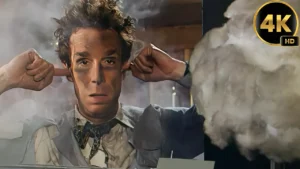
Light Optics
The Fascinating Science of Light with Bill Nye
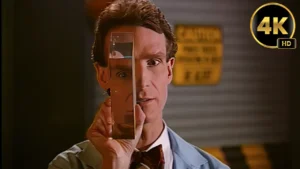
Light is one of the most important forces in the universe. It allows us to see, creates colors, and even carries information through fiber optics. In this episode of Bill Nye The Science Guy, Bill Nye dives into the world of light and optics, revealing the hidden science behind how light moves, bends, and reflects.
Have you ever wondered why mirrors show reflections? Or why a straw looks bent when placed in a glass of water? Bill Nye explains these mysteries by breaking down the laws of reflection, refraction, and absorption. Light may seem simple, but it behaves in incredible ways!
How Does Light Work? Bill Nye Explains!
Light doesn’t just travel in a straight line—it interacts with everything it touches. Bill Nye demonstrates how it bounces, bends, and gets absorbed, depending on the material it encounters.
- Reflection happens when light hits a smooth surface, like a mirror, and bounces back.
- Refraction occurs when light bends as it passes through materials like glass or water.
- Absorption happens when light enters an object and converts into heat.
Without these properties, we wouldn’t have glasses, cameras, or even rainbows!
Bill Nye’s Cool Light & Optics Experiments
Learning about light isn’t just theory—it’s fun to see in action! In this episode, Bill Nye uses simple but effective experiments to explain optics:
🔹 Mirror Reflections – He shows how light bounces off different surfaces to form images.
🔹 Prism Spectrums – Using a prism, he splits white light into a colorful rainbow.
🔹 Magnifying Lenses – Bill explores how lenses bend light to make things appear bigger or smaller.
🔹 Shadow Science – He demonstrates why some shadows are sharp while others are blurry.
Each experiment connects to real-world technology, helping us understand why glasses correct vision and how telescopes bring distant galaxies into view.
Why Light & Optics Matter
Light isn’t just about seeing—it powers technology, medical advancements, and space exploration. Bill Nye highlights some of its most important applications:
🔹 Lasers – Used in surgery, communications, and barcode scanners.
🔹 Fiber Optics – Carrying information as light pulses at incredible speeds.
🔹 Photography & Cameras – Controlling light to capture clear images.
🔹 Solar Energy – Transforming sunlight into electricity for a greener planet.
Without an understanding of light and optics, modern technology wouldn’t exist.
Scientific Adjustment: How Light Science Has Evolved
Since this episode first aired, research in optics and photonics has led to groundbreaking discoveries. Scientists now use adaptive optics in astronomy, allowing telescopes to correct for atmospheric distortion, capturing sharper images of distant galaxies.
In addition, quantum optics has paved the way for advancements in light-based computing, secure data encryption, and medical imaging. Meanwhile, new solar panel technologies use nanomaterials to boost energy efficiency, making clean energy more accessible.
Light continues to be a key force in science and technology, shaping the way we explore the universe and improve everyday life.
Conclusion: Why Bill Nye Makes Light Science Fun
Understanding light helps us see the world more clearly—both literally and scientifically. From mirrors and rainbows to fiber optics and space telescopes, the science of light and optics is everywhere. In this episode, Bill Nye makes these complex ideas easy to grasp. Watch and see the world in a whole new light!
Home Page Link
Visit our homepage for more Seriously Scientific news and documentaries: SeriouslyScientific.com.
YouTube Channel Link
Subscribe to our YouTube channel for more science content: Seriously Scientific YouTube.
Free Worksheets for Teachers & Students
Get free science worksheets for students and educators: Seriously Scientific on TPT.
Bill Nye The Science Guy
02 // EPISODE_INDEX100 remastered episodes across 5 seasons of science education
Season 1 (20 episodes)
Bill Nye The Science Guy | Flight
Bill Nye The Science Guy | Earth's Crust
Bill Nye The Science Guy | Dinosaurs
Bill Nye The Science Guy | Skin
Bill Nye The Science Guy | Buoyancy
Bill Nye The Science Guy | Gravity
Bill Nye The Science Guy | Digestion
Bill Nye The Science Guy | Phases of Matter
Bill Nye The Science Guy | Biodiversity
Bill Nye The Science Guy | Simple Machines
Bill Nye The Science Guy | The Moon
Bill Nye The Science Guy | Sound
Bill Nye The Science Guy | Garbage
Bill Nye The Science Guy | Structures
Bill Nye The Science Guy | Earth's Seasons
Bill Nye The Science Guy | Light & Color
Bill Nye The Science Guy | Cells
Bill Nye The Science Guy | Electricity
Bill Nye The Science Guy | Outer Space
Bill Nye The Science Guy | Eyeballs
Season 2 (20 episodes)
Bill Nye The Science Guy | Magnetism
Bill Nye The Science Guy | Wind
Bill Nye The Science Guy | Blood & Circulation
Bill Nye The Science Guy | Chemical Reactions
Bill Nye The Science Guy | Static Electricity
Bill Nye The Science Guy | Food Webs
Bill Nye The Science Guy | Light Optics
Bill Nye The Science Guy | Bones & Muscle
Bill Nye The Science Guy | Oceanography
Bill Nye The Science Guy | Heat
Bill Nye The Science Guy | Insects
Bill Nye The Science Guy | Balance
Bill Nye The Science Guy | The Sun
Bill Nye The Science Guy | The Brain
Bill Nye The Science Guy | Forests
Bill Nye The Science Guy | Communication
Bill Nye The Science Guy | Momentum
Bill Nye The Science Guy | Reptiles
Bill Nye The Science Guy | Atmosphere
Bill Nye The Science Guy | Respiration
Season 3 (21 episodes)
Bill Nye The Science Guy | Planets & Moons
Bill Nye The Science Guy | Pressure
Bill Nye The Science Guy | Plants
Bill Nye The Science Guy | Rocks & Soil
Bill Nye The Science Guy | Energy
Bill Nye The Science Guy | Evolution
Bill Nye The Science Guy | The Water cycle
Bill Nye The Science Guy | Friction
Bill Nye The Science Guy | Germs
Bill Nye The Science Guy | Climates
Bill Nye The Science Guy | Waves
Bill Nye The Science Guy | Ocean Life
Bill Nye The Science Guy | Mammals
Bill Nye The Science Guy | Spinning Things
Bill Nye The Science Guy | Fish
Bill Nye The Science Guy | Human Transportation
Bill Nye The Science Guy | Wetlands
Bill Nye The Science Guy | Birds
Bill Nye The Science Guy | Populations
Bill Nye The Science Guy | Animal Locomotion
Bill Nye The Science Guy | Invertebrates
Season 4 (19 episodes)
Bill Nye The Science Guy | Rivers & Streams
Bill Nye The Science Guy | Nutrition
Bill Nye The Science Guy | Marine Mammals
Bill Nye The Science Guy | Earthquakes
Bill Nye The Science Guy | NTV Music Videos
Bill Nye The Science Guy | Spiders
Bill Nye The Science Guy | Pollution Solutions
Bill Nye The Science Guy | Probability
Bill Nye The Science Guy | Pseudoscience
Bill Nye The Science Guy | Flowers
Bill Nye The Science Guy | Archaeology
Bill Nye The Science Guy | Deserts
Bill Nye The Science Guy | Amphibians
Bill Nye The Science Guy | Volcanoes
Bill Nye The Science Guy | The Heart
Bill Nye The Science Guy | Inventions
Bill Nye The Science Guy | Computers
Bill Nye The Science Guy | Fossils
Bill Nye The Science Guy | Time
Season 5 (20 episodes)
Bill Nye The Science Guy | Forensics
Bill Nye The Science Guy | Space Exploration
Bill Nye The Science Guy | Genes
Bill Nye The Science Guy | Architecture
Bill Nye The Science Guy | Farming
Bill Nye The Science Guy | Life Cycles
Bill Nye The Science Guy | The Scientific Method
Bill Nye The Science Guy | Atoms
Bill Nye The Science Guy | Ocean Exploration
Bill Nye The Science Guy | Lakes and Ponds
Bill Nye The Science Guy | Smell
Bill Nye The Science Guy | Caves
Bill Nye The Science Guy | Erosion
Bill Nye The Science Guy | Fluids
Bill Nye The Science Guy | Comets and Meteors
Bill Nye The Science Guy | Measurement
Bill Nye The Science Guy | Patterns
Bill Nye The Science Guy | Storms
Bill Nye The Science Guy | Music
Bill Nye The Science Guy - Motion
Loading Biography...
Light Optics
Based on Bill Nye the Science Guy · Season 2, Episode 7 · 23 min
It allows us to see our own reflections, sends phone calls across the globe, and brings all the brilliant colours of the rainbow into our eyes. Join Bill Nye the Science Guy as we bend, bounce, and absorb the incredible waves of light!
Illuminate Your Mind!
It gets absorbed and turns into heat! Dark colours absorb almost all the light waves that hit them, trapping the energy inside. White objects, on the other hand, reflect the light back out.
The light slows down and bends! When light waves travel from the thin air into the denser water, they slow down and change direction. Scientists call this physical bending refraction!
Put Your Instincts to the Test
Think about how light waves interact with different materials. Pick an answer for each question, then see if your instincts were right.
The glass traps the infrared heat inside! The clear glass lets visible light in so the plants can grow, but it completely blocks the long infrared heat waves from escaping back out!
In completely straight lines! Unless a light wave hits a new material, bounces off a mirror, or is pulled by immense gravity, it will travel in a perfectly straight line forever.
It absorbs all colours except red, which bounces back! Pure white light contains the entire visible spectrum. The paint absorbs the blue, green, and yellow waves, reflecting only the red waves back into our eyes.
Understanding the Science
Tap each card to uncover the spectacular physics of how light waves travel and interact with the world around us.
Key Concepts
Reflection
Tap to learn moreWhen light waves hit a smooth surface like a mirror and bounce off at the exact same angle they came in.
Refraction
Tap to learn moreThe physical bending of light waves as they slow down while passing through denser materials like water or glass.
Absorption
Tap to learn moreWhen light waves hit a dark object, trapping the energy entirely and preventing it from bouncing back into our eyes.
Concave Lens
Tap to learn moreA curved piece of glass that caves inward in the middle, making objects look much smaller and further away.
Convex Lens
Tap to learn moreA curved piece of glass that bulges outward in the middle, magnifying objects to make them look much larger.
Internal Reflection
Tap to learn moreWhen light becomes completely trapped inside a clear material, bouncing off the inside walls without escaping.
Fibre Optics
Tap to learn moreIncredibly thin strands of glass that use internal reflection to transmit computer data and phone calls at the speed of light.
Visible Spectrum
Tap to learn moreThe complete rainbow of brilliant colours that are hidden entirely inside a single beam of pure white light.
Try It: The Super Complex Laser Maze
Step into the high tech testing chamber!
The Mission: You must arrange the flat mirrors to guide the straight laser beam around the massive black barricades and into the sensor. The laser will fire red, but it will power up to brilliant yellow when you establish a successful connection!
Please drag the flat mirrors from the bottom tray onto the white grid points to navigate the maze.
Apply Your Knowledge
Let us see if you can correctly identify how different optical tools manipulate waves of light in the real world.
Match the Concepts
Click an optical object to select it, then click the matching light behaviour to place it.
Real World Challenge
Bill Nye the Science Guy shows how red objects absorb every colour except red, which bounces back to our eyes. Based on this logic, explain exactly what happens to the light waves when you look at a bright green leaf growing on a tree!
What Has Changed Since This Episode Aired
This episode originally aired in 1994. While the core physics of light remain perfectly accurate, our modern technology to bend, bounce, and capture these waves has advanced exponentially.
Updated: Medical optics have advanced incredibly! Today, doctors use highly advanced robotic arms guided by high definition fibre optic cameras to perform completely precise, life saving surgeries on the human heart and brain without ever making large incisions.
Updated: Today, massive bundles of these glass fibre optic cables stretch all the way across the bottoms of the oceans! They connect entire continents together, allowing the entire globe to access the high speed internet in mere milliseconds.
Test Your Understanding
Answer these questions and get instant feedback. How many can you get right?
Results
Your score:
Reflection
If you were trapped on a desert island and only had a magnifying glass, how could you use your knowledge of convex lenses and focal points to start a campfire using nothing but dry leaves and sunlight?
Episode Discussion
Share your thoughts on this Bill Nye episode