







































Respiration
Bill Nye Explains Respiration
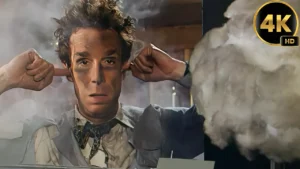
Breathing is something we do all the time, but have you ever wondered how it works? In this episode of Bill Nye the Science Guy, Bill takes a deep breath and dives into the science of respiration—how our lungs help us take in oxygen and release carbon dioxide to keep our bodies running.
Why Do We Breathe?
Our bodies need oxygen to survive! Bill Nye explains how respiration fuels our cells by bringing oxygen into the body and getting rid of carbon dioxide. The lungs are the key organs in this process, expanding as we inhale and contracting as we exhale. The diaphragm, a muscle below the lungs, controls our breathing and helps air move in and out.
The episode also covers cellular respiration, where our cells use oxygen to produce energy. Bill explains the difference between aerobic respiration (using oxygen) and anaerobic respiration (when the body makes energy without oxygen, like during intense exercise).
Experiments and Demonstrations
Bill Nye brings respiration to life with hands-on experiments. He uses a balloon lung model to show how the diaphragm works. A breathing rate test demonstrates how our breathing speeds up after exercise. Bill also shows how we exhale carbon dioxide with a CO₂ indicator experiment, proving that we breathe out gas that plants need to survive!
Another fascinating experiment highlights the connection between oxygen and energy—explaining how our bodies break down food to release energy. Without oxygen, we wouldn’t have the fuel to walk, run, or even think!
Respiration in Action
Breathing isn’t just important for humans—all animals rely on respiration. Bill Nye explains how fish extract oxygen from water using gills and how insects use tiny air tubes to breathe. He also explores how different environments affect respiration, from high-altitude mountains to deep-sea creatures.
Exercise plays a huge role in respiration. Bill shows why we breathe harder when we run, swim, or play sports. When muscles need more oxygen, our breathing rate increases to keep up with energy demands. Understanding how our respiratory system works helps athletes improve their endurance and performance.
Scientific Adjustment
Since this episode first aired, scientists have learned even more about respiration and lung health. Advances in medical technology, such as artificial lungs and oxygen therapy, have improved treatment for people with respiratory illnesses. Researchers continue to study how air pollution affects lung function, and athletes now use advanced techniques to maximize their breathing efficiency. New studies on the respiratory effects of space travel also help astronauts adapt to different oxygen levels in space!
Links
More science shows and documentaries – SeriouslyScientific.com
Subscribe for more episodes – Seriously Scientific YouTube
Free Worksheets for Teachers & Students – Seriously Scientific on TPT
Bill Nye The Science Guy
02 // EPISODE_INDEX100 remastered episodes across 5 seasons of science education
Season 1 (20 episodes)
Bill Nye The Science Guy | Flight
Bill Nye The Science Guy | Earth's Crust
Bill Nye The Science Guy | Dinosaurs
Bill Nye The Science Guy | Skin
Bill Nye The Science Guy | Buoyancy
Bill Nye The Science Guy | Gravity
Bill Nye The Science Guy | Digestion
Bill Nye The Science Guy | Phases of Matter
Bill Nye The Science Guy | Biodiversity
Bill Nye The Science Guy | Simple Machines
Bill Nye The Science Guy | The Moon
Bill Nye The Science Guy | Sound
Bill Nye The Science Guy | Garbage
Bill Nye The Science Guy | Structures
Bill Nye The Science Guy | Earth's Seasons
Bill Nye The Science Guy | Light & Color
Bill Nye The Science Guy | Cells
Bill Nye The Science Guy | Electricity
Bill Nye The Science Guy | Outer Space
Bill Nye The Science Guy | Eyeballs
Season 2 (20 episodes)
Bill Nye The Science Guy | Magnetism
Bill Nye The Science Guy | Wind
Bill Nye The Science Guy | Blood & Circulation
Bill Nye The Science Guy | Chemical Reactions
Bill Nye The Science Guy | Static Electricity
Bill Nye The Science Guy | Food Webs
Bill Nye The Science Guy | Light Optics
Bill Nye The Science Guy | Bones & Muscle
Bill Nye The Science Guy | Oceanography
Bill Nye The Science Guy | Heat
Bill Nye The Science Guy | Insects
Bill Nye The Science Guy | Balance
Bill Nye The Science Guy | The Sun
Bill Nye The Science Guy | The Brain
Bill Nye The Science Guy | Forests
Bill Nye The Science Guy | Communication
Bill Nye The Science Guy | Momentum
Bill Nye The Science Guy | Reptiles
Bill Nye The Science Guy | Atmosphere
Bill Nye The Science Guy | Respiration
Season 3 (21 episodes)
Bill Nye The Science Guy | Planets & Moons
Bill Nye The Science Guy | Pressure
Bill Nye The Science Guy | Plants
Bill Nye The Science Guy | Rocks & Soil
Bill Nye The Science Guy | Energy
Bill Nye The Science Guy | Evolution
Bill Nye The Science Guy | The Water cycle
Bill Nye The Science Guy | Friction
Bill Nye The Science Guy | Germs
Bill Nye The Science Guy | Climates
Bill Nye The Science Guy | Waves
Bill Nye The Science Guy | Ocean Life
Bill Nye The Science Guy | Mammals
Bill Nye The Science Guy | Spinning Things
Bill Nye The Science Guy | Fish
Bill Nye The Science Guy | Human Transportation
Bill Nye The Science Guy | Wetlands
Bill Nye The Science Guy | Birds
Bill Nye The Science Guy | Populations
Bill Nye The Science Guy | Animal Locomotion
Bill Nye The Science Guy | Invertebrates
Season 4 (19 episodes)
Bill Nye The Science Guy | Rivers & Streams
Bill Nye The Science Guy | Nutrition
Bill Nye The Science Guy | Marine Mammals
Bill Nye The Science Guy | Earthquakes
Bill Nye The Science Guy | NTV Music Videos
Bill Nye The Science Guy | Spiders
Bill Nye The Science Guy | Pollution Solutions
Bill Nye The Science Guy | Probability
Bill Nye The Science Guy | Pseudoscience
Bill Nye The Science Guy | Flowers
Bill Nye The Science Guy | Archaeology
Bill Nye The Science Guy | Deserts
Bill Nye The Science Guy | Amphibians
Bill Nye The Science Guy | Volcanoes
Bill Nye The Science Guy | The Heart
Bill Nye The Science Guy | Inventions
Bill Nye The Science Guy | Computers
Bill Nye The Science Guy | Fossils
Bill Nye The Science Guy | Time
Season 5 (20 episodes)
Bill Nye The Science Guy | Forensics
Bill Nye The Science Guy | Space Exploration
Bill Nye The Science Guy | Genes
Bill Nye The Science Guy | Architecture
Bill Nye The Science Guy | Farming
Bill Nye The Science Guy | Life Cycles
Bill Nye The Science Guy | The Scientific Method
Bill Nye The Science Guy | Atoms
Bill Nye The Science Guy | Ocean Exploration
Bill Nye The Science Guy | Lakes and Ponds
Bill Nye The Science Guy | Smell
Bill Nye The Science Guy | Caves
Bill Nye The Science Guy | Erosion
Bill Nye The Science Guy | Fluids
Bill Nye The Science Guy | Comets and Meteors
Bill Nye The Science Guy | Measurement
Bill Nye The Science Guy | Patterns
Bill Nye The Science Guy | Storms
Bill Nye The Science Guy | Music
Bill Nye The Science Guy - Motion
Loading Biography...
Respiration
Based on Bill Nye the Science Guy · Season 2, Episode 20 · 23 min
Every single cell in your body needs a constant supply of fresh air to stay alive. Join Bill Nye the Science Guy as we travel deep inside the human chest to discover exactly how our lungs pull life giving oxygen out of the invisible air around us.
Take a Deep Breath!
The diaphragm! This large parachute shaped muscle sits right under your lungs and pulls down to suck air into your body.
To combine with food and create energy! Your cells use oxygen to burn the fuel from your food so you can run, jump, and think.
Put Your Instincts to the Test
Think about what you already know about your own body. Pick an answer for each question, then see if your instincts were right.
Carbon dioxide! After your cells use the oxygen to make energy, they create carbon dioxide as a waste product that your lungs must quickly push out.
The size of a tennis court! Your lungs are packed with millions of tiny folds to maximize the space available to absorb oxygen into your blood.
Air from your lungs makes them vibrate! As you push air out of your windpipe, it rushes past your vocal cords causing them to buzz and create sound.
Understanding the Science
Tap each card to uncover the biological blueprints of the human respiratory system.
Key Concepts
Lungs
Tap to learn moreThe two spongy organs in your chest that expand to fill with air and shrink to push out waste gas.
Diaphragm
Tap to learn moreThe powerful sheet of muscle located directly below your lungs that does the heavy lifting of breathing.
Oxygen
Tap to learn moreThe vital invisible gas in the air that every single living cell in your body needs to survive.
Carbon Dioxide
Tap to learn moreThe invisible waste gas that your body produces when making energy, which you must breathe out to get rid of.
Cellular Respiration
Tap to learn moreThe incredible chemical process where your cells combine oxygen and food to create the energy you need to live.
Trachea
Tap to learn moreThe main windpipe tube that carries fresh air from your mouth and nose down into your chest.
Alveoli
Tap to learn moreThe millions of tiny air sacs inside your lungs where oxygen crosses over into your blood.
Cilia
Tap to learn moreTiny hairs inside your breathing tubes that sweep away dirt and dust to keep your lungs perfectly clean.
Try It: The Breathing Machine
Your lungs are not actually muscles! They rely entirely on the powerful diaphragm to do all the heavy lifting.
The Mission: Use the slider to contract the diaphragm downward, expanding the chest cavity to inhale fresh oxygen. Then, relax the muscle to let it arch back up, exhaling the carbon dioxide. Watch the dramatic change in lung size!
Apply Your Knowledge
Let us see if you can correctly identify the anatomy of your breathing system.
Match the Concepts
Click an anatomy term to select it, then click the matching description to place it.
Real-World Challenge
Fish do not have lungs like we do, but they still absolutely need oxygen to survive. Based on what you know about how we pull oxygen from the air, how do you think fish manage to get their oxygen while completely underwater?
What Has Changed Since This Episode Aired
This episode aired in 1994. While the core biology of breathing remains perfectly accurate, our medical technology to study and protect the lungs has advanced incredibly.
Updated: Yes! Today, medical imaging technology has allowed scientists to map the lungs in brilliant three dimensional detail. We now know that the millions of tiny alveoli sacs are even more complex and efficient at transferring oxygen than scientists previously thought!
Updated: Modern medicine has made huge leaps in respiratory health. Doctors can now use tiny robotic cameras to look deep inside the lungs of patients to spot problems early, and engineers have developed incredible artificial lungs to help sick people breathe while they heal!
Test Your Understanding
Answer these questions and get instant feedback. How many can you get right?
Results
Your score:
Reflection
Think about the last time you had a bad cold or a stuffed up nose. How did it change the way you normally breathe, and why do you think your body produces all that extra mucus when you are sick?
Episode Discussion
Share your thoughts on this Bill Nye episode