
































































Pressure
It is the invisible pushing force that makes rockets fly, pumps blood through your veins, and crushes submarines! Join Bill Nye the Science Guy as we investigate the spectacular science of pressure.
Under Pressure!
The air pressure holds it in place! Atmospheric pressure acts in all directions at once. The invisible air in the room is physically pushing UP against the bottom of the cardboard card with enough force to fight gravity and hold the heavy water inside!
It is all about surface area! A wide snowshoe safely spreads your body weight out over a massive area, creating very low pressure on the mud. A high-heel focuses your entire weight onto a tiny point, creating massive pressure that pierces straight into the ground!
Put Your Instincts to the Test
Think about how pressure behaves in different environments. Pick an answer for each question, then see if your instincts were right.
You are creating low pressure inside your mouth! When you suck the air out of the straw, you create a low-pressure vacuum. The heavier atmospheric pressure outside then pushes down on the milkshake, forcing it up the straw!
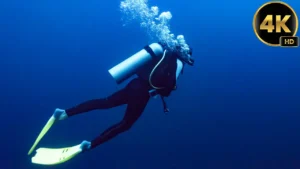
The pressure gets significantly higher! Water is incredibly heavy. The deeper you go, the more physical water is stacked up above you, pushing down and creating massive crushing pressure!
By forcing pressurised oil through a tight cylinder! Liquids cannot be easily compressed. When a hydraulic pump forces oil into a closed cylinder, the massive liquid pressure pushes the metal pistons upward, lifting the heavy car!
Understanding the Science
Tap each card to uncover the physical laws that allow us to harness pressure for amazing engineering feats.
Key Concepts
Pressure
Tap to learn moreA continuous pushing force exerted by molecules acting in all directions at once against a surface.
Vacuum
Tap to learn moreA completely empty space that contains absolutely no matter, no molecules, and therefore has zero pressure.
Area & Force
Tap to learn moreThe principle that concentrating force into a tiny area (like a nail) creates high pressure, while spreading it out (like a snowshoe) creates low pressure.
Water Pressure
Tap to learn moreThe crushing force generated by the immense physical weight of liquid water pushing down from above.
Hydraulics
Tap to learn moreA mechanical system that uses highly pressurised liquid (like oil) to transmit incredible force to move heavy objects.
Pneumatics
Tap to learn moreEngineering technology that specifically uses pressurised gases (like compressed air) to power fast-moving mechanical tools.
Water-jet Cutting
Tap to learn moreAn industrial tool that forces water and abrasive sand through a tiny nozzle at 4,136 bar (60,000 psi) to cleanly slice through solid metal.
Atmospheric Pressure
Tap to learn moreThe heavy, physical weight of the entire invisible ocean of air pushing down on absolutely everything at the surface of the Earth.
Try It: The Deep Sea Pressure Lab
Welcome to the underwater testing zone!
The Mission: Observe exactly how external water weight affects trapped gases. Press the buttons to plunge an inverted glass beaker deep into the ocean. Watch how the massive water pressure physically shrinks the trapped air bubble!
WATER PRESSURE: NORMAL
Apply Your Knowledge
Let us see if you can correctly identify how brilliant engineering harnesses the power of pressure.
Match the Concepts
Click an engineering tool to select it, then click the matching pressure description to place it.
into a tiny point to cleanly slice through metal
by trapping pressurised air directly underneath it
allowing outside atmospheric pressure to push dirt inside
lowering your body pressure so you do not sink in the mud
Real World Challenge
Bill Nye the Science Guy shows us the massive Hoover Dam. Explain why the water naturally squirts out much further from the pipes located at the very bottom of the dam compared to the pipes located at the top!
What Has Changed Since This Episode Aired
This episode originally aired in 1995. While the fundamental physical laws of pressure remain exactly the same, the incredible ways engineers harness hydraulics and water-jets have undergone an absolute technological revolution!
Updated: Modern water-jets have evolved into brilliant 3D robotic systems! Today, advanced 5-axis cutting heads controlled by artificial intelligence can physically tilt and rotate while cutting, allowing them to perfectly slice complex 3D shapes for modern aerospace and automotive manufacturing. They also feature highly efficient hybrid pressure intensifiers that massively reduce energy consumption, alongside automated recycling systems to safely reclaim the abrasive cutting sand!
Updated: We are wearing it! Engineers have miniaturised hydraulic technology to create powered robotic exoskeletons. By strapping these high-pressure, liquid-powered frames to their legs and arms, factory workers can safely lift immense weights without back injury, and patients undergoing physical rehabilitation can use the hydraulic assistance to learn to walk again.
Test Your Understanding
Answer these questions and get instant feedback. How many can you get right?
Results
Your score:
Reflection
Think about how deep-sea submarines must be constructed out of incredibly thick, heavy titanium metal. How does a solid understanding of water pressure keep deep-sea explorers safe when travelling to the pitch-black bottom of the Mariana Trench?
Episode Discussion
Share your thoughts on this Bill Nye The Science Guy episode