































Earth's Seasons
Introduction to Earth’s Seasons
Ever wonder why we have winter, spring, summer, and fall? In this episode, Bill Nye explores Earth’s seasons, explaining how the planet’s tilt and orbit around the Sun create the changing weather patterns we experience every year.
Since Earth spins on its axis, it gets different amounts of sunlight at different times of the year. This tilt is what gives us seasons, not how close or far Earth is from the Sun. Bill Nye breaks down why some places have extreme seasons while others stay the same all year.
Why Does Earth Have Seasons?
Earth’s 23.5-degree tilt is the main reason for seasonal changes. As the planet moves around the Sun:
- Summer happens when a hemisphere tilts toward the Sun, getting more direct sunlight.
- Winter happens when a hemisphere tilts away from the Sun, receiving less sunlight.
- Spring and fall occur in between, bringing milder temperatures as daylight shifts.
Because of this tilt, seasons are opposite in the Northern and Southern Hemispheres. When it’s summer in the United States, it’s winter in Australia!
Bill Nye’s Fun Experiments on Earth’s Seasons
Bill Nye makes learning about Earth’s seasons exciting with hands-on demonstrations!
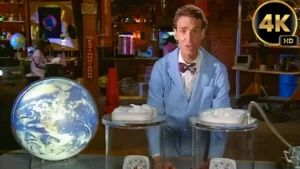
- Sunlight and tilt experiment – He uses a flashlight and a globe to show how sunlight hits different parts of Earth.
- Shadow tracking – He explains why shadows change size and direction throughout the day and year.
- Temperature and sunlight test – Bill shows how direct sunlight creates warmth while angled light spreads out, making it cooler.
These experiments prove that the angle of the Sun’s rays controls seasonal temperatures, not how far Earth is from the Sun.
How Earth’s Orbit Affects Seasons
Many people think Earth’s distance from the Sun causes seasons, but that’s not true. Earth follows an elliptical orbit, meaning its distance from the Sun changes slightly. However, this has little effect on temperature.
- During winter in the Northern Hemisphere, Earth is actually closer to the Sun.
- During summer in the Northern Hemisphere, Earth is farther away.
Instead, the tilt of Earth’s axis controls how much sunlight reaches different parts of the planet.
Why Different Places Have Different Seasons
Not all places experience four seasons. Some areas, like the tropics, stay warm all year because they receive consistent sunlight. Other places, like the Arctic and Antarctic, experience extreme seasons.
- Polar regions have months of darkness in winter and 24-hour sunlight in summer.
- Tropical areas near the equator have only wet and dry seasons.
- Temperate zones, like North America and Europe, experience all four seasons.
Bill Nye explains how these differences impact weather, agriculture, and ecosystems.
Conclusion on Earth’s Seasons
Seasons change because of Earth’s tilt, not its distance from the Sun. Bill Nye reminds us that without this tilt, we wouldn’t have the variety of weather we experience today.
Next time the seasons change, remember the science behind it! Earth’s movement through space creates the patterns that shape our world.
More Seriously Scientific Links
Visit our homepage for more Seriously Scientific news and documentaries: https://seriouslyscientific.com.
Subscribe to our YouTube channel for more science content: https://youtube.com/@seriouslyscientific.
Get free science worksheets for students and educators: https://teacherspayteachers.com/Store/Seriously-Scientific.
Follow us on BlueSky: https://bsky.app/profile/seriouslysci.bsky.social.
Bill Nye The Science Guy
02 // EPISODE_INDEX100 remastered episodes across 5 seasons of science education
Season 1 (20 episodes)
Bill Nye The Science Guy | Flight
Bill Nye The Science Guy | Earth's Crust
Bill Nye The Science Guy | Dinosaurs
Bill Nye The Science Guy | Skin
Bill Nye The Science Guy | Buoyancy
Bill Nye The Science Guy | Gravity
Bill Nye The Science Guy | Digestion
Bill Nye The Science Guy | Phases of Matter
Bill Nye The Science Guy | Biodiversity
Bill Nye The Science Guy | Simple Machines
Bill Nye The Science Guy | The Moon
Bill Nye The Science Guy | Sound
Bill Nye The Science Guy | Garbage
Bill Nye The Science Guy | Structures
Bill Nye The Science Guy | Earth's Seasons
Bill Nye The Science Guy | Light & Color
Bill Nye The Science Guy | Cells
Bill Nye The Science Guy | Electricity
Bill Nye The Science Guy | Outer Space
Bill Nye The Science Guy | Eyeballs
Season 2 (20 episodes)
Bill Nye The Science Guy | Magnetism
Bill Nye The Science Guy | Wind
Bill Nye The Science Guy | Blood & Circulation
Bill Nye The Science Guy | Chemical Reactions
Bill Nye The Science Guy | Static Electricity
Bill Nye The Science Guy | Food Webs
Bill Nye The Science Guy | Light Optics
Bill Nye The Science Guy | Bones & Muscle
Bill Nye The Science Guy | Oceanography
Bill Nye The Science Guy | Heat
Bill Nye The Science Guy | Insects
Bill Nye The Science Guy | Balance
Bill Nye The Science Guy | The Sun
Bill Nye The Science Guy | The Brain
Bill Nye The Science Guy | Forests
Bill Nye The Science Guy | Communication
Bill Nye The Science Guy | Momentum
Bill Nye The Science Guy | Reptiles
Bill Nye The Science Guy | Atmosphere
Bill Nye The Science Guy | Respiration
Season 3 (21 episodes)
Bill Nye The Science Guy | Planets & Moons
Bill Nye The Science Guy | Pressure
Bill Nye The Science Guy | Plants
Bill Nye The Science Guy | Rocks & Soil
Bill Nye The Science Guy | Energy
Bill Nye The Science Guy | Evolution
Bill Nye The Science Guy | The Water cycle
Bill Nye The Science Guy | Friction
Bill Nye The Science Guy | Germs
Bill Nye The Science Guy | Climates
Bill Nye The Science Guy | Waves
Bill Nye The Science Guy | Ocean Life
Bill Nye The Science Guy | Mammals
Bill Nye The Science Guy | Spinning Things
Bill Nye The Science Guy | Fish
Bill Nye The Science Guy | Human Transportation
Bill Nye The Science Guy | Wetlands
Bill Nye The Science Guy | Birds
Bill Nye The Science Guy | Populations
Bill Nye The Science Guy | Animal Locomotion
Bill Nye The Science Guy | Invertebrates
Season 4 (19 episodes)
Bill Nye The Science Guy | Rivers & Streams
Bill Nye The Science Guy | Nutrition
Bill Nye The Science Guy | Marine Mammals
Bill Nye The Science Guy | Earthquakes
Bill Nye The Science Guy | NTV Music Videos
Bill Nye The Science Guy | Spiders
Bill Nye The Science Guy | Pollution Solutions
Bill Nye The Science Guy | Probability
Bill Nye The Science Guy | Pseudoscience
Bill Nye The Science Guy | Flowers
Bill Nye The Science Guy | Archaeology
Bill Nye The Science Guy | Deserts
Bill Nye The Science Guy | Amphibians
Bill Nye The Science Guy | Volcanoes
Bill Nye The Science Guy | The Heart
Bill Nye The Science Guy | Inventions
Bill Nye The Science Guy | Computers
Bill Nye The Science Guy | Fossils
Bill Nye The Science Guy | Time
Season 5 (20 episodes)
Bill Nye The Science Guy | Forensics
Bill Nye The Science Guy | Space Exploration
Bill Nye The Science Guy | Genes
Bill Nye The Science Guy | Architecture
Bill Nye The Science Guy | Farming
Bill Nye The Science Guy | Life Cycles
Bill Nye The Science Guy | The Scientific Method
Bill Nye The Science Guy | Atoms
Bill Nye The Science Guy | Ocean Exploration
Bill Nye The Science Guy | Lakes and Ponds
Bill Nye The Science Guy | Smell
Bill Nye The Science Guy | Caves
Bill Nye The Science Guy | Erosion
Bill Nye The Science Guy | Fluids
Bill Nye The Science Guy | Comets and Meteors
Bill Nye The Science Guy | Measurement
Bill Nye The Science Guy | Patterns
Bill Nye The Science Guy | Storms
Bill Nye The Science Guy | Music
Bill Nye The Science Guy - Motion
Loading Biography...
Earths Seasons
Based on Bill Nye the Science Guy · Season 1, Episode 15 · 22 min
Have you ever wondered why it snows in December but gets blazing hot in July? A lot of people think it is because the Earth gets closer to the sun, but that is actually completely wrong! Let us take a trip into outer space to discover the real reason we experience summer, autumn, winter, and spring.
Why Does the Weather Change Every Year?
Absolutely not! The distance between the Earth and the sun changes very slightly throughout the year, but we are actually closest to the sun during the cold winter months in the Northern Hemisphere.
No! When people in North America and Europe are sweating in the hot summer sun, people in Australia and South America are wearing heavy coats for their freezing winter.
Put Your Instincts to the Test
Think about what you already know about space and the weather. Pick an answer for each question, then see if your instincts were right.
The Earth is tilted on its axis! Our planet leans over at a precise angle, which changes exactly how much direct sunlight we get throughout the year.
It is winter! Because the Earth is tilted, when the Northern half leans towards the sun, the Southern half leans completely away from it.
No, we are actually closer in the winter! The distance does not cause the seasons, only the angle of the sunlight matters.
Understanding the Science
Let us break down the science of orbital paths, axial tilt, and solar energy with Bill Nye the Science Guy.
Key Concepts
Axis
Tap to learn moreAn axis is the imaginary line that goes straight through the centre of the Earth from the North Pole to the South Pole. The Earth constantly spins around this line.
Tilt
Tap to learn moreThe Earth does not sit straight up and down! It has a tilt of exactly 23.5 degrees, and this precise lean is the true cause of every single season.
Orbit
Tap to learn moreAn orbit is the circular path the Earth takes as it travels completely around the massive sun. It takes exactly one full year to complete this journey.
Direct Sunlight
Tap to learn moreDirect Sunlight happens when a part of the Earth is tilted straight towards the sun. The light hits it head on, and this highly concentrated heat creates the warm summer season.
Indirect Sunlight
Tap to learn moreIndirect Sunlight happens when a part of the Earth is tilted away from the sun. The light hits it at an angle and spreads out, and this much weaker heat creates the cold winter season.
Hemisphere
Tap to learn moreA hemisphere is half of the Earth. The Equator is an imaginary line that divides our planet perfectly into a Northern half and a Southern half.
Solstice
Tap to learn moreA solstice happens on the two days of the year when the sun reaches its absolute highest or lowest point in the sky at noon, marking the longest and shortest days of the year.
Equinox
Tap to learn moreAn equinox happens on the two days of the year when the sun crosses the celestial equator, making day and night exactly equal in length all over the entire world.
Try It: The Interactive Orbital Seasons Simulator
A very common scientific myth is that the Earth wobbles back and forth to create the seasons. It actually never changes direction! The axis stays locked pointing at the exact same spot in deep space all year long.
Because the tilt is fixed in space, as the Earth travels in a giant elipse around the sun, the angle of the incoming sunlight constantly changes. Use the bright yellow slider below to drag the Earth along its orbit. Watch the Close Up Side View carefully to see exactly how the fixed axis forces the Northern and Southern Hemispheres to take turns leaning directly into the sunlight!
Live Global Data
Apply Your Knowledge
Let us see if you can match these seasonal concepts to their correct definitions.
Match the Concepts
Click an object to select it, then click the matching description to place it.
Real World Challenge
Imagine you are an architect building a house that uses the sun for natural heating and cooling. Knowing that the sun is much higher in the sky during summer and much lower during winter, how would you carefully design the windows and roof overhangs to keep the house cool in July but incredibly warm in December?
What Has Changed Since This Episode Aired
This episode first aired in the 1990s. While the Earth still tilts at exactly the same angle, modern science and technology have drastically changed how we observe and understand our climate!
Updated: Scientists are closely tracking how global warming is physically changing the timing of the seasons! Warmer global temperatures are causing spring flowers to bloom much earlier and pushing the start of autumn back by several weeks.
Updated: We use incredibly advanced satellites in space to monitor the exact temperature of the oceans and the atmosphere. This modern technology allows meteorologists to accurately predict severe seasonal storms and droughts months in advance.
Updated: Not at all! Modern rovers and advanced space telescopes have proven that Mars also experiences dramatic seasons because it is tilted on its axis, complete with freezing winters and polar ice caps that grow and shrink every year.
Test Your Understanding
Answer these questions and get instant feedback. How many can you get right?
Results
Your score:
Reflection
If the Earth was not tilted at all and sat perfectly straight up and down, how would your life, the weather, and the environment around you be completely different?
Episode Discussion
Share your thoughts on this Bill Nye episode