




















Atmosphere
Bill Nye Breaks Down the Atmosphere
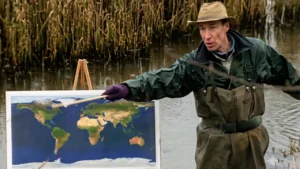
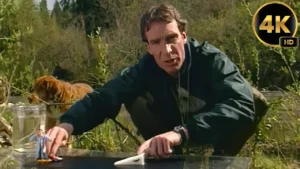
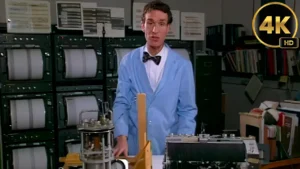
The atmosphere is what makes life on Earth possible! In this episode of Bill Nye the Science Guy, Bill takes viewers on a journey through the air around us, exploring its layers, how it shapes weather, and why it’s so important.
What’s in the Atmosphere?
Earth’s atmosphere is made up of different gases, mostly nitrogen and oxygen. Bill explains how these gases keep us alive and protect the planet from harmful space radiation. He also breaks down the layers of the atmosphere—from the troposphere, where weather happens, all the way up to the exosphere, which fades into space.
One of the key ideas Bill explores is air pressure—the invisible force that helps control weather. He demonstrates how air moves between high and low-pressure areas, creating wind and storms. Without the atmosphere, we wouldn’t have clouds, rain, or even breathable air!
Experiments and Demonstrations
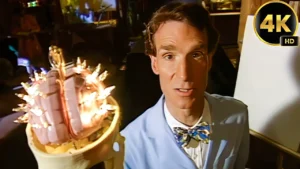
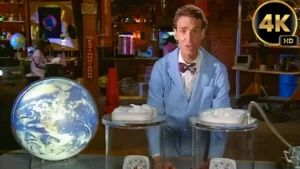
Bill Nye keeps things fun with exciting experiments! He shows how air pressure changes by expanding and shrinking a balloon. A cloud formation experiment helps explain how clouds form from moisture in the air. He also demonstrates how wind is created, showing why air moves from areas of high pressure to low pressure.
One of the most fascinating demonstrations involves the greenhouse effect. Bill explains how certain gases trap heat in our atmosphere, keeping the planet warm but also contributing to climate change. He discusses why balancing these gases is crucial for a stable climate.
The Atmosphere and Everyday Life
Everything we do is connected to the atmosphere! Bill Nye explores how airplanes fly by taking advantage of air pressure and lift. He also explains how the oxygen cycle keeps life going, as plants produce oxygen that animals and humans breathe.
Weather forecasting depends entirely on understanding the atmosphere. Bill shows how meteorologists use air pressure, humidity, and wind speed to predict storms and temperature changes. Without atmospheric science, we wouldn’t know when to bring an umbrella or prepare for a hurricane!
Scientific Adjustment
Since this episode first aired, scientists have learned even more about Earth’s atmosphere. Climate change research has advanced, with improved satellite technology measuring greenhouse gas levels. The study of extreme weather events, like hurricanes and wildfires, has also deepened our understanding of how atmospheric changes impact the planet. Space agencies like NASA continue to monitor the upper atmosphere, tracking how solar radiation affects Earth’s protective layers.
Links
More science shows and documentaries – SeriouslyScientific.com
Subscribe for more episodes – Seriously Scientific YouTube
Free Worksheets for Teachers & Students – Seriously Scientific on TPT
Bill Nye The Science Guy
02 // EPISODE_INDEX100 remastered episodes across 5 seasons of science education
Season 1 (20 episodes)
Bill Nye The Science Guy | Flight
Bill Nye The Science Guy | Earth's Crust
Bill Nye The Science Guy | Dinosaurs
Bill Nye The Science Guy | Skin
Bill Nye The Science Guy | Buoyancy
Bill Nye The Science Guy | Gravity
Bill Nye The Science Guy | Digestion
Bill Nye The Science Guy | Phases of Matter
Bill Nye The Science Guy | Biodiversity
Bill Nye The Science Guy | Simple Machines
Bill Nye The Science Guy | The Moon
Bill Nye The Science Guy | Sound
Bill Nye The Science Guy | Garbage
Bill Nye The Science Guy | Structures
Bill Nye The Science Guy | Earth's Seasons
Bill Nye The Science Guy | Light & Color
Bill Nye The Science Guy | Cells
Bill Nye The Science Guy | Electricity
Bill Nye The Science Guy | Outer Space
Bill Nye The Science Guy | Eyeballs
Season 2 (20 episodes)
Bill Nye The Science Guy | Magnetism
Bill Nye The Science Guy | Wind
Bill Nye The Science Guy | Blood & Circulation
Bill Nye The Science Guy | Chemical Reactions
Bill Nye The Science Guy | Static Electricity
Bill Nye The Science Guy | Food Webs
Bill Nye The Science Guy | Light Optics
Bill Nye The Science Guy | Bones & Muscle
Bill Nye The Science Guy | Oceanography
Bill Nye The Science Guy | Heat
Bill Nye The Science Guy | Insects
Bill Nye The Science Guy | Balance
Bill Nye The Science Guy | The Sun
Bill Nye The Science Guy | The Brain
Bill Nye The Science Guy | Forests
Bill Nye The Science Guy | Communication
Bill Nye The Science Guy | Momentum
Bill Nye The Science Guy | Reptiles
Bill Nye The Science Guy | Atmosphere
Bill Nye The Science Guy | Respiration
Season 3 (21 episodes)
Bill Nye The Science Guy | Planets & Moons
Bill Nye The Science Guy | Pressure
Bill Nye The Science Guy | Plants
Bill Nye The Science Guy | Rocks & Soil
Bill Nye The Science Guy | Energy
Bill Nye The Science Guy | Evolution
Bill Nye The Science Guy | The Water cycle
Bill Nye The Science Guy | Friction
Bill Nye The Science Guy | Germs
Bill Nye The Science Guy | Climates
Bill Nye The Science Guy | Waves
Bill Nye The Science Guy | Ocean Life
Bill Nye The Science Guy | Mammals
Bill Nye The Science Guy | Spinning Things
Bill Nye The Science Guy | Fish
Bill Nye The Science Guy | Human Transportation
Bill Nye The Science Guy | Wetlands
Bill Nye The Science Guy | Birds
Bill Nye The Science Guy | Populations
Bill Nye The Science Guy | Animal Locomotion
Bill Nye The Science Guy | Invertebrates
Season 4 (19 episodes)
Bill Nye The Science Guy | Rivers & Streams
Bill Nye The Science Guy | Nutrition
Bill Nye The Science Guy | Marine Mammals
Bill Nye The Science Guy | Earthquakes
Bill Nye The Science Guy | NTV Music Videos
Bill Nye The Science Guy | Spiders
Bill Nye The Science Guy | Pollution Solutions
Bill Nye The Science Guy | Probability
Bill Nye The Science Guy | Pseudoscience
Bill Nye The Science Guy | Flowers
Bill Nye The Science Guy | Archaeology
Bill Nye The Science Guy | Deserts
Bill Nye The Science Guy | Amphibians
Bill Nye The Science Guy | Volcanoes
Bill Nye The Science Guy | The Heart
Bill Nye The Science Guy | Inventions
Bill Nye The Science Guy | Computers
Bill Nye The Science Guy | Fossils
Bill Nye The Science Guy | Time
Season 5 (20 episodes)
Bill Nye The Science Guy | Forensics
Bill Nye The Science Guy | Space Exploration
Bill Nye The Science Guy | Genes
Bill Nye The Science Guy | Architecture
Bill Nye The Science Guy | Farming
Bill Nye The Science Guy | Life Cycles
Bill Nye The Science Guy | The Scientific Method
Bill Nye The Science Guy | Atoms
Bill Nye The Science Guy | Ocean Exploration
Bill Nye The Science Guy | Lakes and Ponds
Bill Nye The Science Guy | Smell
Bill Nye The Science Guy | Caves
Bill Nye The Science Guy | Erosion
Bill Nye The Science Guy | Fluids
Bill Nye The Science Guy | Comets and Meteors
Bill Nye The Science Guy | Measurement
Bill Nye The Science Guy | Patterns
Bill Nye The Science Guy | Storms
Bill Nye The Science Guy | Music
Bill Nye The Science Guy - Motion
Loading Biography...
Atmosphere
Based on Bill Nye the Science Guy · Season 2, Episode 19 · 23 min
We live at the very bottom of a massive invisible ocean of air! Join Bill Nye the Science Guy as we investigate how atmospheric pressure and weather patterns make life on Earth absolutely possible.
The Ocean of Air!
Because the moon has no atmosphere! The gravity of the moon is far too weak to hold onto any floating gases. Because there is no air to breathe and no atmospheric pressure to protect them, astronauts must bring their own Earth environment inside their suits!
It is caused by changing air pressure! As you travel higher, the air becomes thinner and the outside pressure drops. Your ears pop when the trapped air inside your head finally equalizes with the lower pressure outside your body!
Put Your Instincts to the Test
Think about how the invisible air around us physically behaves. Pick an answer for each question, then see if your instincts were right.
It would become boiling hot during the day and freezing cold at night! The atmosphere acts like a massive thermal blanket, trapping the heat of the sun to keep our global temperatures perfectly balanced and comfortable.
The Troposphere! This is the lowest and thickest layer of the atmosphere. It contains the air we breathe and is where all clouds, storms, and winds physically form!
A barometer! A barometer physically measures the heavy weight of the air pushing down from above, which helps meteorologists successfully predict incoming storms and clear skies.
Understanding the Science
Tap each card to uncover the spectacular invisible forces and layers that protect life on our planet.
Key Concepts
Atmosphere
Tap to learn moreThe massive protective ocean of invisible gases perfectly held to the surface of the Earth by planetary gravity.
Air Pressure
Tap to learn moreThe heavy physical weight of the entire atmosphere pushing down on absolutely everything at the surface of the planet.
Troposphere
Tap to learn moreThe lowest and thickest layer of the atmosphere where human beings live and all turbulent rain and weather takes place.
Stratosphere
Tap to learn moreThe calm middle layer of the sky that houses the ozone layer, safely protecting the Earth from deadly ultra violet light.
Greenhouse Effect
Tap to learn moreThe incredible natural process where atmospheric gases trap the heat of the sun, keeping the planet perfectly warm at night.
Acid Rain
Tap to learn moreDangerous atmospheric pollution caused when sulfur from burning coal mixes with rain clouds, harming lakes and forests.
Barometer
Tap to learn moreA highly sensitive scientific instrument designed to explicitly measure the rising and falling pressure of the atmosphere.
Ozone
Tap to learn moreA special oxygen molecule floating high in the stratosphere that acts as a global shield against dangerous solar radiation.
Try It: The Atmospheric Pressure Lab
Welcome to the altitude testing zone!
The Mission: You must observe exactly how external air pressure affects an expanding weather balloon. Press the massive round activation buttons to instantly teleport the balloon from deep below sea level up to a towering mountain peak. Watch the physics happen live!
Apply Your Knowledge
Let us see if you can correctly identify the mighty layers that make up the Earth's atmosphere.
Match the Concepts
Click a layer term to select it, then click the matching atmospheric description to place it.
Earth where all clouds and weather happen
shield to block dangerous ultra violet sunlight
friction to safely melt incoming space meteors
absorb and trap lethal gamma rays from outer space
Real World Challenge
Bill Nye the Science Guy demonstrates how air pressure pushes down on a plastic disk with over one hundred and fifty kilograms of force! If there is that much invisible weight pushing down on us all the time, explain why our human bodies do not simply get crushed flat like a pancake!
What Has Changed Since This Episode Aired
This episode originally aired in 1995. While the fundamental layers of the atmosphere remain exactly the same, our global scientific ability to successfully monitor and protect the sky has absolutely skyrocketed!
Updated: Incredible global teamwork actually fixed it! In the late twentieth century, scientists discovered that human made chemicals called CFCs were burning a massive hole directly through the ozone layer. Nations around the entire world united to successfully ban those chemicals. Today, modern satellite data proves that the massive ozone hole is officially shrinking and slowly repairing itself!
Updated: We now use spectacular fleets of orbital supercomputers! Modern meteorology relies on advanced geostationary satellites floating incredibly high in the exosphere. These machines use infrared lasers and microwave sensors to instantly map global atmospheric pressure, ocean temperatures, and hurricane paths, providing brilliantly accurate global weather models directly to your smart phone!
Test Your Understanding
Answer these questions and get instant feedback. How many can you get right?
Results
Your score:
Reflection
Think about how the atmosphere provides the absolute perfect amount of pressure, temperature, and breathable oxygen to keep us alive. How does studying the atmosphere help engineers successfully design protective suits for deep space exploration?
Episode Discussion
Share your thoughts on this Bill Nye episode