









































Blood & Circulation
Blood is essential for life, but how does it move through the body? In this episode of Bill Nye The Science Guy, Bill Nye explains the circulatory system, showing how the heart, veins, and arteries work together. Every second, blood travels through an intricate network, delivering oxygen and nutrients to keep us alive. But why does your heart beat faster when you exercise? What happens inside your body when you get a cut? Through engaging demonstrations, Bill answers these questions while exploring how blood circulation keeps us healthy.
The Heart: Your Body’s Pump
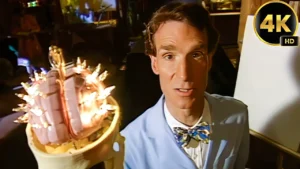
The heart is a muscle that works tirelessly. With each beat, it pumps blood through arteries, carrying oxygen from the lungs to every cell. After delivering oxygen, blood returns through veins, bringing carbon dioxide back to the lungs for exhalation. To illustrate this, Bill Nye uses a pump and tubing to show how the heart moves blood through the body.
Interestingly, your heart rate changes based on your activity level. For instance, when you run, your heart beats faster to deliver more oxygen to your muscles. On the other hand, when you rest, it slows down. Bill demonstrates how to check your pulse, which helps measure heart function and overall health.
The Circulatory System: Blood on the Move
Blood constantly flows through three types of vessels:
- Arteries – Carry oxygen-rich blood away from the heart.
- Veins – Bring oxygen-depleted blood back to the heart.
- Capillaries – Allow oxygen and nutrients to pass into tissues.
To explain blood pressure, Bill Nye uses a balloon to simulate how arteries expand and contract. As a result, this experiment helps clarify why high blood pressure can be harmful. Additionally, Bill discusses how lifestyle choices like exercise, diet, and hydration impact circulation and overall heart health.
Why Blood Matters
Although blood is primarily known for transporting oxygen, it also plays other critical roles. For example, it carries nutrients, removes waste, and fights infections. Each component has a specific function:
- Red blood cells – Transport oxygen with the help of hemoglobin.
- White blood cells – Defend against infections and strengthen the immune system.
- Platelets – Form clots to prevent excessive bleeding.
To illustrate this, Bill Nye demonstrates what happens when you get a cut. Almost immediately, platelets rush to the site of injury and form a protective clot. Without this process, even minor injuries could become life-threatening.
Scientific Adjustment
Since this episode first aired, scientists have gained new insights into heart health and circulation. For instance, recent research has linked cholesterol levels and inflammation to heart disease, leading to better treatments and lifestyle recommendations. In addition, scientists are developing artificial blood to assist in emergencies where transfusions are needed.
By understanding how blood circulates, we can make healthier choices. Want to learn more? Watch the full episode and explore the science of circulation with Bill Nye!
More Seriously Scientific Links
Visit our homepage for more Seriously Scientific news and documentaries: https://seriouslyscientific.com.
Subscribe to our YouTube channel for more science content: https://youtube.com/@seriouslyscientific.
Get free science worksheets for students and educators: https://teacherspayteachers.com/Store/Seriously-Scientific.
Follow us on BlueSky: https://bsky.app/profile/seriouslysci.bsky.social.
Bill Nye The Science Guy
02 // EPISODE_INDEX100 remastered episodes across 5 seasons of science education
Season 1 (20 episodes)
Bill Nye The Science Guy | Flight
Bill Nye The Science Guy | Earth's Crust
Bill Nye The Science Guy | Dinosaurs
Bill Nye The Science Guy | Skin
Bill Nye The Science Guy | Buoyancy
Bill Nye The Science Guy | Gravity
Bill Nye The Science Guy | Digestion
Bill Nye The Science Guy | Phases of Matter
Bill Nye The Science Guy | Biodiversity
Bill Nye The Science Guy | Simple Machines
Bill Nye The Science Guy | The Moon
Bill Nye The Science Guy | Sound
Bill Nye The Science Guy | Garbage
Bill Nye The Science Guy | Structures
Bill Nye The Science Guy | Earth's Seasons
Bill Nye The Science Guy | Light & Color
Bill Nye The Science Guy | Cells
Bill Nye The Science Guy | Electricity
Bill Nye The Science Guy | Outer Space
Bill Nye The Science Guy | Eyeballs
Season 2 (20 episodes)
Bill Nye The Science Guy | Magnetism
Bill Nye The Science Guy | Wind
Bill Nye The Science Guy | Blood & Circulation
Bill Nye The Science Guy | Chemical Reactions
Bill Nye The Science Guy | Static Electricity
Bill Nye The Science Guy | Food Webs
Bill Nye The Science Guy | Light Optics
Bill Nye The Science Guy | Bones & Muscle
Bill Nye The Science Guy | Oceanography
Bill Nye The Science Guy | Heat
Bill Nye The Science Guy | Insects
Bill Nye The Science Guy | Balance
Bill Nye The Science Guy | The Sun
Bill Nye The Science Guy | The Brain
Bill Nye The Science Guy | Forests
Bill Nye The Science Guy | Communication
Bill Nye The Science Guy | Momentum
Bill Nye The Science Guy | Reptiles
Bill Nye The Science Guy | Atmosphere
Bill Nye The Science Guy | Respiration
Season 3 (21 episodes)
Bill Nye The Science Guy | Planets & Moons
Bill Nye The Science Guy | Pressure
Bill Nye The Science Guy | Plants
Bill Nye The Science Guy | Rocks & Soil
Bill Nye The Science Guy | Energy
Bill Nye The Science Guy | Evolution
Bill Nye The Science Guy | The Water cycle
Bill Nye The Science Guy | Friction
Bill Nye The Science Guy | Germs
Bill Nye The Science Guy | Climates
Bill Nye The Science Guy | Waves
Bill Nye The Science Guy | Ocean Life
Bill Nye The Science Guy | Mammals
Bill Nye The Science Guy | Spinning Things
Bill Nye The Science Guy | Fish
Bill Nye The Science Guy | Human Transportation
Bill Nye The Science Guy | Wetlands
Bill Nye The Science Guy | Birds
Bill Nye The Science Guy | Populations
Bill Nye The Science Guy | Animal Locomotion
Bill Nye The Science Guy | Invertebrates
Season 4 (19 episodes)
Bill Nye The Science Guy | Rivers & Streams
Bill Nye The Science Guy | Nutrition
Bill Nye The Science Guy | Marine Mammals
Bill Nye The Science Guy | Earthquakes
Bill Nye The Science Guy | NTV Music Videos
Bill Nye The Science Guy | Spiders
Bill Nye The Science Guy | Pollution Solutions
Bill Nye The Science Guy | Probability
Bill Nye The Science Guy | Pseudoscience
Bill Nye The Science Guy | Flowers
Bill Nye The Science Guy | Archaeology
Bill Nye The Science Guy | Deserts
Bill Nye The Science Guy | Amphibians
Bill Nye The Science Guy | Volcanoes
Bill Nye The Science Guy | The Heart
Bill Nye The Science Guy | Inventions
Bill Nye The Science Guy | Computers
Bill Nye The Science Guy | Fossils
Bill Nye The Science Guy | Time
Season 5 (20 episodes)
Bill Nye The Science Guy | Forensics
Bill Nye The Science Guy | Space Exploration
Bill Nye The Science Guy | Genes
Bill Nye The Science Guy | Architecture
Bill Nye The Science Guy | Farming
Bill Nye The Science Guy | Life Cycles
Bill Nye The Science Guy | The Scientific Method
Bill Nye The Science Guy | Atoms
Bill Nye The Science Guy | Ocean Exploration
Bill Nye The Science Guy | Lakes and Ponds
Bill Nye The Science Guy | Smell
Bill Nye The Science Guy | Caves
Bill Nye The Science Guy | Erosion
Bill Nye The Science Guy | Fluids
Bill Nye The Science Guy | Comets and Meteors
Bill Nye The Science Guy | Measurement
Bill Nye The Science Guy | Patterns
Bill Nye The Science Guy | Storms
Bill Nye The Science Guy | Music
Bill Nye The Science Guy - Motion
Loading Biography...
Blood and Circulation
Based on Bill Nye the Science Guy · Season 2, Episode 3 · 23 min
Every minute of every day, your heart is working tirelessly to keep you alive. The sheer amount of pumping it does is truly astonishing. Let us find out exactly how much traffic is moving through your body's personal transport system!
How Much Work Does Your Heart Actually Do?
Over once a second, every single day! Bill Nye the Science Guy shows us that your heart never takes a break. It is a powerful muscle that continually pumps blood, beating around 100,000 times a day just to keep your body functioning.
Thousands of litres! Even though you only have about 5 litres of blood inside you, your heart works so efficiently that it recirculates that same blood over and over, effectively pumping thousands of litres through your blood vessels every 24 hours.
Put Your Instincts to the Test
Think about what you already know about your body. Pick an answer for each question, then see if your instincts were right.
Arteries! Remember what Bill Nye the Science Guy says: "A" is for Arteries, and "A" is for Away. They carry oxygen-rich blood out to the rest of your body through strong, thick walls.
To fight off sickness and disease! White blood cells act like your body's personal security team. They travel through your circulatory system, hunting down viruses and bacteria to keep you healthy.
5 litres! In the episode, Bill Nye the Science Guy demonstrates this volume. It is roughly equivalent to two and a half large, two-litre bottles of soda moving through your body right now.
Understanding the Science
Tap each card to uncover the incredible components that make up your blood and the highway system it travels on.
Key Concepts
Red Blood Cells
Tap to learn moreThese are the delivery trucks of your circulatory system. They carry oxygen from your lungs to every single tissue and muscle in your body, and they pick up waste carbon dioxide to carry back to the lungs.
White Blood Cells
Tap to learn moreThis is your body's defence force. As Bill Nye the Science Guy demonstrates, these cells patrol your bloodstream looking for invaders, fighting off infections and diseases to keep you well.
Platelets
Tap to learn morePlatelets are tiny cell fragments that stick together to form complex nets and clots. They are essential for stopping you from bleeding when you get a scrape or cut.
Plasma
Tap to learn moreThis is the liquid component of your blood. Plasma is actually a yellowish colour! It acts as the river that carries all the red cells, white cells, platelets, and nutrients around your body.
Arteries
Tap to learn moreThese are the strong, thick-walled blood vessels that carry oxygen-rich blood away from your heart and distribute it to the rest of your body under high pressure.
Veins
Tap to learn moreOnce your cells have dropped off their oxygen, veins act as the return highway. They carry the darker, deoxygenated blood back to the heart so it can be sent to the lungs for a fresh supply.
Capillaries
Tap to learn moreThese are the microscopic bridges connecting arteries to veins. Capillaries have walls so thin that oxygen, nutrients, and carbon dioxide can easily pass right through them into your tissues.
The Heart Chambers
Tap to learn moreYour heart is divided into four distinct rooms called chambers. The top two are the atria, and the bottom two are the ventricles. They squeeze in perfect coordination to keep your blood flowing smoothly.
Try It: The Capillary Exchange Mission
Your leg muscle is working hard! Empty red blood cells are flowing into your lungs. You have two jobs to keep the muscle energised:
1. In the Lungs (Left): Tap the floating Oxygen (O2) molecules to load them onto passing empty cells.
2. In the Muscle (Right): Tap the bright red, loaded cells to drop off the O2 into the muscle and swap it for CO2 waste!
Science Fact: Fortunately for us, this two-way exchange happens entirely automatically through a process called passive diffusion. It is all part of a larger biological mechanism known as homeostasis, which keeps our body perfectly in balance. When you exercise, your body automatically alters your heart rate to ensure your muscles get exactly as much oxygen as they need while rapidly removing waste carbon dioxide!
Apply Your Knowledge
Let us see if you can connect the microscopic components of your circulatory system to their vital jobs.
Match the Concepts
Click an object to select it, then click the matching description to place it.
Real-World Challenge
Imagine you have just run a very fast race. Your muscles need a lot more oxygen than usual. Based on what you have learned about the circulatory system and homeostasis, describe the chain of events that happens in your body to get that extra oxygen down to your legs and remove the extra carbon dioxide.
What Has Changed Since This Episode Aired
This episode first aired in 1994. While the core science of the circulatory system remains completely accurate, our understanding of some details has been refined.
Updated: We now emphasise in modern biology that human blood is never actually blue. Deoxygenated blood is simply a darker, deeper shade of red. Veins only appear blue through our skin because of how human tissue scatters and absorbs different wavelengths of light. It is an optical illusion!
Updated: While a plug is correct, modern science has mapped out exactly how this happens through a complex process called the "coagulation cascade". We now know it involves over a dozen different chemical clotting factors working together like a molecular domino effect to build a sturdy net over a wound.
Test Your Understanding
Answer these questions and get instant feedback. How many can you get right?
Results
Your score:
Reflection
If you could shrink down to the size of a red blood cell and travel through your own circulatory system, what part of the journey do you think would be the most exciting to see? Why?
Episode Discussion
Share your thoughts on this Bill Nye episode