





















Dinosaurs
Discovering Dinosaurs with Bill Nye
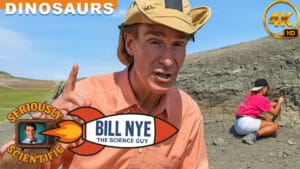
Dinosaurs ruled the Earth for millions of years. But how do we know about them? In this exciting episode, Bill Nye uncovers the science of dinosaurs. Scientists study fossils to piece together their history. Fossils include bones, footprints, and even eggs. These remains help paleontologists understand how dinosaurs lived.
By studying rock layers, scientists can tell how old different fossils are. This method, called relative dating, builds a timeline of Earth’s history. Some dinosaurs were huge plant-eaters, while others were fierce predators. To understand their survival, scientists look at their teeth, footprints, and bones. As a result, they can reconstruct how these creatures moved and hunted. Furthermore, this knowledge helps us understand ancient ecosystems.
Fossils: Clues to the Past
Have you ever wondered how fossils form? Fossilization happens when organic material turns into rock over millions of years. Fossils can be more than just bones. They can include footprints, skin imprints, and even preserved nests. By examining these ancient remains, scientists learn more about how dinosaurs lived and behaved. Consequently, we can make connections between past and present life forms.
One of the biggest mysteries in paleontology is the extinction of dinosaurs. Bill explores different theories, including volcanic activity, climate change, and the famous asteroid impact. About 66 million years ago, a massive asteroid struck Earth. Consequently, it caused extreme climate changes, leading to the extinction of most dinosaurs. This event, called the Cretaceous-Paleogene extinction, allowed mammals to dominate the planet. As a result, the world we know today took shape.
How Dinosaurs Moved
How did dinosaurs move? Bill Nye explains this by studying fossilized footprints. He also compares dinosaur legs to modern animals. Some dinosaurs, like Brachiosaurus, walked on all fours. Others, like Velociraptor, ran on two legs. By looking at skeletons, scientists estimate how fast dinosaurs could run. They also discover how certain species used their tails for balance. Moreover, studying dinosaur movement helps us understand modern-day birds and reptiles.
Bill also discusses evolution. Scientists believe that birds evolved from dinosaurs. Fossils of feathered dinosaurs provide strong evidence of this connection. By studying these fossils, researchers can see how flight may have developed in ancient times. In addition, genetic studies support the idea that birds are living dinosaurs.
Scientific Adjustment
Since this episode aired, new discoveries have given us even more insights. Scientists now use CT scans and 3D modeling to study fossils without damaging them. Research on fossilized feathers has helped reveal dinosaur colors. Moreover, recent finds in China and South America have expanded our knowledge of dinosaur species. These discoveries show that dinosaurs were more diverse than we once thought. Consequently, our understanding of prehistoric life keeps evolving.
Watch & Learn!
Dinosaurs continue to capture our imagination. Thanks to science, we keep learning more. Whether you’re curious about T. rex or fossil formation, this episode makes learning fun! Additionally, new research helps us rethink what we thought we knew. Watch Bill Nye uncover the mysteries of the prehistoric world!
More Seriously Scientific Links
Visit our homepage for more Seriously Scientific news and documentaries: https://seriouslyscientific.com.
Subscribe to our YouTube channel for more science content: https://youtube.com/@seriouslyscientific.
Get free science worksheets for students and educators: https://teacherspayteachers.com/Store/Seriously-Scientific.
Follow us on BlueSky: https://bsky.app/profile/seriouslysci.bsky.social.
Bill Nye The Science Guy
02 // EPISODE_INDEX100 remastered episodes across 5 seasons of science education
Season 1 (20 episodes)
Bill Nye The Science Guy | Flight
Bill Nye The Science Guy | Earth's Crust
Bill Nye The Science Guy | Dinosaurs
Bill Nye The Science Guy | Skin
Bill Nye The Science Guy | Buoyancy
Bill Nye The Science Guy | Gravity
Bill Nye The Science Guy | Digestion
Bill Nye The Science Guy | Phases of Matter
Bill Nye The Science Guy | Biodiversity
Bill Nye The Science Guy | Simple Machines
Bill Nye The Science Guy | The Moon
Bill Nye The Science Guy | Sound
Bill Nye The Science Guy | Garbage
Bill Nye The Science Guy | Structures
Bill Nye The Science Guy | Earth's Seasons
Bill Nye The Science Guy | Light & Color
Bill Nye The Science Guy | Cells
Bill Nye The Science Guy | Electricity
Bill Nye The Science Guy | Outer Space
Bill Nye The Science Guy | Eyeballs
Season 2 (20 episodes)
Bill Nye The Science Guy | Magnetism
Bill Nye The Science Guy | Wind
Bill Nye The Science Guy | Blood & Circulation
Bill Nye The Science Guy | Chemical Reactions
Bill Nye The Science Guy | Static Electricity
Bill Nye The Science Guy | Food Webs
Bill Nye The Science Guy | Light Optics
Bill Nye The Science Guy | Bones & Muscle
Bill Nye The Science Guy | Oceanography
Bill Nye The Science Guy | Heat
Bill Nye The Science Guy | Insects
Bill Nye The Science Guy | Balance
Bill Nye The Science Guy | The Sun
Bill Nye The Science Guy | The Brain
Bill Nye The Science Guy | Forests
Bill Nye The Science Guy | Communication
Bill Nye The Science Guy | Momentum
Bill Nye The Science Guy | Reptiles
Bill Nye The Science Guy | Atmosphere
Bill Nye The Science Guy | Respiration
Season 3 (21 episodes)
Bill Nye The Science Guy | Planets & Moons
Bill Nye The Science Guy | Pressure
Bill Nye The Science Guy | Plants
Bill Nye The Science Guy | Rocks & Soil
Bill Nye The Science Guy | Energy
Bill Nye The Science Guy | Evolution
Bill Nye The Science Guy | The Water cycle
Bill Nye The Science Guy | Friction
Bill Nye The Science Guy | Germs
Bill Nye The Science Guy | Climates
Bill Nye The Science Guy | Waves
Bill Nye The Science Guy | Ocean Life
Bill Nye The Science Guy | Mammals
Bill Nye The Science Guy | Spinning Things
Bill Nye The Science Guy | Fish
Bill Nye The Science Guy | Human Transportation
Bill Nye The Science Guy | Wetlands
Bill Nye The Science Guy | Birds
Bill Nye The Science Guy | Populations
Bill Nye The Science Guy | Animal Locomotion
Bill Nye The Science Guy | Invertebrates
Season 4 (19 episodes)
Bill Nye The Science Guy | Rivers & Streams
Bill Nye The Science Guy | Nutrition
Bill Nye The Science Guy | Marine Mammals
Bill Nye The Science Guy | Earthquakes
Bill Nye The Science Guy | NTV Music Videos
Bill Nye The Science Guy | Spiders
Bill Nye The Science Guy | Pollution Solutions
Bill Nye The Science Guy | Probability
Bill Nye The Science Guy | Pseudoscience
Bill Nye The Science Guy | Flowers
Bill Nye The Science Guy | Archaeology
Bill Nye The Science Guy | Deserts
Bill Nye The Science Guy | Amphibians
Bill Nye The Science Guy | Volcanoes
Bill Nye The Science Guy | The Heart
Bill Nye The Science Guy | Inventions
Bill Nye The Science Guy | Computers
Bill Nye The Science Guy | Fossils
Bill Nye The Science Guy | Time
Season 5 (20 episodes)
Bill Nye The Science Guy | Forensics
Bill Nye The Science Guy | Space Exploration
Bill Nye The Science Guy | Genes
Bill Nye The Science Guy | Architecture
Bill Nye The Science Guy | Farming
Bill Nye The Science Guy | Life Cycles
Bill Nye The Science Guy | The Scientific Method
Bill Nye The Science Guy | Atoms
Bill Nye The Science Guy | Ocean Exploration
Bill Nye The Science Guy | Lakes and Ponds
Bill Nye The Science Guy | Smell
Bill Nye The Science Guy | Caves
Bill Nye The Science Guy | Erosion
Bill Nye The Science Guy | Fluids
Bill Nye The Science Guy | Comets and Meteors
Bill Nye The Science Guy | Measurement
Bill Nye The Science Guy | Patterns
Bill Nye The Science Guy | Storms
Bill Nye The Science Guy | Music
Bill Nye The Science Guy - Motion
Loading Biography...
Dinosaurs
Based on Bill Nye the Science Guy · Season 1, Episode 3 · 23 min
Millions of years ago, gigantic reptiles ruled the Earth. Today, all we have left are their fossilised remains hidden in the rocks. Let us dig into how we know these incredible creatures existed and what exactly happened to them!
Digging Up the Past!
No, never! Dinosaurs and humans never lived at the same time. As Bill Nye the Science Guy explains, we missed them by about 64 million years.
The rocks tell the story. We know they lived because palaeontologists continue to dig up their fossilised bones and discover their ancient footprints preserved in stone.
Put Your Instincts to the Test
Think about what you already know about ancient Earth. Pick an answer for each question, then see if your instincts were right.
65 million years ago. That is right! The giant non-avian dinosaurs went extinct long before the first ancient humans ever walked the Earth.
Less than an inch from the final goal line. Bill Nye the Science Guy demonstrates that humans have only been around for a tiny, microscopic fraction of Earth's total history.
Iridium. This heavy metal is rare on Earth's surface but common in space rocks. Scientists found a layer of it all over the globe right at the 65-million-year mark, suggesting a massive meteorite impact!
Understanding the Science
To understand how these ancient creatures lived, scientists have to look closely at the clues left behind in the earth. Tap each card to reveal the explanation.
Key Concepts
Fossil
Tap to learn moreA fossil is the preserved remains or impressions of prehistoric organisms. The word comes from Latin, meaning "something that has been dug up." Fossils are the primary way we know dinosaurs existed.
Permineralisation
Tap to learn morePermineralisation is the process where water rich in minerals seeps into the tiny spaces inside buried bones. Over time, the water evaporates and the minerals harden, literally turning the bone into solid stone.
Palaeontologist
Tap to learn moreA palaeontologist is a scientist who studies ancient life and fossils. They act like detectives, piecing together clues from rock layers to reconstruct past environments and ecosystems.
Iridium
Tap to learn moreIridium is a rare metal on Earth's surface that is found abundantly in meteorites. Finding a global layer of iridium in the rock record provides a major piece of evidence for the meteorite impact that caused the dinosaurs' extinction.
Radioactive Decay
Tap to learn moreRadioactive decay is the process by which an unstable element (like Potassium) slowly changes into another element (like Argon) at a predictable rate. Scientists use this exact natural clock to measure the age of volcanic ash layers near fossils.
Ecosystem
Tap to learn moreAn ecosystem is a biological community of interacting organisms and their physical environment. By studying different types of fossils found together, palaeontologists can reconstruct entire ancient ecosystems.
Try It: Radiometric Dating Simulator
Scientists date the rock layers above and below a fossil to find out when the dinosaur lived. They often look for Potassium-40, an unstable element found in volcanic ash, because it slowly decays into Argon gas at a steady, predictable rate. Drag the slider to advance time and watch the parent Potassium isotopes (orange) decay into daughter Argon isotopes (blue).
Apply Your Knowledge
Palaeontologists rely on different types of evidence to piece together the history of the dinosaurs.
Match the Concepts
Click an object to select it, then click the matching description to place it.
Real-World Challenge
Imagine you are a palaeontologist who just discovered a new set of fossilised footprints in the mud. What specific clues would you look for to decide if the dinosaur walked on two legs or four, and whether it was walking slowly or running?
What Has Changed Since This Episode Aired
This episode first aired in 1993. While the core science remains incredibly accurate, our understanding of dinosaurs has expanded significantly.
Updated: It is no longer a joke! Modern palaeontology officially classifies birds (including chickens) as actual, living avian dinosaurs. The giant non-avian dinosaurs died out, but the feathered ones survived and evolved into the birds we see today. They didn't completely disappear; they just took flight!
Updated: Thanks to incredible new fossil discoveries since the 1990s, we now know that many, many dinosaur species were actually covered in feathers! They likely looked much more like massive, brightly coloured ground birds than the green scaly lizards depicted in older movies and books.
Test Your Understanding
Answer these questions and get instant feedback. How many can you get right?
Results
Your score:
Reflection
If you could discover a brand new species of dinosaur, what would you name it and what special features or adaptations would it have to survive in its ancient environment?
Episode Discussion
Share your thoughts on this Bill Nye episode