

































































Animal Locomotion
Why do animals walk, run, swim, and fly? To survive! Whether you are hunting for food, looking for a new home, or running away from a predator, you have to know how to move. But not every animal uses legs and feet!
Get Ready to Move!
There are many ways! Some animals slide on their bellies, some use tiny hairs to pull themselves through the dirt, and some even use jet propulsion to shoot through the water like a rocket.
Pushing and pulling! No matter how an animal moves, they must push or pull against something. They push against the land, they push against the water, or they push against the air!
Put Your Instincts to the Test
Think about the incredible biology of movement. Pick an answer for each question, then see if your instincts were right.
Muscles only pull! To move a bone, a muscle must contract (get shorter and tighter). To move it back, a completely different muscle on the other side has to pull it back!
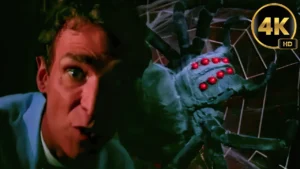
Spiders use biological hydraulics! They use their hearts to pump fluid into their legs to force them straight, and then pull themselves forward.
Surface tension! Water molecules stick together tightly at the surface, creating a thin, invisible skin that lightweight insects can literally walk on.
Understanding the Science
No matter if an animal uses fins, wings, or feet, all animal locomotion involves pushing or pulling against something. Tap the cards below to reveal the keywords of biomechanics.
Key Concepts
Locomotion
Tap to learn moreThe biological ability of an organism to completely move its body from one place to another to survive, hunt, or escape predators.
Muscle Contraction
Tap to learn moreThe unbreakable scientific rule that muscles can only ever pull (get shorter and tighter) to move a bone; they can never push.
Jet Propulsion
Tap to learn moreHow squid and octopuses move by rapidly squeezing water out of their bodies, exactly like letting go of a pressurised water balloon.
Scutes
Tap to learn moreThe highly specialised, one-way belly scales that allow snakes to aggressively grip the ground and scoot themselves forward.
Surface Tension
Tap to learn moreThe sticky, skin-like layer of water molecules that allows exceptionally lightweight insects, like water skimmers, to walk across ponds.
Gastropod
Tap to learn moreA scientific classification for animals like slugs and snails whose name literally translates to stomach foot, as they use their entire belly to slide around.
Tube Feet
Tap to learn moreThe hundreds of tiny, hydraulic suction cups lining the arms of a Sea Star, which they use to grip rocks, walk, and even smell their food!
Biomechanics
Tap to learn moreThe scientific study of how animals physically move, like discovering that a galloping thoroughbred horse takes a single breath with every single stride.
Interactive: The Biomechanics Lab
Step into the lab and test your knowledge of animal engineering! You are presented with a test subject. To make it successfully cross the testing chamber, you must select the correct biological mechanism from the control panel. Match the physics to the animal to succeed!
Apply Your Knowledge
Let us see if you can correctly identify the essential scientific terminology associated with biomechanics and animal locomotion.
Match the Concepts
Click a scientific term to select it, then click the matching description to place it.
Real-World Challenge
Robotics engineers at advanced technology companies spend years studying animal locomotion. If you had to design a rescue robot to safely climb over jagged, slippery rocks inside a dark cave, which animal's method of locomotion (a galloping horse, a slithering snake, or a sea star with tube feet) would you copy, and why?
What Has Changed Since This Episode Aired
This episode originally aired in 1995. Since then, the study of animal locomotion has directly inspired the future of robotics!
Updated: Engineers have used this exact biological blueprint to invent "soft robotics"! These are robots built without hard metal gears that use fluid pumps (just like a spider) to move gently and carefully around fragile objects.
Updated: Absolutely! That biological data has been fully digitized. Modern robot dogs (like those built by Boston Dynamics) can now instantly switch from a walk, to a trot, to a full gallop using the exact same biomechanical physics mapped from living animals in the 1990s.
Updated: Yes! Marine biologists have since mapped the incredible chemical sensors inside those tiny suction cups, revealing that sea stars can effectively taste the exact location of a clam from several metres away just by walking across the ocean floor!
Test Your Understanding
Answer these 10 questions and get instant feedback. How many can you get right?
Results
Your score:
Reflection
Think about how your own body moves during your favourite sport or physical activity. Which specific muscles are contracting (pulling) to power your legs or arms? Try moving incredibly slowly and feel exactly where the tension is!
Episode Discussion
Share your thoughts on this Bill Nye The Science Guy episode