
















Cells
Introduction to Cells
Every living thing is made of cells. They are the tiny building blocks of life, forming plants, animals, and even humans. But what do cells do? In this episode, Bill Nye explores cells, explaining how they function, why they divide, and how they keep living things alive.
Cells are microscopic, yet they perform essential tasks. They provide structure, produce energy, and carry genetic information. Bill Nye explains how different cells have unique jobs, from brain cells that help us think to skin cells that protect our bodies.
What Are Cells and Why Are They Important?
Cells are the basic unit of life. Every living organism, from tiny bacteria to massive whales, is made of them. Scientists classify cells into two main types:
- Prokaryotic cells – Simple cells without a nucleus, like bacteria.
- Eukaryotic cells – Complex cells with a nucleus, found in plants, animals, and humans.
Because cells work together, they allow organisms to grow, heal, and function.
Bill Nye’s Fun Experiments on Cells
Bill Nye makes cell biology fun with exciting demonstrations!
- Microscope exploration – He shows what cells look like up close.
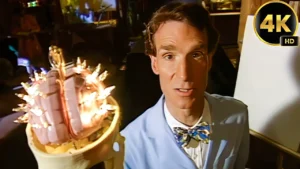
- Cell model activity – He builds a cell to explain its different parts.
- Mitosis experiment – He demonstrates how cells divide to help organisms grow.
These experiments prove that even though cells are tiny, they play a huge role in life.
How Do Cells Work?
Cells have specialized parts called organelles that help them function. The most important ones include:
- Nucleus – Stores genetic material (DNA).
- Mitochondria – Produces energy for the cell.
- Cytoplasm – A jelly-like substance that holds organelles.
- Cell membrane – Protects the cell and controls what enters and leaves.
Because cells need energy, they absorb nutrients, break them down, and convert them into fuel. Bill Nye explains how plant cells use sunlight in photosynthesis, while animal cells get energy from food.
Why Do Cells Divide?
Cells don’t last forever, so they must make copies of themselves. This process, called mitosis, helps organisms grow, heal, and replace old cells.
- Growth – New cells help living things get bigger.
- Healing – Cells repair cuts and injuries.
- Reproduction – Some organisms divide to create new life.
Bill Nye shows how mitosis allows living things to stay alive and healthy.
Conclusion on Cells
Cells are the foundation of life. They build bodies, produce energy, and allow living things to grow. Bill Nye reminds us that, even though cells are microscopic, they shape the world around us.
Next time you scratch your skin or eat a meal, remember—cells are working behind the scenes to keep you alive!
More Seriously Scientific Links
Visit our homepage for more Seriously Scientific news and documentaries: https://seriouslyscientific.com.
Subscribe to our YouTube channel for more science content: https://youtube.com/@seriouslyscientific.
Get free science worksheets for students and educators: https://teacherspayteachers.com/Store/Seriously-Scientific.
Follow us on BlueSky: https://bsky.app/profile/seriouslysci.bsky.social.
Bill Nye The Science Guy
02 // EPISODE_INDEX100 remastered episodes across 5 seasons of science education
Season 1 (20 episodes)
Bill Nye The Science Guy | Flight
Bill Nye The Science Guy | Earth's Crust
Bill Nye The Science Guy | Dinosaurs
Bill Nye The Science Guy | Skin
Bill Nye The Science Guy | Buoyancy
Bill Nye The Science Guy | Gravity
Bill Nye The Science Guy | Digestion
Bill Nye The Science Guy | Phases of Matter
Bill Nye The Science Guy | Biodiversity
Bill Nye The Science Guy | Simple Machines
Bill Nye The Science Guy | The Moon
Bill Nye The Science Guy | Sound
Bill Nye The Science Guy | Garbage
Bill Nye The Science Guy | Structures
Bill Nye The Science Guy | Earth's Seasons
Bill Nye The Science Guy | Light & Color
Bill Nye The Science Guy | Cells
Bill Nye The Science Guy | Electricity
Bill Nye The Science Guy | Outer Space
Bill Nye The Science Guy | Eyeballs
Season 2 (20 episodes)
Bill Nye The Science Guy | Magnetism
Bill Nye The Science Guy | Wind
Bill Nye The Science Guy | Blood & Circulation
Bill Nye The Science Guy | Chemical Reactions
Bill Nye The Science Guy | Static Electricity
Bill Nye The Science Guy | Food Webs
Bill Nye The Science Guy | Light Optics
Bill Nye The Science Guy | Bones & Muscle
Bill Nye The Science Guy | Oceanography
Bill Nye The Science Guy | Heat
Bill Nye The Science Guy | Insects
Bill Nye The Science Guy | Balance
Bill Nye The Science Guy | The Sun
Bill Nye The Science Guy | The Brain
Bill Nye The Science Guy | Forests
Bill Nye The Science Guy | Communication
Bill Nye The Science Guy | Momentum
Bill Nye The Science Guy | Reptiles
Bill Nye The Science Guy | Atmosphere
Bill Nye The Science Guy | Respiration
Season 3 (21 episodes)
Bill Nye The Science Guy | Planets & Moons
Bill Nye The Science Guy | Pressure
Bill Nye The Science Guy | Plants
Bill Nye The Science Guy | Rocks & Soil
Bill Nye The Science Guy | Energy
Bill Nye The Science Guy | Evolution
Bill Nye The Science Guy | The Water cycle
Bill Nye The Science Guy | Friction
Bill Nye The Science Guy | Germs
Bill Nye The Science Guy | Climates
Bill Nye The Science Guy | Waves
Bill Nye The Science Guy | Ocean Life
Bill Nye The Science Guy | Mammals
Bill Nye The Science Guy | Spinning Things
Bill Nye The Science Guy | Fish
Bill Nye The Science Guy | Human Transportation
Bill Nye The Science Guy | Wetlands
Bill Nye The Science Guy | Birds
Bill Nye The Science Guy | Populations
Bill Nye The Science Guy | Animal Locomotion
Bill Nye The Science Guy | Invertebrates
Season 4 (19 episodes)
Bill Nye The Science Guy | Rivers & Streams
Bill Nye The Science Guy | Nutrition
Bill Nye The Science Guy | Marine Mammals
Bill Nye The Science Guy | Earthquakes
Bill Nye The Science Guy | NTV Music Videos
Bill Nye The Science Guy | Spiders
Bill Nye The Science Guy | Pollution Solutions
Bill Nye The Science Guy | Probability
Bill Nye The Science Guy | Pseudoscience
Bill Nye The Science Guy | Flowers
Bill Nye The Science Guy | Archaeology
Bill Nye The Science Guy | Deserts
Bill Nye The Science Guy | Amphibians
Bill Nye The Science Guy | Volcanoes
Bill Nye The Science Guy | The Heart
Bill Nye The Science Guy | Inventions
Bill Nye The Science Guy | Computers
Bill Nye The Science Guy | Fossils
Bill Nye The Science Guy | Time
Season 5 (20 episodes)
Bill Nye The Science Guy | Forensics
Bill Nye The Science Guy | Space Exploration
Bill Nye The Science Guy | Genes
Bill Nye The Science Guy | Architecture
Bill Nye The Science Guy | Farming
Bill Nye The Science Guy | Life Cycles
Bill Nye The Science Guy | The Scientific Method
Bill Nye The Science Guy | Atoms
Bill Nye The Science Guy | Ocean Exploration
Bill Nye The Science Guy | Lakes and Ponds
Bill Nye The Science Guy | Smell
Bill Nye The Science Guy | Caves
Bill Nye The Science Guy | Erosion
Bill Nye The Science Guy | Fluids
Bill Nye The Science Guy | Comets and Meteors
Bill Nye The Science Guy | Measurement
Bill Nye The Science Guy | Patterns
Bill Nye The Science Guy | Storms
Bill Nye The Science Guy | Music
Bill Nye The Science Guy - Motion
Episode Discussion
Share your thoughts on this Bill Nye episode
1 Comments
Join the Discussion Cancel Reply
Loading Biography...
Cells
Based on Bill Nye the Science Guy · Season 1, Episode 17 · 23 min
Have you ever looked closely at a brick wall? A massive building is just thousands of tiny bricks stacked together. Your body is built exactly the same way, but your "bricks" are alive!
Are You Made of Bricks?
Yes! Even after a tree is cut down, the wood is still made of the empty cell walls that once kept the tree alive. This means wooden buildings are actually being held up by cells!
No! Just like a house has different rooms for different purposes, your body has highly specialised cells. You have different cells for seeing, hearing, moving, and even thinking!
Put Your Instincts to the Test
Think about what you already know about living things. Pick an answer for each question, then see if your instincts were right.
Carrot cells have a rigid outer cell wall. Both plants and animals have flexible cell membranes, but only plant cells have a thick, rigid cell wall on the outside to give them structure so they can stand up without bones!
The vanilla molecules pass through microscopic holes in the balloon. The molecules are so incredibly small they slip right through the solid rubber. This is similar to how your cells absorb chemicals through their membrane, a process called osmosis!
Every single day. We shed millions of dead skin cells every day, and millions of new ones are constantly being born to replace them! Your body is constantly refreshing itself.
Understanding the Science
Tap each card to learn about the tiny, living compartments that make up every living thing on Earth.
Key Concepts
The Cell
Tap to learn moreCells are the tiny, living building blocks of all plants and animals. Just like a brick wall is made of single bricks, you are made of trillions of microscopic cells stacked together.
Specialised Cells
Tap to learn moreNot all cells are the same. Your body has many different types of cells with specific jobs, such as red blood cells to carry oxygen, nerve cells to send signals, and muscle cells for movement.
The Nucleus
Tap to learn moreThis is the control centre of the cell. It acts like the brain or the boss's office, holding the DNA instructions and telling the rest of the cell exactly what to do.
Mitochondria
Tap to learn moreThese are the powerhouses of the cell. Just like a fireplace provides heat for a room, mitochondria provide the energy that the cell needs to survive and do its job.
Cell Membrane
Tap to learn moreThis is the flexible outer skin of an animal cell. It protects the inside of the cell and controls what chemicals and nutrients are allowed to pass in and out.
Cell Walls
Tap to learn morePlant cells have a cell membrane, but they also have a tough, rigid cell wall on the very outside. This is what allows trees and plants to stand up tall without having a skeleton!
Mitosis
Tap to learn moreCells reproduce by dividing. One parent cell splits into two identical baby cells. This process, called mitosis, is how living things grow and how they heal from injuries.
DNA & Genes
Tap to learn moreDeoxyribonucleic Acid (DNA) is a very long molecule inside the nucleus. Genes are specific sections of DNA that act like a chemical instruction manual, deciding everything from your eye colour to what job a cell will do.
Try It: Interactive Cell Explorer
Click on the different parts of the detailed plant and animal cells below to explore their organelles and find out what jobs they do!
Try It: Interactive Cell Explorer
Click on the different parts of the detailed plant and animal cells below to explore their organelles and find out what jobs they do!
Select a Cell
Click the buttons above to switch cell types, then click on the specific organelles inside the cross-section to identify them!
Apply Your Knowledge
Now let us see if you can connect what you have learned to the real world.
Match the Cell Parts
Click an object to select it, then click the matching description to place it.
Real-World Challenge
Imagine you are a scientist trying to figure out if a mysterious, unmoving green blob you found in a pond is actually a living creature. Based on what you learned in this episode, what would you look for under a microscope to prove it is alive? What specific organelles might you see because it is green?
What Has Changed Since This Episode Aired
This episode of Bill Nye the Science Guy first aired in the 1990s. While the biology of a cell remains accurate, modern science has made some incredible discoveries about how many cells we actually have!
Updated: Actually, it is closer to 37 trillion cells! Why the huge change? This is a perfect example of the scientific method in action. In 1993, scientists used the best estimations they had. Today, with advanced imaging and biological modelling, we have much more accurate counts. Science is not about being perfect the first time; it is about constantly refining answers. As our tools get better, our numbers get closer and closer to the absolute truth. That is what makes science great!
Updated: We now know that you are only about half human! Your body is also home to roughly 39 trillion bacterial cells (your microbiome). These friendly microbes live mostly in your gut and are absolutely essential for helping you digest food and stay healthy.
Updated: We have since discovered a fascinating field called "Epigenetics." Scientists now know that while your core DNA code does not change, your environment, diet, and lifestyle can actually turn certain genes "on" or "off" like a light switch!
Test Your Understanding
Answer these questions and get instant feedback. How many can you get right?
Results
Your score:
Reflection
The episode showed that many of the foods we eat (like yoghurt, cheese, and bread) are actually made with the help of living cells (bacteria and yeast). Does knowing that there are living things involved in making your food change how you think about it? Why or why not?
answer show me the answers