









































































Germs
Did you know that right now, you are completely covered in tiny, invisible germs? But do not panic! Your body has an incredible, built-in defence system of chemical markers and specialised cells fighting a constant microscopic battle to keep you healthy.
You Are Covered in an Invisible Army!
Not at all! Most of the germs that you encounter every single day are completely harmless. Your body is incredibly good at ignoring the safe ones and fighting off the dangerous ones before you even notice.
They look for an open door! Your skin acts like a strong castle wall. Germs usually have to sneak in through your mouth, your nose, your eyes, or through open cuts and scrapes in your skin.
Put Your Instincts to the Test
Before we dive into the microscopic science, what do you think will happen in these scenarios? Pick an answer, then see if your instincts were right.
No, you only catch a cold from a virus! Being cold does not make you sick. You only get a cold when an extremely small microorganism called a virus physically enters your body.
Leave it alone! A pimple is actually your body putting scar tissue around bacteria to trap and kill it. If you pop it, you can spread the germs all over your face or force them deeper into your skin.
They contain preservatives! Preservatives like salt, sugar, and vinegar create a harsh environment where bacteria simply cannot survive or grow, keeping the food fresh for much longer.
Understanding the Science
To understand how we get sick and how we get better, we have to shrink down and look at the tiny combatants in the microscopic war for your health.
Key Concepts
Germ
Tap to learn moreA generic term for a microscopic organism, like bacteria or a virus, that can sometimes invade your body and make you sick.
White Blood Cell
Tap to learn moreSpecialised defender cells drifting through your bloodstream. They act like an internal army, actively hunting down and destroying invading germs.
Antibodies
Tap to learn moreSpecial Y-shaped chemical markers made by your body. They attach to germs, acting like bright tags that tell your white blood cells exactly what to attack.
Virus
Tap to learn moreAn incredibly tiny invader that cannot survive on its own. It must attach to one of your healthy cells and force that cell to make copies of the virus until the cell bursts.
Bacteria
Tap to learn moreSingle-celled living organisms. Many are actually helpful to your body, but others can cause infections like food poisoning if they multiply where they should not.
Immune System
Tap to learn moreYour body's incredibly complex defence network. It is made up of specialised cells, tissues, and chemical markers that work together to protect you from microscopic invaders.
Mutation
Tap to learn moreA random change in a germ's internal code. When a virus mutates, it changes its outer shape, making it harder for your existing antibodies to recognise and fight it.
Infection
Tap to learn moreWhat happens when germs successfully bypass your body's outer defences, multiply inside your host cells, and cause you to develop symptoms like a cough or fever.
Try It: Antibody Anarchy
Viruses are attacking! Move your mouse or finger across the game screen to slide the White Blood Cell. Crucial Rule: Click or Tap anywhere to instantly change your antibody shape to match the falling virus. Destroy 10 viruses to survive the wave. Brace yourself, each wave gets faster!
What Has Changed Since This Episode Aired
This episode originally aired in 1995. Medical science has moved at lightning speed since then, especially in how we understand and fight viruses!
Updated: Medical science has made incredible breakthroughs! Today, we have highly effective medicines called Antiretroviral Therapy (ART). While not a complete cure, ART effectively stops HIV from multiplying, allowing people with the virus to live long, healthy lives. We also have medicines (PrEP) that can prevent people from catching HIV in the first place.
Updated: Yes! Thanks to advanced genetics and DNA sequencing, scientists have now identified over 200 distinct viruses that can cause a cold, including rhinoviruses, adenoviruses, and some seasonal coronaviruses.
Updated: Absolutely. Today, scientists use a revolutionary technique called Cryo-Electron Microscopy (Cryo-EM). This allows researchers to freeze viruses instantly and see their exact atomic structure in 3D. This modern technology is exactly how scientists were able to understand and create vaccines for the COVID-19 virus so rapidly!
Test Your Understanding
Answer these 10 questions and get instant feedback. How many can you get right?
Results
Your score:
Reflection
Look around the room you are currently in. Based on what you learned about how germs spread, identify three places or objects that probably have a high number of germs. What is your plan to keep yourself safe after touching them?
Episode Discussion
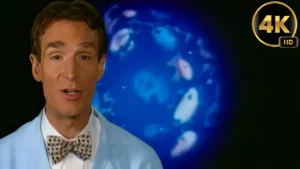
Share your thoughts on this Bill Nye The Science Guy episode