













































































Buoyancy
Have you ever tossed a tiny pebble into a pond and watched it sink straight to the bottom? If a tiny rock sinks, how can a massive cruise ship weighing thousands of tonnes float perfectly on the surface? Let us dive into the science of buoyancy and discover the invisible upward push of water!
How Do Massive Metal Ships Float?
Not at all! Water is a heavy fluid made of molecules. When you jump into water, you actually have to push all those water molecules out of the way to make room for your body.
The water pushes back! This invisible upward pushing force is exactly what allows heavy things to float. If you push enough water out of the way, the water will hold you up.
Put Your Instincts to the Test
Think about what you already know about floating and sinking. Pick an answer for each question, then see if your instincts were right.
It rises up! Your body pushes the water out of the way, making the water level rise. Scientists call this action displacement.
Buoyancy! When you push water out of the way, the water fights back and pushes up against you with a force called buoyancy.
Hot air is less dense than cold air! Buoyancy does not just happen in water, it happens in the invisible air too.
Understanding the Science
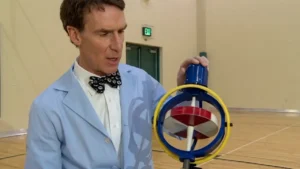
Let us break down the science of floating, sinking, and displacement with Bill Nye the Science Guy.
Key Concepts
Buoyancy
Tap to learn moreBuoyancy is the invisible upward pushing force of a fluid against an object. It is the amazing force that fights completely against gravity to keep things afloat.
Displacement
Tap to learn moreDisplacement means pushing a fluid out of the way. When an object enters water, it makes room for itself by pushing the water up and outwards.
Density
Tap to learn moreDensity is a measurement of how tightly packed the matter inside an object is. A solid block of steel is incredibly dense, while a hollow steel boat contains a lot of empty air.
Positive Buoyancy
Tap to learn morePositive Buoyancy happens when an object displaces an amount of water that weighs more than the object itself. This causes the object to float securely on the surface.
Negative Buoyancy
Tap to learn moreNegative Buoyancy happens when an object weighs more than the water it displaces. The upward push is not strong enough, causing the object to sink to the bottom.
Neutral Buoyancy
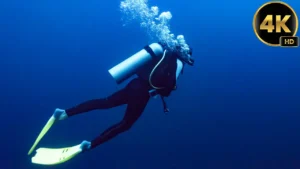
Tap to learn moreNeutral Buoyancy happens when an object weighs exactly the same as the water it displaces. It neither sinks nor floats, but hovers perfectly in the middle like a fish.
Archimedes Principle
Tap to learn moreThe Archimedes Principle is an ancient Greek discovery stating that the upward buoyant force on an object is exactly equal to the weight of the fluid that the object pushes out of the way.
Gases and Buoyancy
Tap to learn moreBuoyancy works in the air too! Hot air spreads out and becomes less dense than the cold air around it, allowing hot air balloons to float gracefully into the sky.
Try It: The Archimedes Displacement Tank
Test the ancient secrets of buoyancy! Drop different materials into our virtual glass tank. Here is the secret: the solid aluminium block and the aluminium boat actually weigh the exact same amount!
The solid block sinks rapidly because it is tightly packed and incredibly dense. But when we take that exact same amount of metal and shape it into a wide boat, we trap a large amount of empty air inside! This wide shape forces a massive amount of water out of the way, and that large displacement pushes back up with enough force to keep the heavy metal floating.
Test it out below! Pay very close attention to the water line to see exactly how shape changes displacement.
Live Tank Data
Apply Your Knowledge
Let us see if you can match these objects to how they behave in fluid environments.
Match the Concepts
Click an object to select it, then click the matching description to place it.
Real World Challenge
Imagine you are an engineer building an exploration submarine. How would you design the water tanks inside the submarine to actively switch between positive buoyancy for floating and negative buoyancy for diving?
What Has Changed Since This Episode Aired
This episode first aired in the 1990s. While water still pushes up with the exact same force today, humans have invented incredible new ways to harness buoyancy to explore the deep ocean and protect the environment!
Updated: Engineers have invented a revolutionary new material called syntactic foam! This special foam is packed with millions of microscopic hollow glass spheres. It provides incredible structural strength to withstand the crushing pressure at the bottom of the Mariana Trench, while maintaining positive buoyancy so the heavy submersible can safely float back to the surface when the mission is over.
Updated: Scientists have deployed a global fleet of over 4,000 robotic Argo floats! These autonomous robots completely control their own buoyancy by pumping oil in and out of a special external bladder. By changing their volume, they constantly sink deep into the dark ocean and float back up to the surface, collecting vital data on ocean density and climate change.
Updated: Engineers are actually using the power of buoyancy to build massive floating solar farms! By placing thousands of solar panels on specially designed high density plastic pontoons, we can generate clean electricity directly on top of lakes and reservoirs. This saves valuable land and actually helps keep the solar panels cool, which makes them generate even more power.
Test Your Understanding
Answer these questions and get instant feedback. How many can you get right?
Results
Your score:
Reflection
If you had to design a life jacket for a dog, what lightweight materials would you use and how would you attach them to ensure the dog achieves positive buoyancy in the water?
Episode Discussion
Share your thoughts on this Bill Nye episode