






























































The Rock Cycle
Did you ever stop to think that the whole world is covered with rocks, and every single one used to be different? When you are looking at a rock, you are looking at history! Let us dig into how rocks are born, broken down, and recycled over millions of years.
Where Do Rocks Come From?
The ground beneath your feet feels solid and permanent, but it is actually part of a massive, extremely slow recycling system.
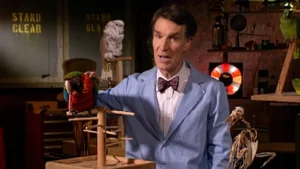
Melted rock! Bill Nye the Science Guy explains that all rocks started out as molten liquid, just like the glowing hot lava that erupts out of volcanoes today.
Yes! The Earth is constantly transforming rocks through heat, pressure, and erosion in a continuous process called the Rock Cycle. Every rock you see used to be a different kind of rock!
Put Your Instincts to the Test
Think about what you already know about geology and nature. Pick an answer for each question, then see if your instincts were right.
A rock with flat layers. This is called sedimentary rock! The heavy sediment crushes down on itself over thousands of years to form visible bands and layers of stone, like sandstone.
Diamonds experienced millions of years of extreme heat and pressure. Both are made of the exact same element (carbon), but the intense conditions deep inside the Earth turn the carbon into a beautiful, extremely hard crystal!
The ice expands and slowly splits the rock apart. When water freezes, it expands. Doing this over and over is a powerful form of weathering that slowly breaks giant rocks down into tiny bits of sand.
Understanding the Science
Tap each card to reveal the science behind the Earth's continuous recycling system.
Key Concepts
Igneous Rock
Tap to learn moreThe name igneous comes from the word for "fire". It is formed when hot, molten lava cools down and hardens into solid rock. Examples include blocky granite and volcanic pumice. As Bill Nye the Science Guy notes, all the rocks in the world used to be melted rock!
Weathering & Erosion
Tap to learn moreRocks do not stay solid forever. They are constantly being broken down by weathering and erosion. This is caused by wind hurling sand against stone, water freezing and expanding in cracks, moving glaciers of ice, and the pounding surf of the ocean. These forces reduce mighty rocks to tiny bits of sand and dust.
Sedimentary Rock
Tap to learn moreFormed when the forces of erosion wash sand, mud, and silt (called sediment) into rivers and lakes. The heavy sediment piles up and crushes down on itself over thousands of years, squeezing the water out and creating rocks with distinct layers, like sandstone.
Metamorphic Rock
Tap to learn moreThe word metamorphic means "changed". These rocks are formed when existing rocks are pushed deep underground and smushed together by huge tectonic pressures and thousands of degrees of heat. This extreme environment crushes and swirls the minerals together to form new rock, like marble.
Minerals
Tap to learn moreRocks are made up of minerals. Minerals are naturally occurring, solid, inorganic (non-living) substances with a specific chemical structure. When metamorphic rocks are formed, the intense heat and pressure cause these different minerals to swirl together into beautiful patterns.
Soil vs. Dirt
Tap to learn moreDirt is simply broken-down, inorganic rock and sand. Soil is dirt mixed with organic vegetative matter and microscopic living things. The rock cycle breaks down the solid earth, which eventually allows rich, dark soil to form so that plants can grow!
Tectonic Plates
Tap to learn moreThe Earth's crust is not one solid shell. It is made of gigantic, shifting puzzle pieces called tectonic plates. When these plates crash into each other, one plate gets forced below the other. This pushes old rock deep underground where it melts back into magma, driving the continuous rock cycle.
Deep Time
Tap to learn moreThe processes that create rocks do not happen overnight. The cycle of forming, breaking down, and reforming rocks relies on Deep Time. The rocks you stand on today have been participating in this cycle for billions of years!
Try It: The Rock Cycle Simulator
Experiment with the forces of nature! Apply different conditions like heat, pressure, or weathering to see how matter moves through the rock cycle.
The Full Rock Cycle
Every rock can transform into any other type of rock depending on the forces acting upon it!
Apply Your Knowledge
Now let us see if you can connect what you have learned to the real world.
Match the Concepts
Click an object to select it, then click the matching description to place it.
Real-World Challenge
Imagine you are an architect designing the foundation for a massive new school. You need a rock that is extremely strong, blocky, and does not crumble easily under weight. You have to choose between granite (an igneous rock) or sandstone (a sedimentary rock). Based on how these rocks are formed in the rock cycle, which would you choose and why?
What Has Changed Since This Episode Aired
This episode first aired in 1995. While the core science of geology remains accurate, here are a few things that modern science has expanded upon.
Updated: Yes! Using an advanced technology called seismic tomography, modern geologists can basically take a "CT scan" of the Earth. By measuring how earthquake waves travel through the planet, scientists can now generate 3D maps that show the exact shapes of cold tectonic plates sinking deep into the hot mantle.
Updated: Scientists have recently discovered a massive "deep biosphere" of microbes living inside solid rock miles beneath the Earth's surface! These incredible organisms survive entirely on chemical energy from the rocks rather than sunlight from the surface, completely changing our understanding of where life can exist.
Updated: We now know that extreme weather events driven by modern climate change are accelerating the rates of weathering and erosion far beyond the historical baselines discussed in the 1990s. Heavier rainfall, extreme flooding, and rising sea levels are breaking down coastal rocks and carving out riverbeds at a much faster pace.
Test Your Understanding
Answer these questions and get instant feedback. How many can you get right?
Results
Your score:
Reflection
Have you ever noticed rocks around your neighbourhood or school? Can you guess if they are igneous, sedimentary, or metamorphic? How do you think they got there?
how was the rocks even there ,when nobody was alive ?
The rocks had to exist first so that life had somewhere to evolve..