


























































Energy
Energy is what makes things go, run, or happen. It comes in many forms, it can change from one form to another, and it is absolutely everywhere. In this lesson, you will discover the difference between potential and kinetic energy, explore how we convert energy into electricity, and find out why you get so hot when you exercise.
What Would Happen if There Were No Energy?
Imagine waking up tomorrow and every form of energy in the world has vanished. What would that actually look like?
A cold, dark, dead world. As the episode puts it: the electricity would stop, the wind would stop blowing, clouds would freeze in place, cars would not move, and every light would go out. Without energy, absolutely nothing can go, run, or happen. Energy is not just useful, it is the reason anything moves or changes at all.
Many forms! In the episode, Bill Nye the Science Guy rattles them off: sound is energy, heat is energy, falling things have energy, moving your muscles takes energy, and electricity is energy. The most important thing? Energy can be converted from one form to another. That single idea is the key to understanding how the entire world works.
Put Your Instincts to the Test
Think about what you already know about energy. Pick an answer for each question, then see if your instincts were right.
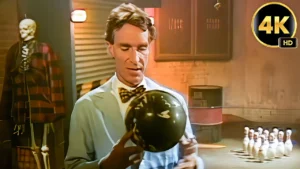
It will never hit you! Bill Nye the Science Guy demonstrates this in the episode with a real bowling ball, and he does not flinch. When you pull the ball back, you give it potential energy. When you release it, that potential energy converts to kinetic energy. But the kinetic energy can never be greater than the potential energy you gave it. So the ball can never swing back farther than the point where you released it.
The cork pops off! The baking soda and vinegar react chemically, producing carbon dioxide gas. That gas builds up pressure inside the sealed bottle until it blasts the cork right off. As the episode explains, chemical energy was converted to kinetic (moving) energy. This is the same basic principle behind how a rocket engine works.
It becomes heat! Bill Nye the Science Guy explains that only about 40% of the energy from your food is used to move around. The other 60% is turned into heat. That is why you feel so hot when you exercise. Your body is a living energy converter, and like every energy conversion, some energy always ends up as heat.
Understanding Energy
Tap each card to reveal the explanation.
Key Concepts
Potential Energy
Tap to learn morePotential energy is stored energy. It has the potential to do something, but it is not doing it yet. In the episode, Bill Nye the Science Guy lifts a box of water up high. The effort of lifting stores energy in the water. A bowling ball pulled back on a rope, a stretched rubber band, and food sitting on your plate all have potential energy. As Bill Nye puts it: "When energy is stored, we call it potential energy."
Kinetic Energy
Tap to learn moreKinetic energy is the energy of movement. The word "kinetic" literally means "moving." When the water flows out of the box and spins a propeller, that is kinetic energy. When the bowling ball swings through the air, that is kinetic energy. When you ride a bike, run, or even breathe, you are using kinetic energy. Anything that is in motion has it.
Energy Conversion
Tap to learn moreThis is the biggest idea in the episode: energy can be converted from one form to another. Bill Nye the Science Guy demonstrates this over and over. Lifting water stores potential energy. Releasing it creates kinetic energy (flow). The flow spins a propeller (mechanical energy), which runs a generator (electrical energy). Every machine, every living thing, and every power plant is really just converting energy from one form to another.
Heat: The Universal Byproduct
Tap to learn moreWhenever energy is converted from one form to another, some of it always ends up as heat. Bill Nye the Science Guy demonstrates this with your own body: only 40% of the chemical energy in your food actually moves your muscles. The other 60% becomes heat, which is why you get hot when you exercise. This is true for every energy conversion. A car engine, a light bulb, a computer: they all produce heat as a byproduct. No conversion is perfectly efficient.
Hydroelectric Power
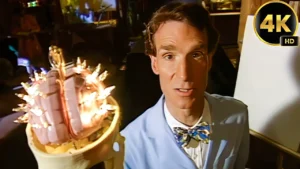
Tap to learn moreIn the episode, Bill Nye the Science Guy visits Grand Coulee Dam with dam operator Jane Rollins. Water is held behind the dam about a hundred metres above the turbines, giving it enormous potential energy. When released, the water rushes down through pipes called penstocks and spins a giant turbine (a huge propeller inside a spiral case that looks like a giant snail shell). The spinning turbine turns generators that produce electricity. The same chain of conversions Bill Nye demonstrated with his small water box and propeller happens here on a massive scale.
Energy Sources
Tap to learn moreThe episode covers the main sources of electricity. Coal is burned to make heat, which makes steam, which spins turbines. Nuclear power comes from atoms with nuclei so big and heavy they are always falling apart, releasing tremendous heat. Wind turns propellers connected to generators. Solar panels, made of the same material as microchips, convert sunlight directly into electricity. And oil, a fossil fuel pumped from hundreds of metres underground, is a chemical that combines with oxygen to release heat energy. Bill Nye the Science Guy ends with an important message: since all of these take effort to produce, "only use it when you need it."
Energy is Everywhere
Tap to learn moreBill Nye the Science Guy opens the episode with a single big idea: energy is everywhere. Sound, heat, light, electricity, movement, even the chemical bonds in food are all forms of energy. When you open a door, walk across a room, or even just sit still and warm up your hands, energy is involved. There is no place in the universe where energy is not happening. As Bill Nye puts it: "Energy is what makes things go, run, or happen."
Conservation of Energy
Tap to learn moreEnergy cannot be created or destroyed. It can only change from one form to another. Bill Nye the Science Guy demonstrates this with the famous bowling ball pendulum: he pulls a bowling ball back until it touches his nose, lets go, and it swings away then back, but it never hits him in the face. Why? The kinetic energy on the return swing can never be greater than the potential energy he started with. You cannot get more energy out than you put in. This rule, called the conservation of energy, holds true for every energy conversion in the universe.
Bill Nye's Water Box
This is the exact demonstration from the episode, recreated as an interactive simulation. Lift the water to store potential energy, open the valve, and watch the chain of conversions all the way to a glowing light bulb. Notice that every conversion leaks a little heat, and the stored energy eventually runs out.
Apply Your Knowledge
Now let us see if you can trace the energy conversions happening all around you.
Match the Energy Conversion
Click an object to select it, then click the matching description to place it.
Real-World Challenge
Imagine you are stranded on a desert island with a waterfall, plenty of sunshine, and some copper wire. Using what you have learned about energy conversion, describe at least two different ways you could try to generate electricity. For each method, trace the full chain of energy conversions from the original source to the final electrical output.
What Has Changed Since This Episode Aired
This episode of Bill Nye the Science Guy first aired in 1995. While the core science of energy conversion remains completely accurate, the world of energy has changed dramatically since then.
Updated: Wind and solar have gone from niche curiosities to major electricity sources worldwide. In many countries, renewable energy now generates more electricity than coal. Solar panel costs have dropped by over 90% since the 1990s, and modern wind turbines are vastly larger and more efficient than the ones shown in the episode. The basic physics Bill Nye the Science Guy demonstrated has not changed, but the engineering and scale have been transformed.
Updated: Coal use for electricity has been declining in many countries. Scientists now understand that burning fossil fuels releases carbon dioxide, a greenhouse gas that traps heat in the atmosphere and drives climate change. This connection was not widely discussed in children's science programming in the 1990s. Today, many countries are actively working to replace coal plants with renewable energy sources and nuclear power to reduce greenhouse gas emissions.
Updated: The 40% figure Bill Nye the Science Guy used is a reasonable approximation for vigorous exercise, but scientists now know the picture is more complex. Muscle efficiency varies between about 20% and 40% depending on the type of activity, the muscles involved, and the individual's fitness level. At rest, nearly all food energy becomes heat. During intense sprinting, efficiency drops even lower than 25%. The core principle from the episode remains correct: your body is an energy converter, and a significant portion of the energy from food always ends up as heat.
Test Your Understanding
Answer these questions and get instant feedback. How many can you get right?
Results
Your score:
Reflection
Think about everything you have done today. How many energy conversions can you count? Start from the moment you woke up (the alarm clock converting electrical energy to sound) and trace the chain as far as you can.
You see, we all have potential 😉
at 19:41 when you pause it is she the flash