































































Earthquakes
It feels like we are standing on solid ground, but the Earth beneath our feet is actually moving right now! Join Bill Nye the Science Guy to discover the powerful, hidden forces that cause the ground to rip apart, mountains to form, and cities to shake.
A Whole Lot of Shaking Going On!
Giant puzzle pieces of the crust! The Earth's surface is broken into tectonic plates that constantly grind against each other. When they get stuck, pressure builds up like a spring until they finally snap, releasing massive amounts of energy!
10 times the shaking! The scale uses powers of 10. A Magnitude 5 shakes the ground ten times more violently than a Magnitude 4, and it releases roughly 32 times more destructive energy!
Put Your Instincts to the Test
Think about the immense physical scale of the Earth. Pick an answer for each question, then see if your instincts were right.
A thick layer of hot, molten liquid rock! Just beneath the thin, hard crust is the mantle. The immense heat from the centre of the Earth churns this molten rock, which slowly drags the solid plates around on the surface.
Three stations! By measuring how long it takes the seismic waves to reach three separate locations (like Jakarta, New Delhi, and Cape Town), scientists can triangulate the exact point where all three distances intersect.
Understanding the Science
Tap each card to uncover the geological terminology and physics concepts used by scientists to measure and understand seismic activity.
Key Concepts
Tectonic Plates
Tap to learn moreThe massive, rigid pieces of the Earth's solid crust that fit together like a giant jigsaw puzzle. These plates carry both the continents and the heavy oceans on their backs.
The Mantle
Tap to learn moreThe thick layer of intensely hot, molten liquid rock located just beneath the crust. The intense churning heat from below causes the tectonic plates to slowly float and slide around on the surface.
Fault Line
Tap to learn moreA massive physical fracture or crack in the Earth's crust where two tectonic plates meet and aggressively grind against one another as they attempt to move in different directions.
Stored Energy
Tap to learn moreAs massive plates push against each other and get permanently stuck, the rock physically bends and compresses. This stores up monumental amounts of kinetic energy, exactly like winding up a heavy metal spring.
Seismometer
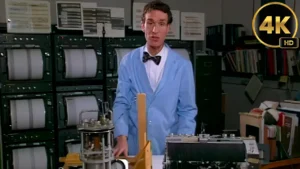
Tap to learn moreA highly delicate scientific instrument used to physically detect the faintest vibrations in the Earth. It typically uses a heavy, suspended magnet that relies on inertia to stay perfectly still while the ground moves wildly beneath it.
Seismograph
Tap to learn moreThe physical, visual record produced by a seismometer. It looks like a jagged, messy line drawn on paper or a computer screen, showing exactly how violently and quickly the ground shook during the event.
Epicentre
Tap to learn moreThe exact target point on the Earth's surface located directly above where an earthquake originated deep underground. Scientists find it by comparing the distance data from at least three different measuring stations.
Richter Scale
Tap to learn moreA logarithmic mathematical scale used to measure the size of an earthquake. Because it uses powers of ten, going up by just one whole number means the ground shakes exactly 10 times as much!
Interactive: The Epicentre Triangulation Simulator
You are the lead seismologist at the Global Warning Centre! A massive earthquake has just triggered alarms. Look at the map to find the glowing red fault line (the target). Adjust the distance radius of each station using the sliders. Use the "Too Small" or "Too Big" hints to guide you until all three stations are LOCKED. (Turn on sound to hear the seismic alarms)
Apply Your Knowledge
Let us see if you can correctly identify the essential scientific terminology associated with geology and seismology.
Match the Concepts
Click a scientific term to select it, then click the matching description to place it.
Real-World Challenge
Bill Nye the Science Guy mentioned that you should have an earthquake survival kit ready in your home. Based on the fact that electrical power lines and fresh water pipes often break during severe shaking, list four essential items you would pack in a family emergency kit and explain why each is necessary.
What Has Changed Since This Episode Aired
This episode originally aired in the mid-1990s. Since then, the science of geology and disaster response has advanced incredibly!
Updated: Actually, no! Today, seismologists almost exclusively use the Moment Magnitude Scale (MMS) for medium and large earthquakes. It works very similarly to the Richter scale (using powers of ten), but it much more accurately measures the total physical energy released across the entire fault line.
Updated: While rescue dogs are still absolute heroes on the front lines, we now deploy highly advanced technologies alongside them. For example, NASA developed FINDER radar technology that can detect the microscopic, rhythmic movements of a human heartbeat through 30 feet of solid concrete rubble!
Updated: In the episode, Bill Nye explains that seismometers measure earthquakes as they are happening. Now, because initial P-waves travel much faster than the destructive S-waves, modern computer networks can detect the P-waves and instantly send alerts to mobile phones. This gives people crucial seconds or even minutes to drop, cover, and hold on before the heavy shaking actually starts.
Updated: The episode shows traditional seismometers relying on heavy, suspended magnets and physical weights to detect vibrations. Today, scientists have developed Distributed Acoustic Sensing (DAS). They fire continuous lasers down standard underground internet fibre optic cables. If the ground shifts even microscopically, the light bends, effectively turning a single internet cable into thousands of highly sensitive digital seismometers!
Updated: Measuring the exact speed and direction of tectonic plates used to be a slow, painstaking process requiring physical surveying. Now, geologists use dense networks of highly advanced Global Positioning System (GPS) receivers bolted directly into the bedrock. They can track the constant, slow-motion movement of the Earth's crust in real time down to the exact millimetre.
Test Your Understanding
Answer these 10 questions and get instant feedback. How many can you get right?
Results
Your score:
Reflection
Do you live near a major fault line? Even if you do not, what natural hazards (like floods or storms) affect your region, and how can applying science and preparedness help you stay safe?
Episode Discussion
Share your thoughts on this Bill Nye The Science Guy episode