













Archaeology
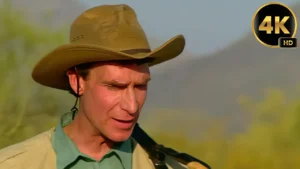
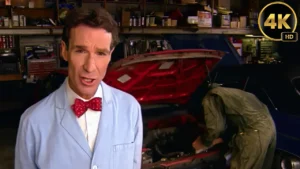
Have you ever wondered what ancient artifacts can reveal about the past? In this classic Bill Nye archaeology episode, the Science Guy digs into the fascinating science of uncovering human history. By studying lost cities, fossilized tools, and ancient ruins, archaeologists gather clues to understand how people lived long ago. As a result, we can piece together the story of our own civilisation.
What Is Archaeology?
At its core, archaeology is the study of ancient people and their culture through the things they left behind. It’s a branch of science that helps us uncover past civilisations and understand the daily lives of our ancestors. Bill Nye explains how every artifact, whether it’s a simple clay pot or a complex building, tells a story.
To interpret these stories, archaeologists use the scientific method to form hypotheses about their discoveries. They carefully map dig sites, use modern science to determine an artifact’s age, and compare their findings to historical records. Consequently, by studying the past in this organised way, we learn valuable lessons about how civilisations have evolved.
How Do Archaeologists Uncover the Past?
Archaeology is like solving a giant historical puzzle. Scientists must carefully uncover clues and piece them together to reveal a larger story. In the episode, Bill Nye breaks down the fundamental steps of this process:
- Digging for Clues: The first step is careful excavation. Scientists know that in layers of soil, the older stuff is on the bottom and the newer stuff is on top. For this reason, they meticulously remove each layer to preserve the context of every discovery.
- Analysing Artifacts: Every broken pot shard or ancient tool holds clues. The key is to leave an artifact where you find it, because its location might tell us exactly how it was used. You can learn more about standard archaeological practices from institutions like the
- Dating Discoveries: To figure out how old an organic artifact is, scientists use a powerful technique called Radiocarbon Dating. This method provides a reliable timeline for many discoveries.
Key Discoveries and Tools from the Episode
Bill Nye brings archaeology to life with hands-on demonstrations of the core concepts scientists use.
First, he explains
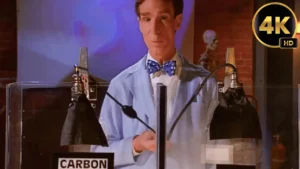
Radiocarbon Dating, a technique that measures the decay of Carbon-14 in organic materials to determine their age. Living things have a steady ratio of Carbon-12 to the radioactive Carbon-14. However, after death, the Carbon-14 slowly breaks down. By measuring how much is left, scientists can calculate when the organism died.
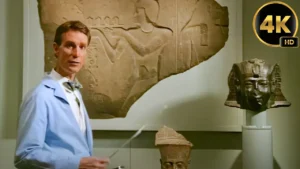
Next, Bill highlights the importance of the Rosetta Stone. This incredible artifact was the key to deciphering ancient Egyptian hieroglyphics because it contained the same text in three different languages. By using the known language (Greek), scholars were finally able to translate the unknown one.
Science Since the 90s: Modern Archaeological Tech
Since this episode first aired, archaeologists have developed groundbreaking new tools. Today, scientists use satellite imaging, drones, and ground-penetrating radar to find hidden structures without digging a single hole. Furthermore, DNA analysis of ancient remains helps researchers understand human migration and the evolution of diseases.
Another breakthrough is virtual archaeology, where scientists create detailed 3D models of ancient sites. This allows them to study delicate ruins without causing damage. These new techniques ensure that the field of archaeology will continue to uncover lost civilisations and rewrite history for years to come.
More Seriously Scientific Links
Visit our homepage for more Seriously Scientific news and documentaries: https://seriouslyscientific.com.
Subscribe to our YouTube channel for more science content: https://youtube.com/@seriouslyscientific.
Get free science worksheets for students and educators: https://teacherspayteachers.com/Store/Seriously-Scientific.
Follow us on BlueSky: https://bsky.app/profile/seriouslysci.bsky.social.
Bill Nye The Science Guy
02 // EPISODE_INDEX100 remastered episodes across 5 seasons of science education
Season 1 (20 episodes)
Bill Nye The Science Guy | Flight
Bill Nye The Science Guy | Earth's Crust
Bill Nye The Science Guy | Dinosaurs
Bill Nye The Science Guy | Skin
Bill Nye The Science Guy | Buoyancy
Bill Nye The Science Guy | Gravity
Bill Nye The Science Guy | Digestion
Bill Nye The Science Guy | Phases of Matter
Bill Nye The Science Guy | Biodiversity
Bill Nye The Science Guy | Simple Machines
Bill Nye The Science Guy | The Moon
Bill Nye The Science Guy | Sound
Bill Nye The Science Guy | Garbage
Bill Nye The Science Guy | Structures
Bill Nye The Science Guy | Earth's Seasons
Bill Nye The Science Guy | Light & Color
Bill Nye The Science Guy | Cells
Bill Nye The Science Guy | Electricity
Bill Nye The Science Guy | Outer Space
Bill Nye The Science Guy | Eyeballs
Season 2 (20 episodes)
Bill Nye The Science Guy | Magnetism
Bill Nye The Science Guy | Wind
Bill Nye The Science Guy | Blood & Circulation
Bill Nye The Science Guy | Chemical Reactions
Bill Nye The Science Guy | Static Electricity
Bill Nye The Science Guy | Food Webs
Bill Nye The Science Guy | Light Optics
Bill Nye The Science Guy | Bones & Muscle
Bill Nye The Science Guy | Oceanography
Bill Nye The Science Guy | Heat
Bill Nye The Science Guy | Insects
Bill Nye The Science Guy | Balance
Bill Nye The Science Guy | The Sun
Bill Nye The Science Guy | The Brain
Bill Nye The Science Guy | Forests
Bill Nye The Science Guy | Communication
Bill Nye The Science Guy | Momentum
Bill Nye The Science Guy | Reptiles
Bill Nye The Science Guy | Atmosphere
Bill Nye The Science Guy | Respiration
Season 3 (21 episodes)
Bill Nye The Science Guy | Planets & Moons
Bill Nye The Science Guy | Pressure
Bill Nye The Science Guy | Plants
Bill Nye The Science Guy | Rocks & Soil
Bill Nye The Science Guy | Energy
Bill Nye The Science Guy | Evolution
Bill Nye The Science Guy | The Water cycle
Bill Nye The Science Guy | Friction
Bill Nye The Science Guy | Germs
Bill Nye The Science Guy | Climates
Bill Nye The Science Guy | Waves
Bill Nye The Science Guy | Ocean Life
Bill Nye The Science Guy | Mammals
Bill Nye The Science Guy | Spinning Things
Bill Nye The Science Guy | Fish
Bill Nye The Science Guy | Human Transportation
Bill Nye The Science Guy | Wetlands
Bill Nye The Science Guy | Birds
Bill Nye The Science Guy | Populations
Bill Nye The Science Guy | Animal Locomotion
Bill Nye The Science Guy | Invertebrates
Season 4 (19 episodes)
Bill Nye The Science Guy | Rivers & Streams
Bill Nye The Science Guy | Nutrition
Bill Nye The Science Guy | Marine Mammals
Bill Nye The Science Guy | Earthquakes
Bill Nye The Science Guy | NTV Music Videos
Bill Nye The Science Guy | Spiders
Bill Nye The Science Guy | Pollution Solutions
Bill Nye The Science Guy | Probability
Bill Nye The Science Guy | Pseudoscience
Bill Nye The Science Guy | Flowers
Bill Nye The Science Guy | Archaeology
Bill Nye The Science Guy | Deserts
Bill Nye The Science Guy | Amphibians
Bill Nye The Science Guy | Volcanoes
Bill Nye The Science Guy | The Heart
Bill Nye The Science Guy | Inventions
Bill Nye The Science Guy | Computers
Bill Nye The Science Guy | Fossils
Bill Nye The Science Guy | Time
Season 5 (20 episodes)
Bill Nye The Science Guy | Forensics
Bill Nye The Science Guy | Space Exploration
Bill Nye The Science Guy | Genes
Bill Nye The Science Guy | Architecture
Bill Nye The Science Guy | Farming
Bill Nye The Science Guy | Life Cycles
Bill Nye The Science Guy | The Scientific Method
Bill Nye The Science Guy | Atoms
Bill Nye The Science Guy | Ocean Exploration
Bill Nye The Science Guy | Lakes and Ponds
Bill Nye The Science Guy | Smell
Bill Nye The Science Guy | Caves
Bill Nye The Science Guy | Erosion
Bill Nye The Science Guy | Fluids
Bill Nye The Science Guy | Comets and Meteors
Bill Nye The Science Guy | Measurement
Bill Nye The Science Guy | Patterns
Bill Nye The Science Guy | Storms
Bill Nye The Science Guy | Music
Bill Nye The Science Guy - Motion
Episode Discussion
Share your thoughts on this Bill Nye episode
1 Comments
Join the Discussion Cancel Reply
Loading Biography...
Archaeology
Based on Bill Nye the Science Guy · Season 4, Episode 11 · 23 min
Archaeology is not just about finding gold in ancient tombs. It is often about looking at the things people threw away thousands of years ago to understand exactly how they lived.
What Can Rubbish Tell Us About the Past?
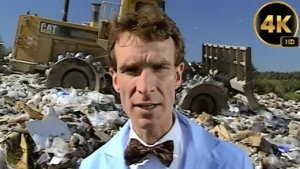
Buried at the very bottom. As Bill Nye the Science Guy explains, people throw things away over time, so the newest rubbish lands on top of the older layers.
Carbon! Specifically, a radioactive type called Carbon-14. Every living thing absorbs carbon, and scientists can measure how much is left to determine its age.
Put Your Instincts to the Test
Think about what you already know about digging up the past. Pick an answer for each question, then see if your instincts were right.
Keep a careful record of exactly where they found it. Knowing exactly where an artefact was buried tells scientists a lot about how it was used in daily life.
Their social organisation and defence strategies. Bill Nye the Science Guy notes that the construction methods and the energy put into building structures tell us what was important to the people who built them.
It must have been alive at some point. Plants, animals, and humans absorb carbon while they are alive. Once they stop living, the Carbon-14 slowly decays over time.
Understanding the Science
Tap each card to reveal the explanation.
Key Concepts
Archaeology
Tap to learn moreArchaeology is the study of ancient people and their cultures by examining the things they left behind. It helps us piece together human history by looking at physical evidence.
Artefact
Tap to learn moreAn artefact is an object made by a human being, typically one of cultural or historical interest. The word comes from Latin words meaning "made with skill". Common examples include tools, pottery, and weapons.
Radiocarbon Dating
Tap to learn moreRadiocarbon Dating is a scientific method used to determine the age of an object containing organic material. Scientists do this by measuring the amount of unstable Carbon-14 left inside it.
Midden
Tap to learn moreA midden is an ancient rubbish heap. These piles of discarded shells, bones, and broken tools give archaeologists a brilliant snapshot of daily life and eating habits in the past.
Rosetta Stone
Tap to learn moreThe Rosetta Stone is a famous stone tablet that helped scientists decode ancient Egyptian hieroglyphics. It featured the exact same message written in three different languages, acting as a translation guide.
Try It: Carbon-14 Half-Life Simulator
Watch Carbon-14 atoms decay into Nitrogen-14 over thousands of years. Each orange dot is a Carbon-14 atom. When it decays, it turns green (Nitrogen-14). Press Start to begin, and watch the half-life in action!
Apply Your Knowledge
Now let us see if you can connect what you have learned to the real world.
Match the Concepts
Click an object to select it, then click the matching description to place it.
Real-World Challenge
Imagine you are an archaeologist 1,000 years in the future excavating a 21st-century school. Based on the artefacts you find, such as plastic pens, computer screens, and metal lunchboxes, what conclusions would you draw about how students learned and lived?
What Has Changed Since This Episode Aired
This episode of Bill Nye the Science Guy first aired in the 1990s. While the core science remains accurate, here are a few things that have been refined or expanded since then.
Updated: Science has refined the timeline of human evolution. While early hominids (our ancient ancestors) were walking around three million years ago, anatomically modern humans (Homo sapiens) actually appeared much more recently, around 300,000 years ago.
Updated: While the core science of radiocarbon dating is exactly the same, modern archaeologists use much more advanced tools like Accelerator Mass Spectrometry (AMS). This allows scientists to date much smaller samples, sometimes just a single seed, without destroying the precious artefact!
Test Your Understanding
Answer these questions and get instant feedback. How many can you get right?
Results
Your score:
Reflection
If archaeologists dug up your bedroom in 2,000 years, what is one artefact they would find, and what do you think they would mistakenly assume it was used for?
If you could be an archaeologist for a day, what kind of ancient civilization would you want to uncover?