



































Genes
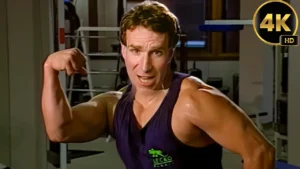
The way you look and the way your body works depends entirely on where you came from. You and every other living thing on Earth are built using a massive set of microscopic instructions called genes.
How Much Information Makes a Human?
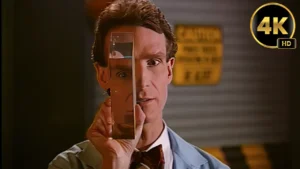
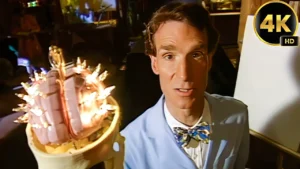
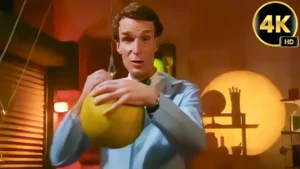
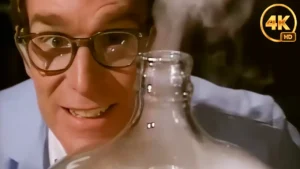
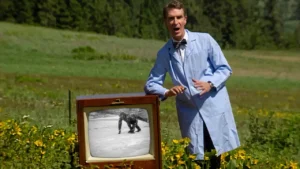
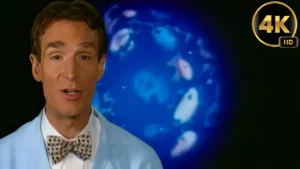
About 200 kilometres long! Bill Nye the Science Guy demonstrates that the instructions to build a human being require a massive amount of information. If we printed out the chemical sequence for just a single gene (like hair colour), it would take up five full pages of paper!
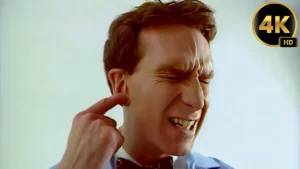
You inherited them! The shape of your earlobes is a physical trait passed down from your parents. If both your parents have dangling earlobes, the instructions they passed to you ensure yours will probably dangle too.
Put Your Instincts to the Test
Think about what you already know about biology, family traits, and the human body. Pick an answer for each question, then see if your instincts were right.
They can roll their tongue completely. A dominant gene overrules a recessive gene. Even though the child carries the instruction for non-rolling hidden in their DNA, the dominant rolling instruction takes control of how their tongue muscles actually develop.
Because genetic material is recombined in brand new ways. You receive half of your chromosomes from your mother and half from your father. These halves join together in a genetic square dance, creating a completely unique blueprint that has never existed before.
Just four chemicals. It sounds impossible, but the DNA in you, giraffes, fish, and seaweed is all made from the same four chemicals (Adenine, Thymine, Cytosine, and Guanine). By arranging these four chemical letters in different sequences, nature creates millions of unique species.
Understanding the Science
Tap each card to reveal the microscopic structures that define who you are and how your body works.
Key Concepts
Cells and the Nucleus
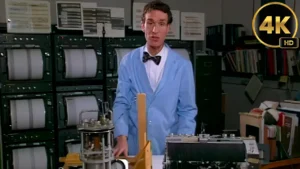
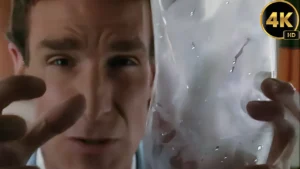
Tap to learn moreYour entire body is made up of microscopic compartments called cells. You have brain cells, stomach cells, and skin cells. When Bill Nye the Science Guy looks at a drop of blood under a powerful microscope, he points out that the white blood cells have a dark central area called a nucleus. The nucleus acts like a vault, safely storing all of the genetic instructions needed to keep the cell alive and functioning.
DNA (Deoxyribonucleic Acid)
Tap to learn moreInside the nucleus, the instructions are written on an incredibly long, stringy molecule called DNA. DNA stands for Deoxyribonucleic Acid. It is shaped like a long ladder that has been twisted into a spiral. This single molecule holds all the information required to determine whether an organism will grow into a human, a tree, or a sea jelly.
The Four Chemicals
Tap to learn moreThe rungs of the twisted DNA ladder are made of just four specific chemicals: Adenine, Thymine, Cytosine, and Guanine (usually referred to by their initials A, T, C, and G). These chemical letters link together in pairs. Because the DNA string is so incredibly long, nature can arrange these four letters into thousands of different sequences to spell out highly complex genetic instructions.
Genes
Tap to learn moreA gene is a specific piece of the long DNA molecule. If the entire DNA sequence is like a massive instruction book, then a single gene is like one specific chapter in that book. You have individual genes that dictate your hair colour, the shape of your toes, and the structure of your internal organs. Humans have thousands of genes working together to build a complete body.
Chromosomes
Tap to learn moreTo fit inside the microscopic nucleus of a cell, the incredibly long strands of DNA must be tightly coiled and packed together into bundles called chromosomes. Every single human cell contains exactly 46 chromosomes, arranged in 23 pairs. When a new person is created, they receive 23 chromosomes from their mother's egg cell and 23 chromosomes from their father's sperm cell.
The Pattern of Life
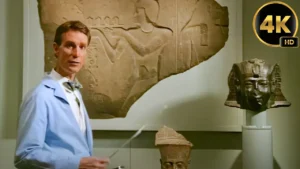
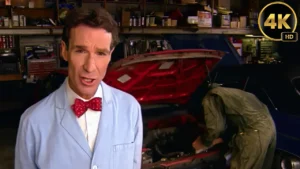
Tap to learn moreBill Nye the Science Guy compares genes to the paper patterns used by a tailor to make a laboratory coat. A tailor uses specific paper shapes to know exactly how to cut the fabric for the left arm or the collar. In the exact same way, your cells read your genes as a physical pattern, using those chemical instructions to assemble proteins and build physical structures like hands and noses.
Dominant and Recessive Genes
Tap to learn moreBecause you receive two copies of every gene (one from each parent), they sometimes contain conflicting instructions. A dominant gene (like the ability to roll your tongue) is strong and will always overrule a recessive gene (the inability to roll). To display a recessive trait like non-rolling, a child must inherit two copies of the recessive gene, one from both parents.
Mutations
Tap to learn moreWhen cells divide and copy their incredibly long DNA sequences, spelling mistakes occasionally happen. When the genetic information gets jumbled or altered, it is called a mutation. Bill Nye the Science Guy shows a two-headed turtle as an extreme example of a mutation. While some mutations can be harmful, other mutations give animals unique advantages that help them survive better in nature.
Try It: Genetic Trait Mixer (Tongue Rolling)
Test the rules of inheritance! Select a dominant or recessive gene from each parent. Then, press Combine DNA to watch the chromosomes perform their genetic square dance, merge into a dividing cell, and see if the baby inherits the Tongue Rolling trait!
Apply Your Knowledge
Let us see if you can connect what you have learned about the microscopic blueprint of life to real-world examples.
Match the Concepts
Click an object to select it, then click the matching description to place it.
Real-World Challenge
Imagine you are a dog breeder trying to raise a puppy with a very specific coat colour. The dark coat colour is a dominant trait, and the light coat colour is a recessive trait. If you absolutely want the puppy to have a light coat, what genetic traits must both the mother and the father dog pass down to the puppy? Why?
What Has Changed Since This Episode Aired
This episode first aired in 1997. Since then, the science of genetics has absolutely exploded with new discoveries. Here is what we know now.
Updated: Actually, we have far fewer! Thanks to the completion of the Human Genome Project in 2003, scientists mapped the entire human code. They discovered that humans only have between 20,000 and 25,000 protein-coding genes. We manage to build a complex human body with fewer genes because our cells can read and combine those instructions in incredibly complex ways.
Updated: Yes, a revolutionary one! In 2012, scientists developed CRISPR-Cas9, a tool that acts like "molecular scissors". It allows geneticists to quickly, cheaply, and incredibly precisely edit the DNA of almost any living thing, opening the door to curing severe genetic diseases.
Updated: Scientists are now studying a booming new field called Epigenetics. They have discovered that your environment, your diet, and your lifestyle can actually turn certain genes "on" or "off" without changing the underlying DNA sequence itself. The genetic blueprint is actually interactive!
Test Your Understanding
Answer these questions and get instant feedback. How many can you get right?
Results
Your score:
Reflection
If you could examine your own DNA blueprint, what specific trait (like eye colour, height, or maybe an athletic ability) do you think you inherited directly from your parents or grandparents?
Episode Discussion
Share your thoughts on this Bill Nye The Science Guy episode